
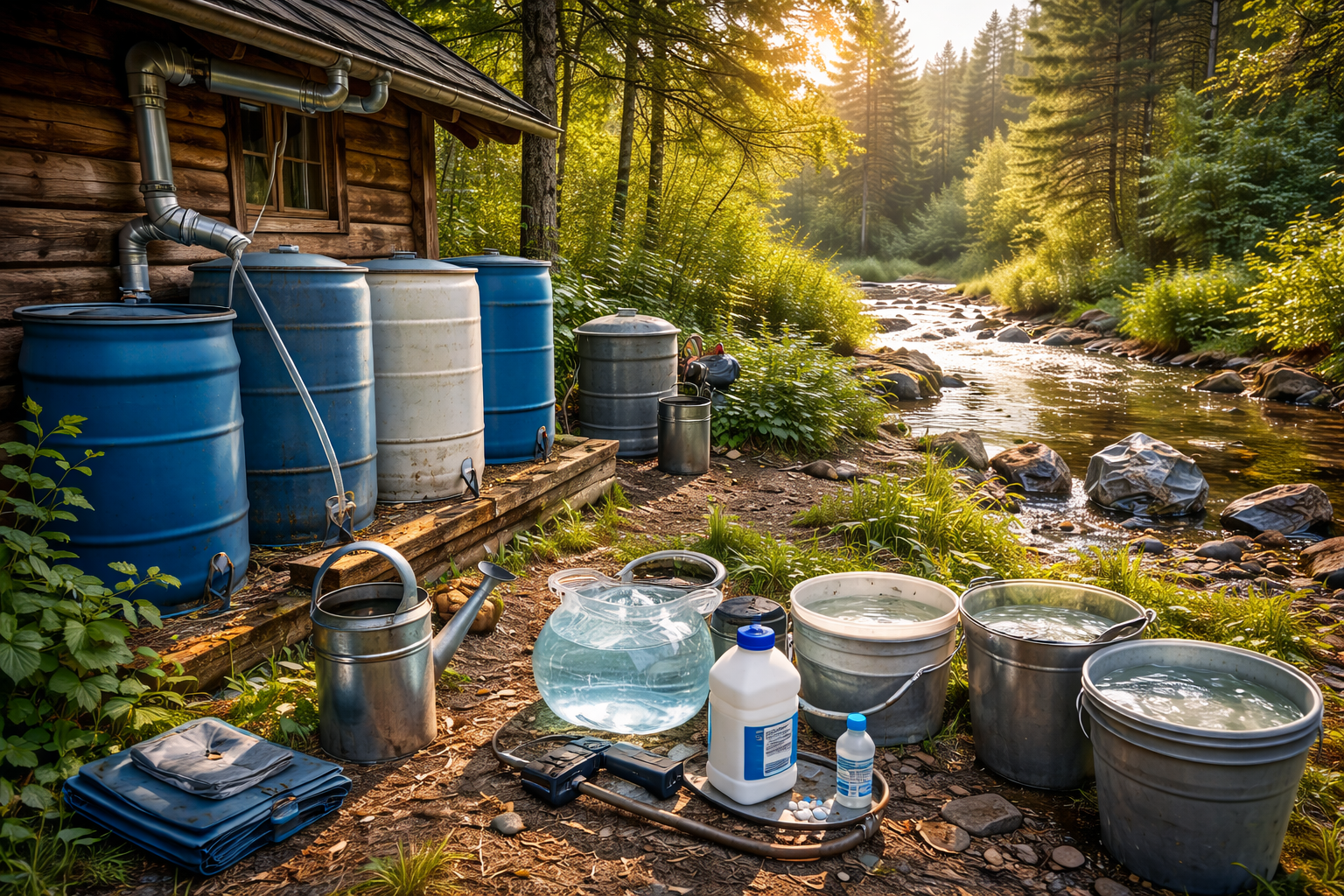
The Complete Prepper Guide to Water Security
Water is not just another prep.
It is the prep.
You can survive weeks without food.
You won’t last more than a few days without water.
And the biggest mistake people make?
They assume it will always be there.
The Reality: Water Systems Are Fragile
Modern water systems depend on:
- Electricity
Treatment facilities
Chemical supply chains
Pumping infrastructure
When any of these fail: - Water pressure drops
Contamination risks increase
Supply can stop completely
When the tap stops, most people have less than 24 hours.
Step 1: Know Your Minimum Requirements
Forget guesses—use real numbers.
Baseline:
- 1 gallon per person per day (minimum)
- Realistic Preparedness:
- Drinking: 1 gallon
- Cooking: 0.5 gallon
- Hygiene (basic): 0.5–1 gallon
*Target: 2–3 gallons per person per day*
Step 2: Build a Layered Water System
Never rely on a single source.
Layer 1: Stored Water (Immediate Access)
This buys you time.
Options:
- Bottled water
- Water bricks / containers
- Food-grade barrels
- Best Practices:
- Store in a cool, dark place
- Rotate every 6–12 months
- Label dates
Goal: 2–4 weeks minimum supply
Layer 2: Water Collection (Sustainability)
When stored water runs out, this matters.
Sources:
- Rainwater collection systems
- Nearby lakes, rivers, streams
- Snow (in cold climates)
Setup:
- Gutters → barrels
- First-flush diverters
- Covered storage
Water is everywhere—but not always usable
Layer 3: Filtration & Purification (Critical)
Most water sources are NOT safe to drink.
Primary Methods:
1. Filtration:
Removes bacteria, protozoa, debris
Examples: gravity filters, pump filters
2. Boiling:
Kills pathogens
Requires fuel
3. Chemical Treatment:
Bleach or purification tablets
Good backup option
Best practice: combine methods when possible
Step 3: Understand Water Threats
Not all water risks are obvious.
Common Dangers:
- Bacteria (E. coli, etc.)
- Parasites (Giardia, Cryptosporidium)
- Chemicals (industrial runoff, fuel leaks)
- Heavy metals
Filtration alone does NOT remove everything
Step 4: Water Storage Strategy (Advanced)
Water storage isn’t just volume—it’s access and rotation.
Smart Setup:
- Multiple smaller containers (not one large tank)
- Easy-to-carry options
- Separate drinking vs utility water
Hidden Risk:
- Stored water can degrade over time
- Containers can leach chemicals if not food-grade
Rotate and refresh regularly
Step 5: Water Transportation Planning
Most people overlook this.
Ask Yourself:
- How will you carry water if needed?
- How far is your nearest source?
- Solutions:
-Buckets with lids
-Water jugs with handles
-Carts or wagons
Water is heavy:
1 gallon = ~8.3 lbs
Step 6: Emergency Water Access Points
Know your environment.
Identify:
- Nearby rivers / lakes
- Community wells
- Rain catch potential
Map It:
-Distance
-Accessibility
-Seasonal reliability
Don’t figure this out during a crisis
Step 7: Hygiene Without Wasting Water
Water disappears fast if you’re not careful.
Conservation Tips:
Use wash basins instead of running water
Reuse greywater (where safe)
Prioritize drinking over everything
Waste is the fastest way to run out
Step 8: Backup Systems Most People Ignore
These are game changers.
Options:
Gravity-fed water systems
Manual well pumps
Portable filters in vehicles
Redundancy = survival
Step 9: Test Your Water Plan
Planning isn’t enough.
Do This:
Turn off your water for 24–72 hours
Use only stored + collected water
Track usage
This reveals your weak points fast
Step 10: The Mindset Shift
Water preparedness isn’t about stockpiling.
It’s about:
- Access
Purification
Sustainability
Efficiency
Most people think:
“I have water.”
Preppers think:
“How long can I keep having water?”
What You Can Do Today
Start immediately.
Today:
-Store at least 3–7 days of water
-Buy a basic water filter
-Identify your nearest water source
This Week:
-Set up rain collection
-Learn purification methods
-Build a simple rotation system
This Month:
-Expand storage
-Test your system
-Add redundancy
Final Thought
Water is the first system to fail—and the fastest to become critical.
When it’s gone:
Panic starts
Mistakes happen
Risk increases
Prepared people don’t scramble.
They already have a plan.