
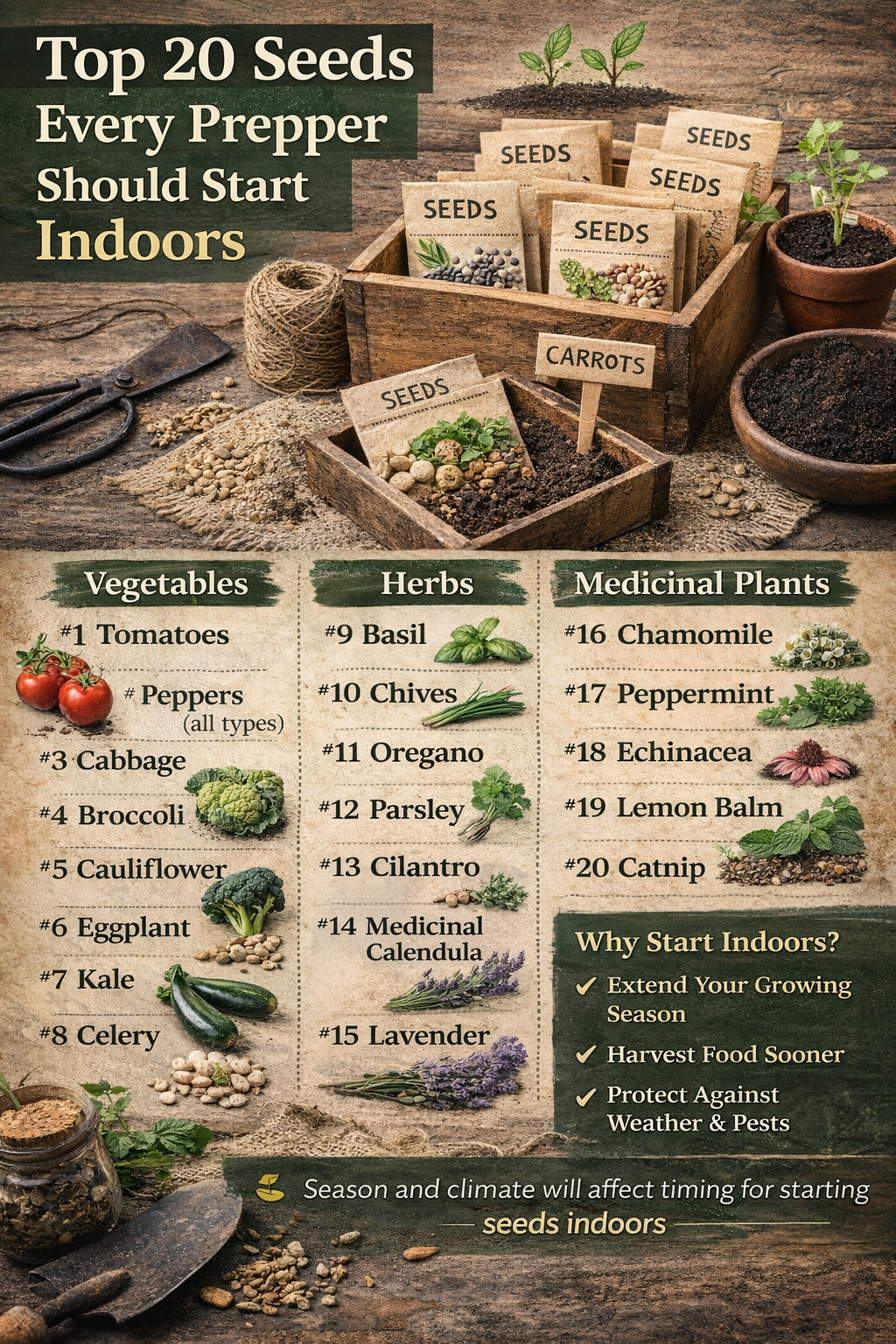
Starting seeds indoors is one of the most valuable skills for anyone interested in gardening, homesteading, or preparedness. By starting seeds early, you extend your growing season, produce stronger plants, and ensure a reliable food supply even when garden centers or seed availability become limited.
For preppers, seed starting is about self-reliance. If supply chains fail or food becomes more expensive, having the ability to grow your own food becomes incredibly valuable.
Here are 20 seeds every prepper should consider starting indoors to build a productive and resilient garden.
Vegetables for Reliable Food Production
1. Tomatoes
Tomatoes are one of the most productive crops you can grow. They store well as sauces, canned goods, and dried foods.
2. Peppers
Peppers are versatile and nutritious. Both sweet peppers and hot peppers grow well when started indoors early.
3. Cabbage
Cabbage is extremely hardy and can produce large yields. It stores well and can be fermented into sauerkraut or kimchi.
4. Broccoli
Broccoli is packed with nutrients and grows well in cooler weather conditions.
5. Cauliflower
A great addition to survival gardens because it provides dense nutrition in a single harvest.
6. Eggplant
Eggplants require a longer growing season, making indoor seed starting especially useful.
7. Kale
Kale is one of the most resilient vegetables. It tolerates cold temperatures and provides continuous harvests.
8. Celery
Celery takes a long time to mature, so starting indoors is essential for good yields.
Herbs for Food and Medicine
9. Basil
Basil grows quickly indoors and is perfect for cooking, preservation, and companion planting.
10. Chives
Chives are hardy herbs that grow easily and can return year after year.
11. Oregano
Oregano is a powerful culinary herb with natural antibacterial properties.
12. Parsley
Parsley is rich in vitamins and can be harvested repeatedly throughout the season.
13. Cilantro
Cilantro grows quickly and provides both leaves and seeds (coriander).
14. Calendula
Calendula is often used in herbal remedies, skin creams, and teas.
15. Lavender
Lavender has calming properties and is commonly used in herbal preparations.
Medicinal and Survival Herbs
16. Chamomile
Chamomile is known for its calming effects and is widely used in teas.
17. Peppermint
Peppermint can support digestion and is useful for teas and herbal remedies.
18. Echinacea
Echinacea has long been used to support the immune system.
19. Lemon Balm
Lemon balm is a soothing herb that can help with relaxation and stress.
20. Catnip
Catnip is part of the mint family and has traditional uses in herbal teas.
Why Preppers Start Seeds Indoors
Starting seeds indoors offers several advantages:
Longer growing season
You can begin growing plants weeks before outdoor planting is possible.
Stronger plants
Seedlings started indoors are often healthier and more resilient.
Greater food security
You control the entire growing process from seed to harvest.
Protection from pests and weather
Young plants can grow safely indoors before being transplanted.
Tips for Successful Indoor Seed Starting
• Use quality seed starting soil
• Provide strong light or grow lights
• Keep soil moist but not waterlogged
• Maintain proper temperatures for germination
• Transplant seedlings gradually to outdoor conditions
Final Thoughts
Seeds are one of the most powerful preparedness tools available. A small packet of seeds can produce hundreds of pounds of food over time.
By learning how to start seeds indoors and selecting crops that provide nutrition, medicinal value, and resilience, you can create a garden that supports your family for years to come.