 Financial Threats is a news and information topic monitored and covered by: Prepper Watch – Wealth and Finance
Introduction: A New Financial Reality
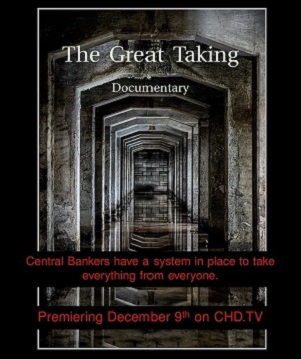
In an era where economic instability is often discussed in hushed tones, one book stands out in its exploration of the inevitable collapse of global finance: The Great Taking by David Webb.
This book delves into the shifting landscape of global finance, drawing attention to the systemic risks, market manipulation, and the economic strategies that threaten the financial sovereignty of individuals and nations alike.
For preppers, the concepts presented in this book hold particular significance, as they offer an insightful look into how such a collapse may impact personal wealth, preparedness strategies, and the future of financial autonomy.
This Posting will explore the themes presented in The Great Taking, discuss its potential impact on financial preppers, and provide key takeaways for those who wish to be financially prepared in an ever-changing world.
Watch the documentary video or get your free PDF copy at TheGreatTaking.com
The Premise of The Great Taking
The Great Taking explores the notion that the world is headed toward an economic reckoning, one where individuals will lose control of their wealth and assets, not through war or revolution, but through financial policies, market manipulation, and systemic collapse.
 Webb argues that the mechanisms of global finance have become so interwoven with government intervention, market distortion, and the pursuit of wealth by a few at the top, that a “Great Taking” is inevitable. The book paints a picture of a world where ordinary citizens are stripped of their assets, often through methods that are too subtle to notice until it’s too late.
Webb warns that the financial systems are increasingly becoming mechanisms for the wealthy elite to further entrench their power and control, leaving the average person vulnerable to economic collapse. For preppers, this is not just a theoretical warning; it’s a clarion call to prepare for the long-term survival of not just the body, but the financial future as well.
The Mechanics of the “Great Taking”
At the core of The Great Taking is the idea that a small group of wealthy elites control the global financial system, which is rigged in their favor.
 These elites, through central banks, multinational corporations, and government collusion, have created a system where financial policies are designed to benefit the few at the expense of the many. Webb outlines several ways in which this manipulation is carried out:
-
Debt-based Economies: The global reliance on debt—particularly sovereign debt—creates a situation where nations, businesses, and individuals are beholden to large financial institutions. The more debt there is, the more interest is accrued, making it nearly impossible to escape from the cycle.
-
Currency Manipulation: Central banks have the power to print money, which, while ostensibly done to stimulate the economy, has the effect of diluting the value of money and causing inflation. This erosion of purchasing power leads to a loss of financial sovereignty for individuals.
-
Bailouts and Crises: In times of economic crisis, rather than allowing markets to correct themselves, governments and central banks intervene to “save” the financial system. These interventions often come at the expense of the average citizen, who pays for the bailouts through taxes, inflation, and devaluation of savings.
For preppers, these systems represent a threat to the financial stability and independence that many strive to achieve. The manipulation of currencies and the debt-driven economy create an unstable foundation for anyone relying on the current system for wealth preservation.
The Impact on Financial Preppers
 Financial preppers, individuals who seek to protect their wealth through tangible assets like precious metals, cryptocurrencies, land, and other forms of value storage, may find themselves increasingly at odds with the traditional financial system. Webb’s warnings resonate strongly with these preppers because the very system they are preparing to avoid is the one that threatens their future wealth. The core themes of The Great Taking highlight why it’s essential for financial preppers to take specific actions:
-
Diversification of Assets: One of the main takeaways from The Great Taking is the importance of asset diversification. Webb suggests that holding all wealth in one form—whether that’s stocks, bonds, or savings in a bank—leaves individuals vulnerable to systemic collapse. For preppers, this means not only stockpiling tangible goods and emergency supplies but also investing in precious metals, land, cryptocurrencies, and other assets that are not tied to the traditional financial system.
-
Physical Assets Over Digital: The book underscores that while digital currencies like Bitcoin offer a hedge against inflation and financial instability, they are still subject to government regulation and market manipulation. Financial preppers should take heed of Webb’s argument that physical assets—gold, silver, land, and barterable goods—are the true forms of wealth that can survive systemic financial collapse.
-
Self-Sufficiency: Webb’s examination of the financial system encourages preppers to build a life that is less reliant on external economic forces. For financial preppers, this might mean investing in sustainable farming, off-grid energy systems, and other methods of creating self-sufficiency. The less one depends on external markets, the less vulnerable they are to the shocks of economic crises.
Historical Precedents of Financial Collapse
 In The Great Taking, Webb draws on several historical examples of financial collapses, both local and global, to illustrate the patterns of economic manipulation and wealth redistribution. These examples include the hyperinflation experienced in Germany during the Weimar Republic, the collapse of the Soviet Union, and the financial crises of the late 2000s. Each of these events, Webb argues, offers a blueprint for understanding how the current financial system could similarly unravel.
For preppers, these historical precedents offer valuable lessons. The key takeaway is that financial collapse doesn’t always happen suddenly; rather, it is often a gradual process that builds over time, as governments and financial institutions become more deeply involved in the economy. Recognizing the signs of this slow burn can give financial preppers a crucial head start in their preparations.
How to Prepare for The Great Taking
Webb offers several practical steps for individuals looking to safeguard themselves from the coming economic crisis:
-
 Invest in Tangible Assets: As mentioned earlier, Webb advocates for investing in physical assets that are not easily manipulated by financial elites. This includes precious metals, land, and tangible goods that can be used for trade or barter in times of crisis.
 -
 Reduce Debt: The less debt an individual carries, the less vulnerable they are to inflation, interest rate hikes, and economic crashes. Preppers should work to pay down high-interest debt and avoid taking on new, unnecessary obligations.
 -
 Prepare for Economic Uncertainty: Webb advises that individuals prepare for a future where economic systems may no longer function as they once did. This means not only preparing for the loss of traditional wealth but also understanding how to navigate an economy that may be less predictable and more volatile.
 -
 Establish Alternative Economies: For preppers, creating networks of exchange through barter, mutual assistance, and local trade is an essential step. Webb emphasizes that these alternative systems of wealth exchange will become more important as the traditional financial system falters.
The Psychological Impact of the Collapse
 While the financial implications of The Great Taking are clear, Webb also explores the psychological impact of financial collapse. When individuals lose access to their savings and wealth, it creates a profound sense of loss and insecurity. Preppers, who are accustomed to anticipating crisis, may fare better in these situations, but even they must recognize the emotional toll of a financial collapse.
For preppers, Webb’s psychological insights are a reminder that survival is not just about physical security, but also about mental and emotional resilience. Preparing for a future of economic instability means not only having tangible assets and strategies but also having the mindset to navigate uncertainty and loss.
Conclusion: A Call to Action for Financial Preppers
 The Great Taking is a powerful wake-up call for financial preppers. It paints a stark picture of the dangers posed by a financial system rigged against the majority, and it emphasizes the importance of preparing for an economic future that could be radically different from what we know today. By diversifying assets, building self-sufficiency, and understanding the history of financial collapses, preppers can better position themselves to survive and thrive in an uncertain world.
Incorporating the lessons from The Great Taking into financial prepper strategies can help individuals maintain their wealth and financial independence, even when faced with global economic shifts. By preparing for the worst and building alternative systems of wealth and exchange, preppers can ensure that they are not part of the next “Great Taking,” but rather, part of a resilient community prepared to weather whatever financial storms lie ahead.