
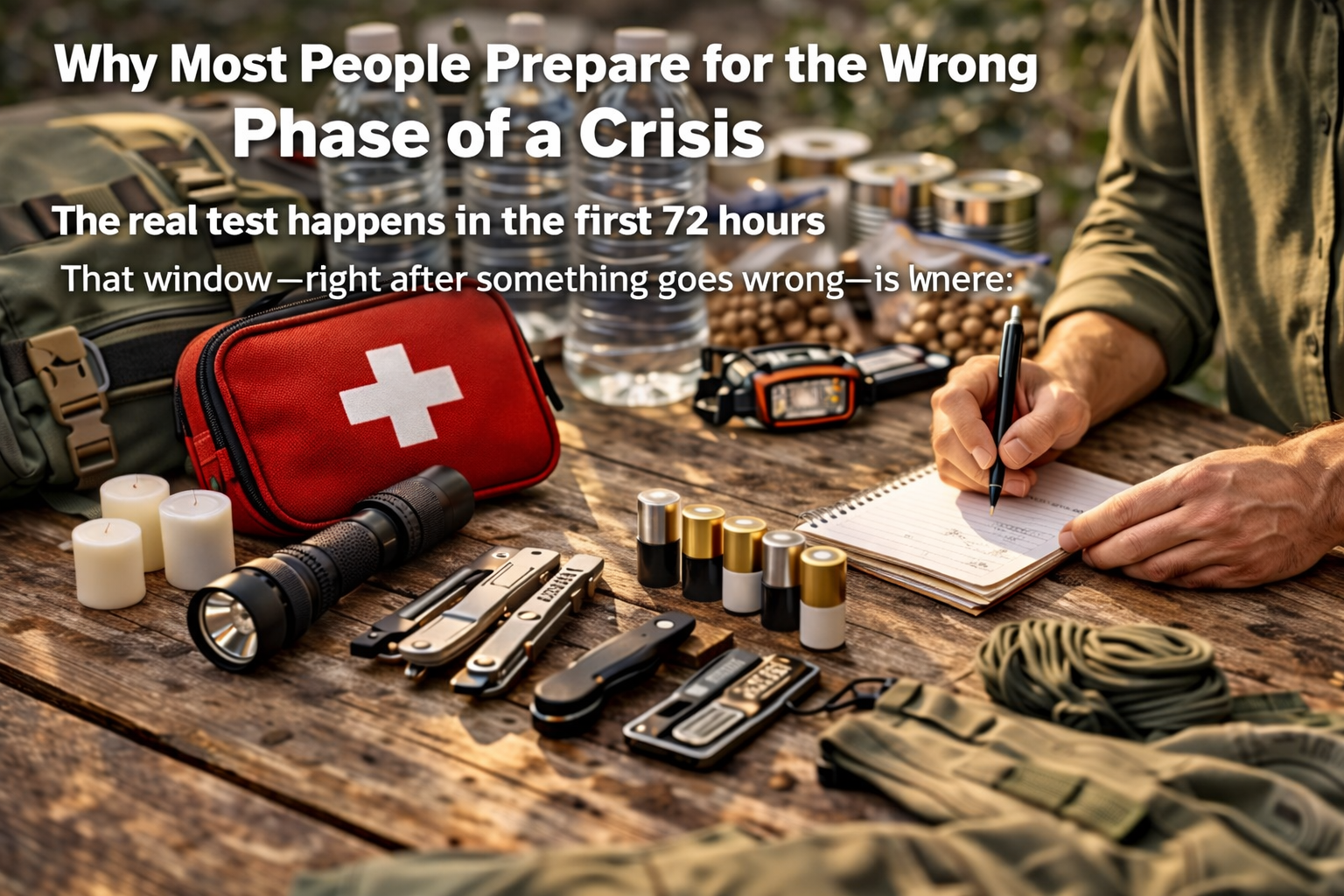
Why Most People Prepare for the Wrong Phase of a Crisis
When people think about preparedness, they usually picture long-term survival.
- Months of food.
- Off-grid systems.
- Total independence.
But that’s not where most situations begin.
The real test happens in the first 72 hours
That window – right after something goes wrong – is where:
- systems fail
- confusion is highest
- and most people realize they’re not ready
This is the phase that determines whether you stabilize… or spiral.
The Reality Most People Ignore
In a serious disruption, help doesn’t arrive immediately.
- Emergency services get overwhelmed.
- Supply chains pause or break.
- Information becomes unreliable or delayed.
You’re on your own—at least for a while.
Preparedness at this stage isn’t about thriving.
It’s about holding things together long enough to regain control
Water Comes First – Always
Nothing becomes critical faster than water.
Not just for drinking – but for:
- basic hygiene
- food prep
- staying functional
A simple rule most experienced preppers follow:
Have enough for several days without relying on outside sources
Because once systems stop flowing, access becomes unpredictable very quickly
Food: Keep It Simple and Ready
During the first phase of a crisis, complexity is your enemy.
You don’t want:
- long cooking times
- complicated prep
- heavy fuel use
You want food that is:
- ready to eat
- easy to prepare
- reliable under stress
This isn’t about variety.
It’s about consistency and simplicity when your focus is elsewhere
Light and Information Are Force Multipliers
When the power goes out, everything changes.
- Darkness slows you down.
- Confusion increases.
- Situational awareness drops.
That’s why two things matter more than people expect:
- Reliable lighting
- Independent information sources
When digital systems fail, even basic updates become hard to get.
Having a way to stay informed – even in a limited way – keeps you ahead of most people
Medical Isn’t Optional
In the early stages of a disruption, even small injuries become serious.
Because:
- clinics may be closed
- response times increase
- resources are limited
Basic medical capability means:
- handling minor injuries
- preventing infection
- stabilizing until help is available
This is one of the fastest ways a situation can get worse if ignored
Air, Environment, and Protection
Most people don’t think about air quality.
But in many situations – fires, debris, industrial issues – it becomes a real factor.
Having even basic protection can:
- reduce exposure
- improve breathing conditions
- keep you functional
It’s not something people prioritize…until they need it.
Shelter and Control of Your Space
You don’t always need to leave.
Sometimes the priority is:
- sealing your environment
- maintaining a safe space
- controlling what comes in and out
Simple materials can make a big difference in:
- temperature control
- contamination prevention
- overall safety
This is about buying time and stability.
Sanitation Becomes a Bigger Issue Than Expected
When systems stop working, waste management becomes immediate.
Without planning, things degrade fast:
- hygiene drops
- illness spreads
- living conditions decline
Basic sanitation supplies help you:
- maintain cleanliness
- manage waste
- reduce health risks
This is one of the fastest ways situations spiral if ignored
Communication Without Infrastructure
Most people assume they can:
- call
- text
- check updates
But those systems rely on infrastructure that may not be available.
Having a simple plan matters:
- Where do you meet?
- How do you reconnect?
- What happens if communication fails?
Because separation is one of the most common problems in real emergencies
Navigation Without Technology
- No GPS.
- No apps.
- No live updates.
If movement becomes necessary, you need:
- awareness of your area
- basic navigation ability
- backup methods
This is something most people overlook completely—until they can’t rely on their phone.
Power: Small but Critical
You don’t need a full system right away.
But even small amounts of backup power can:
- keep essential devices running
- provide light
- maintain limited communication
It’s not about convenience.
It’s about maintaining just enough capability to stay functional
The Biggest Takeaway
Most people prepare for:
- long-term survival
- extreme scenarios
But fail to prepare for:
the first few days when everything is unstable
That’s where:
- stress is highest
- decisions matter most
- and mistakes compound quickly
What You Should Do Next
Look at your setup and ask:
- Can I function for 72 hours without outside help?
- Can I stay stable—not just survive?
- Can I adapt if things don’t go as expected?
That’s the real test.
Community Discussion
What’s one thing you added to your setup that made you feel more prepared for the first 72 hours?
Or…
What’s something you realized you were missing after thinking this through?
Final Thought
Preparedness isn’t just about how long you can last.
It’s about how well you handle the moment everything changes
Because if you can stay steady in the first 72 hours…
everything after that becomes easier to manage.