
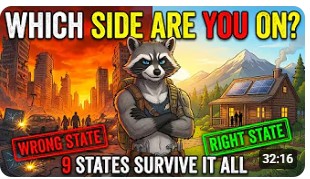
🗺️ 50 states. Millions of people.
But location changes everything.
Most people focus on gear, supplies, and stockpiles…
📦 Food
🔋 Power backups
🛠️ Equipment
But one factor quietly outweighs them all:
📍 Geography.
You can have years of supplies —
but if you’re in the wrong place during a major disruption, your risks multiply fast.
📊 After reviewing disaster patterns, infrastructure data, population density, and environmental risks, one thing becomes clear:
Not all locations are equal when systems fail.
⚡ When the grid goes down, location determines:
🚰 Access to water
🌾 Ability to grow food
🧭 Distance from major population centers
🏥 Access to basic services
🤝 Strength of local community networks
🧠 The key filters serious planners often look at:
🌪️ Natural disaster exposure
💧 Water security
🏞️ Land and resource access
⚖️ Legal environment for self-reliance
🔌 Off-grid viability
👥 Community resilience
Because preparedness isn’t just about what you own —
it’s about where you are when things go wrong.
🏙️ A city with millions of people = faster shortages
🏜️ Extreme climates = higher survival stress
🏔️ Remote areas = more independence but fewer services
⚖️ There are always trade-offs:
❄️ Cold regions = harsh winters but lower population density
🌲 Rural zones = more self-reliance but more isolation
🌾 Agricultural regions = food potential but seasonal limits
🌍 And it’s not just a national issue.
Globally, studies on resilience often point to:
🌱 Food production capacity
💧 Fresh water access
🔋 Energy independence
🧑🌾 Strong local culture of self-sufficiency
🧭 The bigger takeaway:
Preparedness isn’t just gear planning.
It’s life planning.
📦 Supplies can run out.
🧰 Skills can be learned.
📍 But location is much harder to change later.
🚨 Hard truth:
The same disaster affects different regions in completely different ways.
Some areas recover quickly.
Others face long-term disruption.
💬 Real question:
Is your current location strengthening your preparedness…
or quietly working against it?