
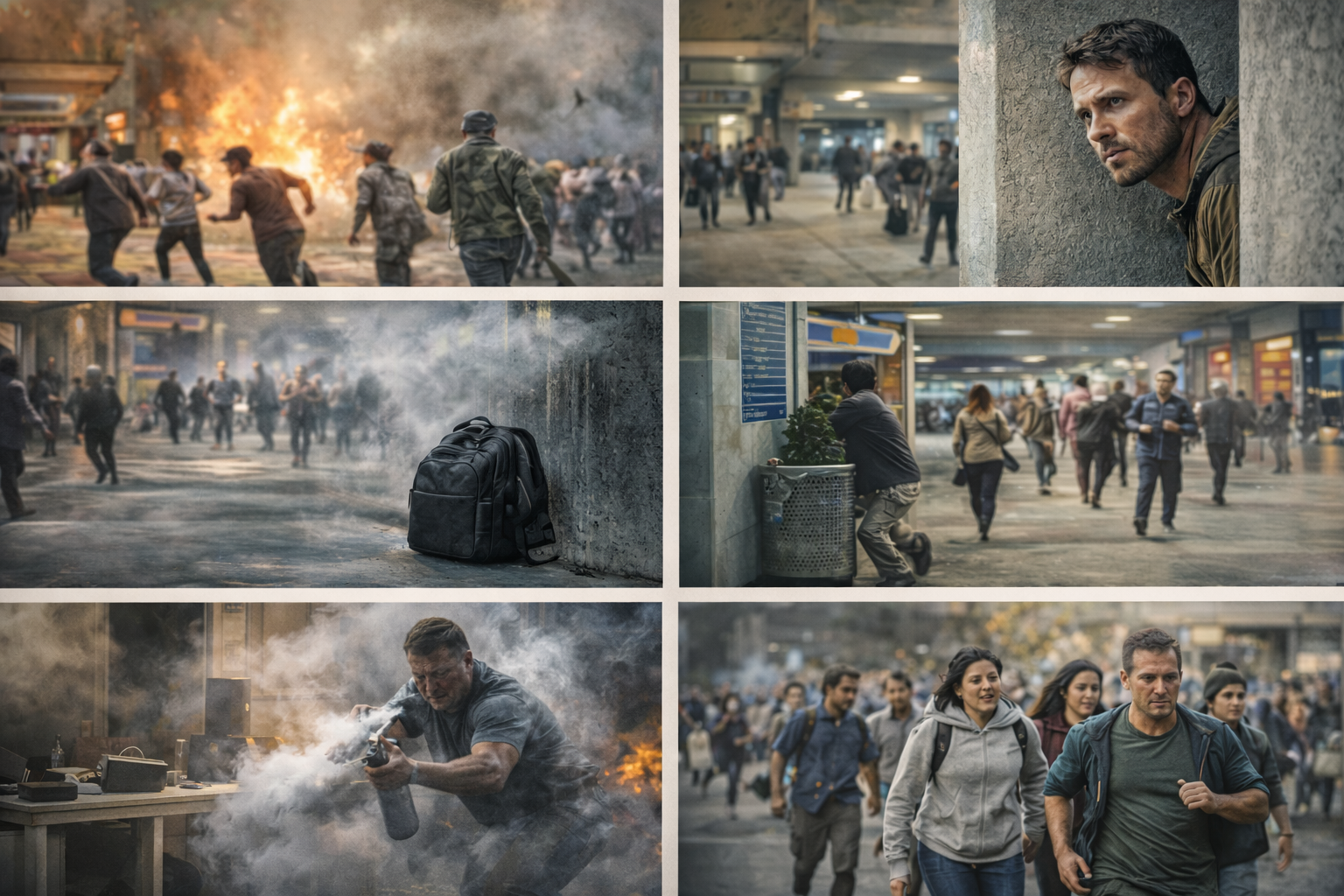
In today’s world, not every threat comes with a warning.
Some situations unfold fast – too fast to think things through in the moment.
And when that happens, survival doesn’t come down to luck…
It comes down to mindset, awareness, and action.
This isn’t about fear.
It’s about being prepared enough to stay in control when others freeze.
The First Weapon: Your Mindset
Before anything else, survival starts in your head.
In a high-stress situation, most people panic. They freeze, hesitate, or follow the crowd without thinking. That delay can cost seconds—and seconds matter.
The goal is simple:
Stay calm
Stay focused
Act quickly
You’re not there to figure out why something is happening.
You’re there to get yourself and others out safely.
Training your mind ahead of time—through awareness, repetition, and even simple mental scenarios—makes a huge difference when it counts.
Situational Awareness: Your Early Warning System
Most people move through life on autopilot.
Head down. Distracted. Unaware.
That’s the opposite of what you want.
Situational awareness means:
Noticing exits when you enter a space
Being aware of unusual behavior or objects
Understanding what “normal” looks like in an environment
When something breaks that pattern, it gives you an early signal.
And early signals give you time.
Even a few seconds of awareness can mean the difference between being trapped… or already moving toward safety.
The Rule of Three: Run, Hide, Act
When a dangerous situation unfolds, your response should follow a clear priority.
1. Get Out (Run)
Your first goal is distance.
Move away from the threat immediately
Don’t stop to grab belongings
Use any available exit—even if it’s not the main one
The farther you are, the safer you are.
2. Stay Out of Sight (Hide)
If you can’t escape, your next move is to disappear.
Find solid cover (not just concealment)
Stay quiet and out of view
Silence devices
Block access if possible
The goal is simple: don’t be seen, don’t be found.
3. Last Resort (Act)
If you’re directly confronted and have no other option, you must act.
This doesn’t mean rushing in—it means doing whatever is necessary to create an opportunity to survive.
Use your surroundings
Create distractions
Work with others if possible
In these moments, hesitation is dangerous.
Decisive action—even imperfect—is often what creates a way out.
Physical and Mental Readiness
Plans are only useful if you can execute them.
Ask yourself:
Can you move quickly under stress?
Can you help someone else if needed?
Can you stay focused when things get chaotic?
Physical fitness improves your ability to react.
Mental resilience helps you stay clear-headed when others panic.
Both matter.
After the Immediate Danger
One of the biggest mistakes people make is stopping too soon.
Just because you’ve moved away from the initial threat doesn’t mean you’re safe yet.
You should:
Continue moving away from the area
Stay alert for additional risks
Avoid gathering in large, visible groups
Keep scanning your surroundings
Your goal isn’t just to escape—it’s to reach a place where you are clearly out of danger.
The Reality Most People Ignore
Events like this are unpredictable.
You can’t control when or where something happens.
But you can control how prepared you are when it does.
Preparation isn’t about living in fear.
It’s about:
Thinking ahead
Staying aware
Having a plan
Because in the moment, you won’t have time to figure it out.
Final Thought
Survival in a sudden crisis comes down to three things:
Awareness
Decision-making
Action
The people who make it through aren’t always the strongest or fastest.
They’re the ones who:
Notice early
Move quickly
Stay focused
And most importantly…
They don’t freeze.