
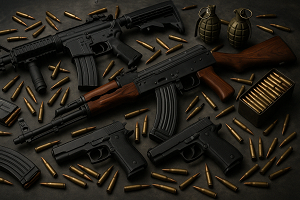
 Weapons Proliferation is a news and information topic monitored and covered by: Prepper Watch – Security and Safety
Understanding Weapons Proliferation as a Threat to Preppers
Weapons proliferation refers to the rapid spread and accessibility of weapons—ranging from small arms to sophisticated military-grade tools—across populations, both legal and illegal. In modern society, this phenomenon is no longer limited to war zones or black markets. Due to political unrest, societal breakdowns, and mass production, firearms and other deadly tools are more accessible than ever.
For preppers, this surge in weapon availability isn’t just a political or legal issue—it’s a survival concern. When society teeters on collapse, more weapons in more hands can dramatically escalate violence, theft, and civil conflict. A prepper must be ready to protect their resources and lives while avoiding unnecessary conflict or visibility.
Types of Weapons Common in Civil Unrest Scenarios
Understanding what kinds of weapons may be circulating is vital for effective prep. Some commonly encountered in post-collapse or unrest environments include:
- Small Arms: Pistols, revolvers, and semi-automatic handguns.
- Long Guns: Shotguns, hunting rifles, and semi-automatic rifles.
- Improvised Weapons: Molotov cocktails, makeshift explosives, clubs.
- Military Surplus: Ex-military gear like tactical vests, scopes, or even automatic weapons (in rare cases).
- Bladed Weapons: Knives, machetes, swords—often easier to obtain than guns in restricted regions.
- Non-lethal Tech: Pepper spray, stun guns, beanbag rounds—often used for defense but can still incapacitate or kill.
Preppers must familiarize themselves with how these weapons function, the threats they pose, and how to protect against them.
Situational Awareness in an Armed Society
As the number of weapons increases, the ability to read situations, people, and environments becomes a life-saving skill. Preppers should hone the following:
- Risk Assessment: Gauge whether a group or person is armed or hostile.
- Crowd Behavior: Learn how to detect agitation or the build-up to violence in groups.
- Territorial Awareness: Know where gang activity, militia presence, or criminal factions operate.
- Threat Mapping: Use local intelligence, ham radio chatter, or online forums to identify conflict zones.
Practicing this awareness daily—even during peacetime—can save your life when things fall apart.
Defense Without Provocation – Maintaining a Low Profile
Increased weapon availability means increased chances of random or targeted violence. Avoiding becoming a target is more important than looking “tough.”
Key low-profile strategies:
- Avoid Tactical Overdisplay: Wearing camouflage and carrying visible firearms may attract unwanted attention.
- Grey Man Concept: Blend in with the environment; avoid standing out or revealing your prepper status.
- Silent Movement: Learn how to travel undetected—especially at night or in wooded/urban ruins.
- Secure Perimeter, Not Fortresses: Reinforce your bug-in or bug-out location discreetly.
In a world where almost anyone can be armed, invisibility often trumps intimidation.
Fortifying Your Home or Bug-Out Location
Security must evolve in response to the risk of armed conflict. Preppers should take a layered approach to defend their home base:
Physical Layers:
- Barriers and Fencing: Concealed, reinforced, and non-aggressive in appearance.
- Early Warning Systems: Motion detectors, alarms, trip wires with flares or noise alerts.
- Safe Rooms and Concealment: A hardened room for last-resort defense or escape.
- Camouflaged Entrances: Prevent easy identification of doors, windows, or escape hatches.
Psychological Layers:
- Deception: Fake signs, false entryways, or “booby trap” warnings can deter without actual danger.
- Routine Diversion: Avoid consistent patterns that can be tracked and exploited.
Always remember: the best defense is the one you never have to use.
Arming Yourself – Training, Tools, and Ethics
While a pacifist approach may seem noble, refusing to carry or train with weapons in a world of rising violence can be dangerous. Preppers must balance readiness with responsibility.
Essential considerations:
- Weapons Training: Firearm safety, accuracy, maintenance, and laws.
- Defensive Use Mindset: Be mentally prepared to use force only as a last resort.
- Less-Lethal Options: Pepper spray, collapsible batons, rubber bullets.
- Ethics and Responsibility: Understand when force is justified and when to retreat.
Regular training improves muscle memory, decision-making, and survival under stress.
Group Security and Militia Threats
In many collapse scenarios, armed groups will form—some benevolent, some predatory. Preppers must be prepared to navigate this uncertain terrain.
How to respond:
- Form Trusted Circles: Join or build Mutual Assistance Groups (MAGs) with strong vetting.
- Plan Defense Rotations: Shared security duties in your community or homestead.
- Have Escape Plans: Always maintain a Plan B and Plan C if a location becomes too dangerous.
- Diplomatic Skill: Not every conflict needs to end in violence. Negotiation and resource-sharing may prevent bloodshed.
Communities that defend together, survive longer.
Psychological Preparedness for Armed Conflict
Carrying a weapon and preparing for violence are both physical and psychological acts. Preppers must train their minds as much as their bodies.
Mental prep strategies:
- Stress Inoculation: Simulated high-stress drills build calm under pressure.
- Ethical Clarity: Know your personal thresholds for force and when you will act.
- Debrief and Reflect: After any hostile situation, regroup mentally and emotionally.
- Avoid the “Rambo” Mentality: Glory-seeking behavior gets people killed. Smart, calm, calculated survival is the goal.
Never underestimate the trauma that comes from real conflict, even for the well-prepared.
Long-Term Strategies Against Armed Collapse
Weapons proliferation is not just a short-term survival threat—it’s a long-term destabilizer. Preppers should plan beyond the initial weeks or months of unrest.
Strategies for sustained resilience:
- Ammo Preservation: Stockpile wisely and practice trigger discipline.
- Weapons Maintenance: Tools deteriorate—cleaning kits and spare parts are essential.
- Community Disarmament Talks: After collapse, a time may come to rebuild trust and reduce arms.
- Skill Diversification: Don’t rely solely on firepower—grow food, heal wounds, build shelter.
The more self-reliant your community becomes, the less it must rely on violence.
The Future of Prepping in an Armed World
As global instability grows, the likelihood of encountering armed civilians, criminals, and even rogue militias becomes greater. Preppers must accept that weapons proliferation isn’t just happening—it’s accelerating.
To survive this reality:
- Educate Yourself about the risks.
- Arm Responsibly and ethically.
- Secure Your Environment without provoking violence.
- Build Community that values life and protection—not domination.
Preparedness isn’t about creating warlords. It’s about safeguarding your loved ones and what you’ve built when society forgets the value of peace.