
Headquarters, Department of the Army, Washington, DC 2 May 1987Approved for public release; distribution is unlimited.
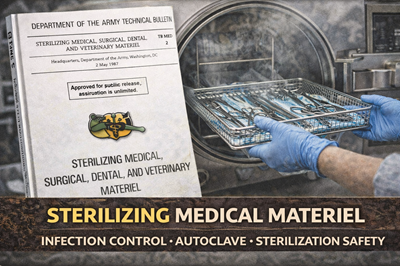
The Sterilizing Medical, Surgical, Dental, and Veterinary Materiel (TB MED 2) is a critical technical bulletin developed by the U.S. Army to ensure the safe and effective sterilization of medical equipment across a wide range of environments. Its primary objective is straightforward but vital: to guarantee that all medical supplies are properly sterilized, handled, and stored so they remain free from harmful microorganisms until the moment they are needed . In any setting where infection control matters—whether in a hospital, field clinic, or off-grid scenario—this manual provides the foundation for maintaining sterile conditions.
What sets this publication apart is its full-process approach to sterilization, not just the act of sterilizing itself. As outlined in Section II, it covers everything from initial cleaning and packaging to sterilization methods, monitoring, storage, and inventory control. The manual emphasizes that sterilization begins long before equipment enters a sterilizer—highlighting the importance of reducing “bioburden” through proper cleaning and ensuring packaging maintains sterility during transport and storage . This systems-level view ensures reliability at every stage, not just at the endpoint.
The guide also provides detailed insight into sterilization methods and safety protocols, including steam sterilization (the preferred method), chemical sterilization using ethylene oxide, and dry heat processes. It explains the advantages and risks of each, particularly noting the hazards of chemical sterilants and the need for proper training and environmental controls when using them . Additionally, it introduces critical monitoring systems—both chemical and biological—to verify that sterilization processes are working effectively, reinforcing that trust in sterile equipment must be backed by measurable validation.
Beyond traditional healthcare facilities, this manual has strong relevance for preppers, homesteaders, field medics, and anyone preparing for medical care in austere conditions. In environments where infection can spread quickly and resources are limited, understanding how to properly sterilize tools and supplies can mean the difference between recovery and serious complications. This publication transforms sterilization from a simple concept into a disciplined, repeatable process that ensures safety, reliability, and long-term medical capability in any situation.