
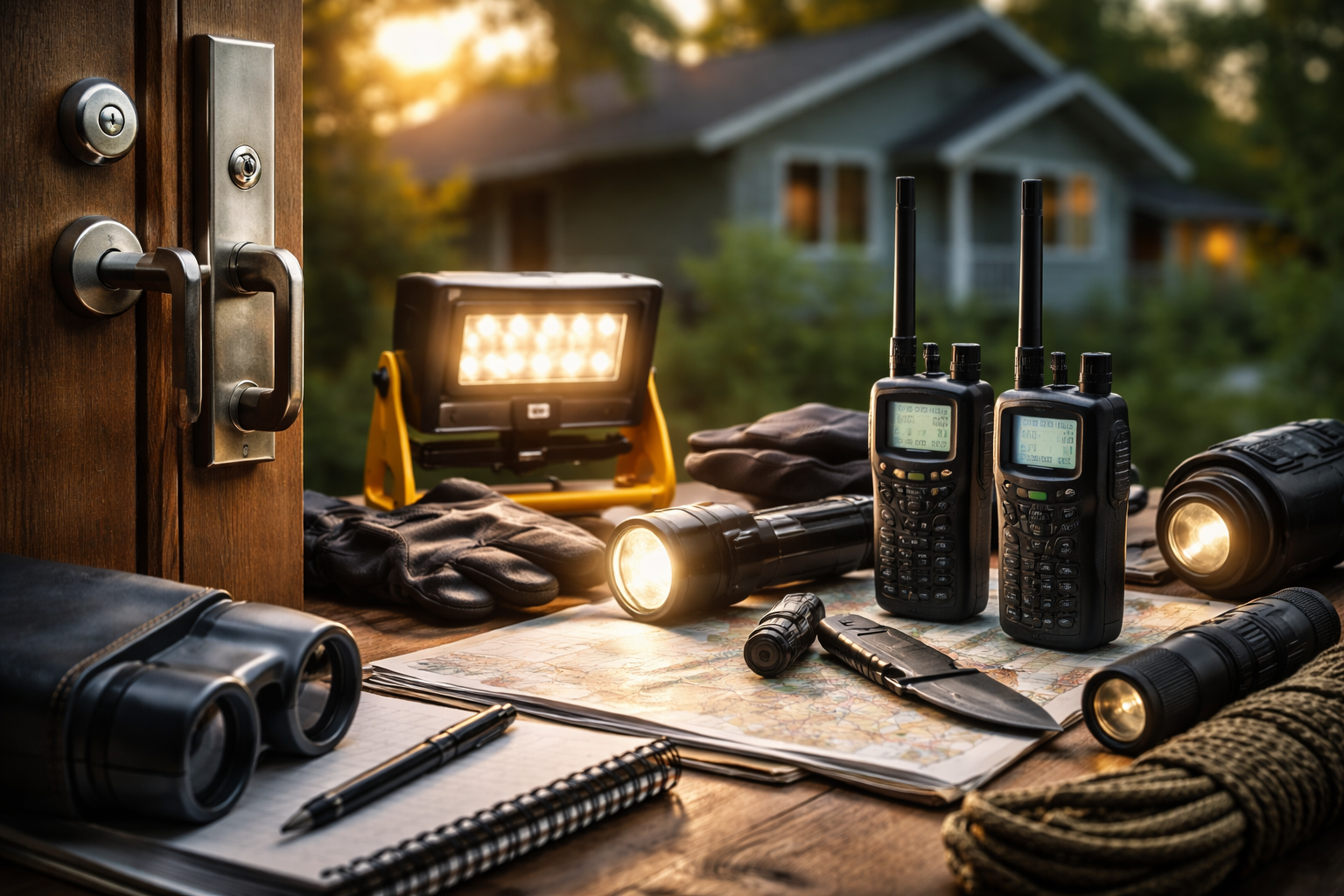
In stable times, most people rely on emergency services, law enforcement, and functioning infrastructure to maintain safety. However, during disasters or major disruptions—such as severe storms, long power outages, civil unrest, or supply chain breakdowns—those systems can become strained or temporarily unavailable. When that happens, households may need to rely more heavily on their own preparedness and the strength of their local community.
Security preparedness is not about expecting the worst from others. Instead, it focuses on prevention, awareness, and creating layers of protection that help keep families safe during uncertain situations. A well-prepared household looks at security as a combination of physical protection, communication, awareness, and cooperation with neighbors.
By strengthening entry points, improving visibility around the home, maintaining communication tools, and developing awareness skills, families can significantly improve their ability to stay safe during emergencies.
Door and Window Reinforcement
The first line of home security is the structure itself. Doors and windows are the most common points of entry into a home, so reinforcing them can greatly improve safety.
Exterior doors should ideally be solid-core or metal, rather than hollow interior-style doors. Strong deadbolt locks, reinforced strike plates, and long mounting screws help prevent doors from being forced open. Door frames should also be reinforced to ensure they can withstand pressure.
Windows should be equipped with secure locking mechanisms. Some homeowners choose to add security film, which strengthens the glass and makes it more resistant to shattering. Simple solutions like dowel rods placed in sliding windows or doors can also prevent forced opening.
Reinforcing entry points does not make a home impenetrable, but it can slow down potential intruders and discourage opportunistic activity. In many cases, visible security improvements alone act as a deterrent.
Outdoor Lighting
Lighting is one of the most effective ways to increase security around a property. Darkness provides cover for unwanted activity, while well-lit areas make it easier for residents to observe their surroundings.
Motion-activated lights are especially useful because they turn on automatically when movement is detected. These lights can be installed near entrances, driveways, garages, and pathways around the home.
Solar-powered lighting is particularly valuable during emergencies because it continues functioning even if the electrical grid goes down. Placing solar lights along walkways, fences, and entry points can maintain basic visibility throughout the night.
Proper lighting improves awareness and discourages suspicious activity around the home.
Communication Radios
Reliable communication becomes extremely important during emergencies. Cell phone networks and internet services can become overloaded or fail entirely during disasters.
Two-way radios allow families and neighbors to stay in contact even when other communication systems are unavailable. Handheld radios can be used to communicate within neighborhoods, between nearby homes, or during evacuation situations.
Some households also maintain longer-range radios that allow communication over greater distances. These systems can be useful for monitoring emergency information, weather alerts, or community updates.
Having communication tools available ensures that people can stay informed and coordinate with others during challenging situations.
Defensive Tools (According to Local Laws)
Some households choose to include defensive tools as part of their personal safety plan. The types of tools available vary depending on local laws and regulations, so it is important to understand and follow the rules in your area.
In addition to personal defense tools, many people focus on deterrence through alarm systems, cameras, or reinforced barriers. Responsible training and safe storage are critical for any security equipment.
The goal of defensive preparedness is to protect family members and discourage threats until normal services return. Preparedness should always prioritize safety, responsibility, and compliance with local laws.
Situational Awareness Training
Situational awareness is one of the most powerful security skills a person can develop. It involves paying attention to surroundings, recognizing unusual behavior, and responding calmly to potential risks.
Many people move through daily life without fully observing what is happening around them. Developing stronger awareness habits can significantly improve personal safety.
Situational awareness includes noticing unfamiliar vehicles in the neighborhood, recognizing changes in normal activity patterns, and paying attention to environmental cues that may indicate danger.
Training programs, self-defense courses, and emergency preparedness workshops often teach these awareness skills. The goal is not to create fear, but to build confidence and the ability to recognize problems early.
Community Security Planning
One of the most effective forms of security during emergencies is strong community cooperation. When neighbors know each other and communicate regularly, they can help watch out for potential problems and support one another.
Community preparedness groups often develop plans for communication, neighborhood watch efforts, and assistance for vulnerable residents during emergencies.
In rural areas or small towns, these relationships may already exist. In larger cities, building connections with nearby neighbors can significantly improve safety during disruptions.
Community planning might include shared communication channels, emergency contact lists, and coordination plans for responding to local issues.
Strong communities often recover from emergencies faster because people work together rather than facing challenges alone.
Building a Layered Security Plan
Effective security planning works best when multiple layers are combined. No single measure provides complete protection, but together they create a stronger and more resilient system.
A practical household security preparedness plan may include:
Reinforced doors and secure windows
Outdoor lighting that improves visibility
Communication radios for emergency contact
Legally compliant defensive tools where appropriate
Situational awareness training
Strong relationships with neighbors and community members
Each layer adds additional protection and helps households respond more effectively to unexpected situations.
Preparedness Creates Confidence
Security preparedness is not about living in fear. Instead, it is about understanding that emergencies can place stress on communities and systems.
By taking reasonable steps to protect homes and families, households can face disruptions with greater confidence and stability.
Preparedness encourages calm decision-making, better awareness, and stronger community relationships. When families strengthen their homes, stay informed, and support their neighbors, they create a safer environment for everyone.
Security and personal safety are important parts of emergency preparedness, helping ensure that families remain protected while navigating uncertain times.