
Across much of the modern world, agriculture has become highly industrialized. Large monoculture farms, chemical fertilizers, centralized distribution systems, and long-distance transportation networks dominate food production. While this system has increased efficiency and global output, it has also created environmental concerns and increased dependence on complex supply chains.
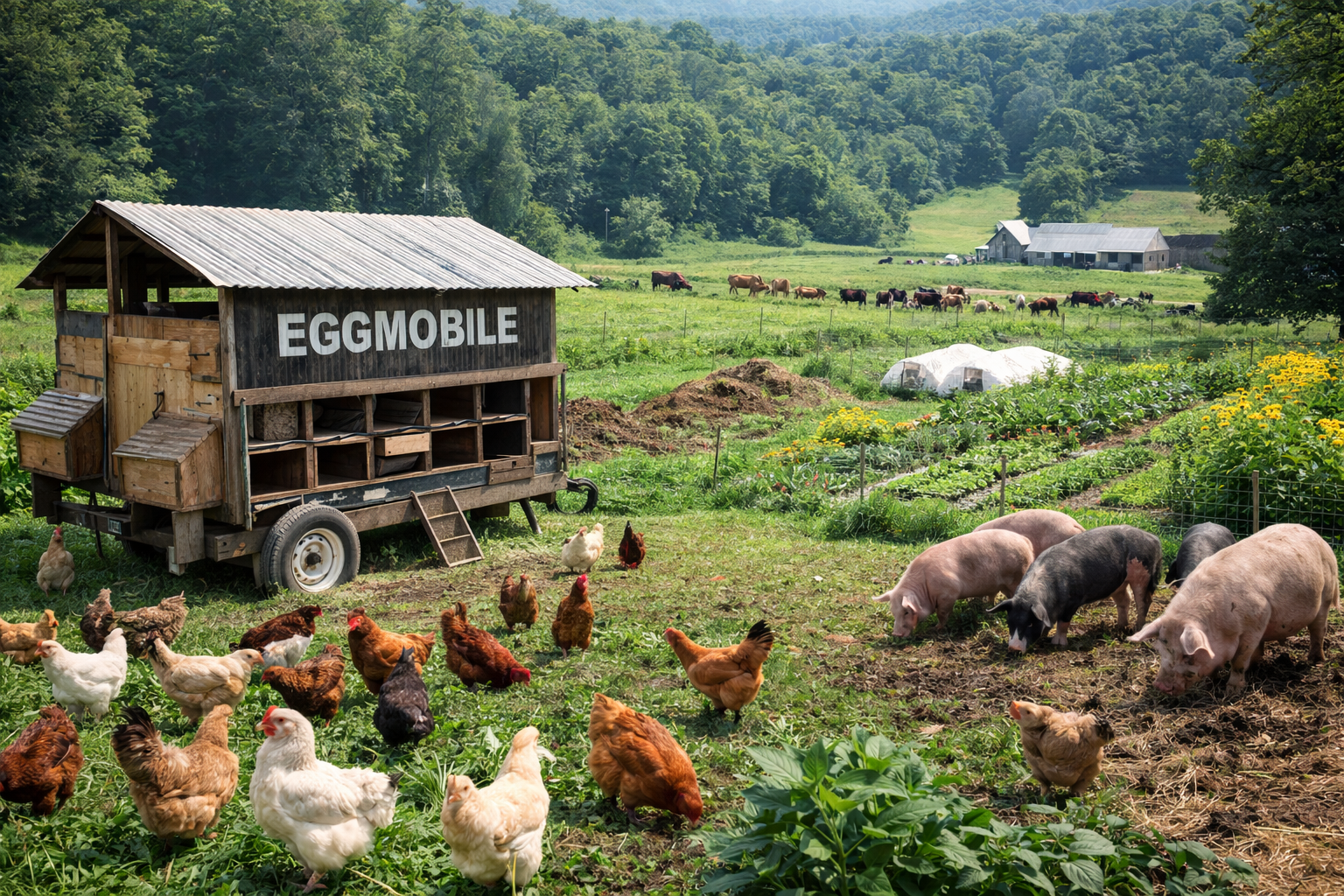
In response, many farmers, homesteaders, and food advocates are exploring regenerative agriculture—an approach that focuses on rebuilding soil health, increasing biodiversity, and producing food in ways that strengthen local ecosystems. One of the most influential examples of this approach comes from the farming model developed at Polyface Farms, where livestock and land management are designed to mimic natural ecological processes.
Rather than relying heavily on chemical inputs or centralized food systems, regenerative farming emphasizes working with natural cycles to produce healthy food while restoring the land.
The Foundations of Regenerative Agriculture
Regenerative farming begins with a simple idea: healthy soil is the foundation of healthy food systems. Soil is not just dirt—it is a living ecosystem filled with microorganisms, fungi, insects, and organic matter that work together to support plant life.
Industrial farming often disrupts this living system through repeated tilling, synthetic fertilizers, and pesticides. Over time, these practices can reduce soil fertility and increase dependence on external inputs.
Regenerative agriculture takes a different approach. It focuses on rebuilding soil biology by increasing organic matter, protecting microbial life, and using natural nutrient cycles. When soil health improves, farms often become more productive and resilient to droughts, pests, and weather extremes.
Moving Beyond Monoculture
Many large farms grow only a single crop over vast areas. While this approach simplifies large-scale mechanized farming, it also reduces biodiversity and increases vulnerability to disease or pests.
Regenerative farms instead rely on diversity. Crops, livestock, and natural vegetation are integrated into a balanced system that supports multiple species at once.
This diversity can improve soil health, reduce pest pressure naturally, and create multiple sources of farm income.
For example, a diversified farm may produce vegetables, pasture-raised eggs, grass-fed beef, and honey all within the same ecosystem.
Rotational Grazing and Land Recovery
One of the most powerful regenerative tools is rotational grazing. Instead of allowing animals to graze continuously on the same pasture, livestock are moved frequently between sections of land.
This strategy mimics the behavior of wild grazing animals that historically moved in large herds across grasslands.
When animals graze an area briefly and then move on, several benefits occur:
Plants have time to recover and grow stronger
Manure fertilizes the soil naturally
Root systems deepen, improving soil structure
Grasslands become more resilient to drought
Over time, properly managed grazing can increase soil carbon, improve water retention, and restore degraded land.
Multi-Species Farming Systems
Another feature of regenerative agriculture is the integration of multiple animal species on the same farm.
Each species plays a unique role in the ecosystem.
For example, cattle may graze pasture grasses first. After they move to a new area, chickens can follow behind them. The birds scratch through manure, spreading nutrients and consuming insects that thrive in the waste.
This process helps control pests naturally while distributing fertilizer across the field.
Other farms incorporate pigs, sheep, or goats to manage vegetation and recycle organic materials.
These layered systems allow animals to support one another while improving the health of the land.
Composting and Natural Fertility
Healthy soil depends on organic matter. Composting is one of the most effective ways to build that fertility naturally.
Organic waste such as manure, crop residues, leaves, and food scraps can be transformed into nutrient-rich compost. When returned to the soil, compost improves structure, feeds microorganisms, and increases long-term productivity.
Rather than relying on synthetic fertilizers, regenerative farms use compost and natural nutrient cycles to maintain soil health.
This approach reduces chemical dependence while improving long-term sustainability.
Building Local Food Networks
Regenerative agriculture often pairs well with local food systems. Instead of shipping products across continents, many regenerative farmers sell directly to their communities.
Farmers’ markets, community-supported agriculture programs, and farm-direct sales allow consumers to purchase fresh food while supporting nearby farms.
These local networks strengthen regional food security and help farmers receive fair prices for their work.
Consumers also benefit from fresher food and greater transparency about how their food is produced.
Opportunities for Backyard and Small-Scale Growers
The principles of regenerative agriculture are not limited to large farms. Many households are adopting small-scale versions in gardens, homesteads, and urban spaces.
Backyard composting, permaculture gardens, and small livestock such as chickens or bees can provide food while improving soil health.
Even small plots of land can produce significant amounts of food when managed carefully and designed to support natural ecosystems.
For families interested in self-reliance, these practices offer a practical way to participate in local food resilience.
Economic and Environmental Benefits
Regenerative farming has attracted growing interest because it can offer both environmental and economic advantages.
Healthy soils often require fewer external inputs such as fertilizers or pesticides. Improved soil structure helps farms retain water during droughts and reduces erosion during heavy rainfall.
At the same time, diversified farms can create multiple income streams, making them less vulnerable to single-crop failures.
This combination of ecological restoration and economic sustainability makes regenerative agriculture appealing to many farmers.
A Long-Term Vision for Agriculture
The regenerative farming movement represents a shift in how agriculture is viewed. Instead of treating land as a resource to extract from, regenerative farmers see themselves as stewards of living ecosystems.
By improving soil health, increasing biodiversity, and strengthening local food networks, farms can become both productive and environmentally restorative.
The lessons emerging from regenerative agriculture suggest that food production and ecological health do not have to be in conflict. When managed thoughtfully, farms can feed communities while rebuilding the land for future generations.
For farmers, gardeners, and consumers alike, this approach offers a hopeful path toward a more resilient and sustainable food system.