
Modern life depends on a web of global systems that most people rarely think about – energy grids, shipping networks, international manufacturing, and digital infrastructure. These systems make daily life efficient and convenient, but they also create vulnerabilities. When major geopolitical tensions rise or large-scale disruptions occur, those interconnected systems can be strained or even temporarily interrupted.
For this reason, many preparedness experts encourage households to think beyond short-term emergencies and consider how to build long-term resilience. Preparing for potential disruptions—whether caused by conflict, natural disasters, cyberattacks, or economic instability—is not about fear. It is about understanding how dependent modern societies are on complex supply chains and taking practical steps to reduce personal risk.
Understanding the Fragility of Modern Supply Chains
Most products used in everyday life travel through long and complicated supply chains before reaching store shelves. Raw materials may be mined in one country, processed in another, assembled elsewhere, and finally shipped to distribution centers across the world.
Because businesses have optimized for efficiency, many industries operate on a “just-in-time” model. Warehouses hold minimal inventory, relying instead on constant deliveries to replenish stock.
While efficient during normal times, this system can struggle when disruptions occur. Shipping delays, trade disputes, transportation bottlenecks, or geopolitical conflicts can interrupt the flow of goods quickly.
When supply chains slow down, shortages may appear in areas such as:
Fuel and energy supplies
Medical equipment and pharmaceuticals
Electronic components
Industrial spare parts
Food distribution networks
The goal of preparedness is not to predict exactly what might happen, but to recognize that complex systems sometimes fail or pause—and to be ready when they do.
The First Effects People Notice During Disruptions
When large disruptions occur, the first effects often appear in everyday services.
Transportation networks may experience delays, which affects food deliveries and retail inventory. Manufacturing facilities may reduce production if key components become unavailable. Financial uncertainty can also cause market volatility and price fluctuations.
In many historical crises—whether wars, pandemics, or natural disasters—supply disruptions often begin with small inconveniences but can gradually expand into wider shortages.
Households that have basic reserves of essential items are often better positioned to handle these interruptions calmly.
A Practical Preparedness Framework
Preparedness planners often think about resilience in layers. One useful way to approach readiness is to consider how dependent everyday life is on complex systems and how households could continue functioning if those systems temporarily stopped working.
A practical framework includes three levels of capability.
Modern Systems
The first layer includes the systems most people rely on today: electricity grids, internet connectivity, global logistics networks, and digital services. These systems support modern lifestyles but depend on large centralized infrastructure.
Simple and Durable Tools
The second layer focuses on tools and equipment that do not depend on large technological systems. Examples include manual tools, alternative cooking methods, mechanical devices, and communication equipment that can operate independently of complex networks.
These tools provide continuity when advanced systems become unreliable.
Foundational Skills
The final layer consists of human knowledge and practical skills that allow people to function even when technology is limited.
Examples include:
Food production and preservation
Water purification methods
Basic first aid and medical care
Repair and maintenance skills
Community cooperation and resource sharing
These skills have supported human survival for thousands of years and remain valuable in uncertain times.
Conducting a Personal Preparedness Assessment
One useful exercise is evaluating the areas of life that rely heavily on outside systems.
Start by identifying critical needs such as:
Food access
Clean water
Heating and cooking
Medical supplies
Communication
Transportation
Sanitation
Then consider which of those systems have single points of failure.
For example, a household might rely entirely on grocery deliveries, prescription refills, or electronic payment systems. If any of those services stopped temporarily, the impact could be immediate.
Preparedness planning aims to add redundancy so that one disruption does not create a crisis.
Essential Areas to Strengthen
While every household has different needs, several areas consistently appear in resilience planning.
Food Security
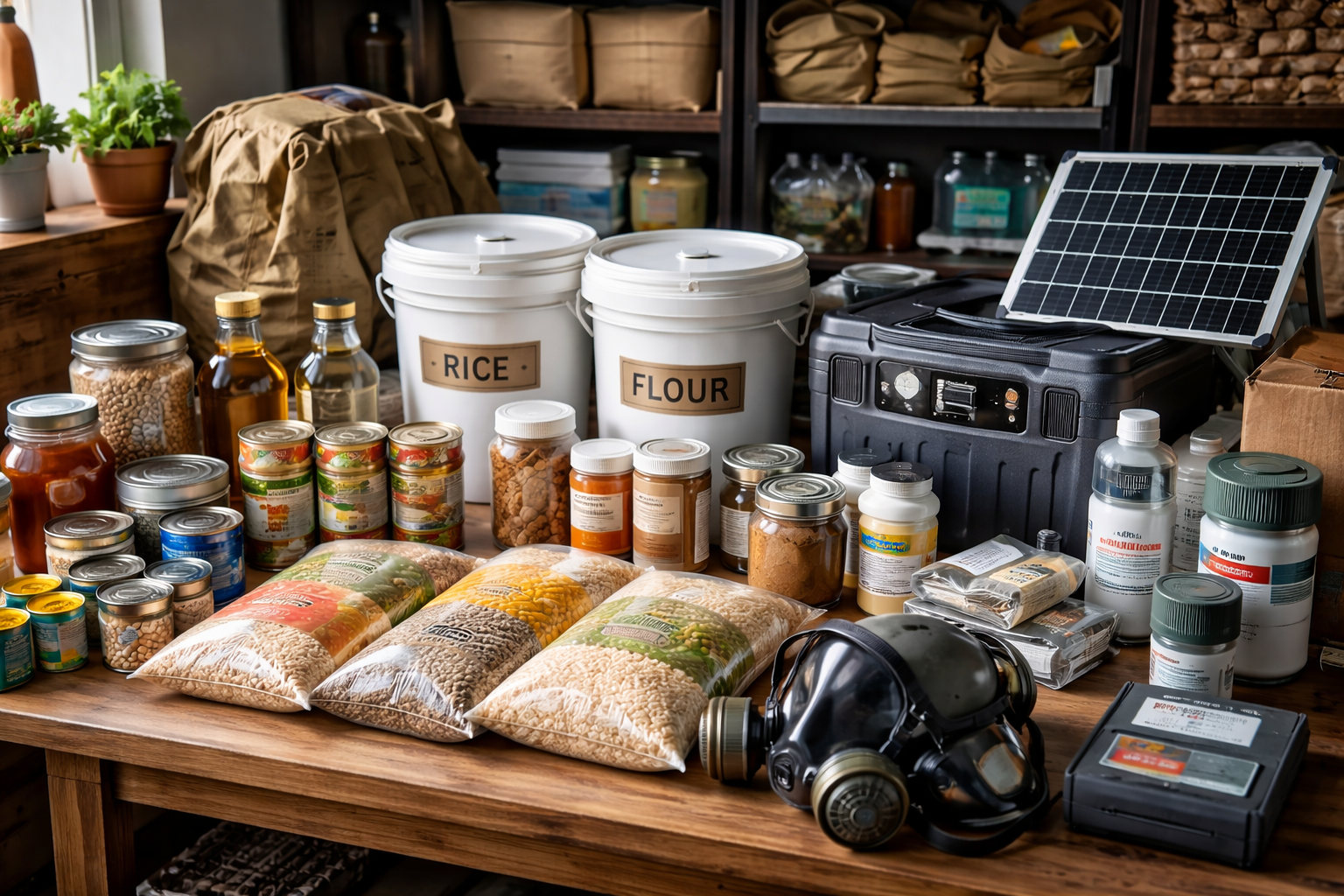
Maintaining a reserve of shelf-stable foods helps families navigate temporary supply interruptions. Long-lasting staples such as grains, beans, canned goods, and preserved foods can extend food availability significantly.
Food rotation ensures that supplies remain fresh and usable.
Water Access
Reliable access to clean water is one of the most important elements of preparedness. Backup filtration systems, stored water supplies, or purification methods can provide security during emergencies.
Medical Preparedness
Access to medications, first aid supplies, and basic medical knowledge becomes extremely important when healthcare systems are strained.
Maintaining organized medical supplies and keeping documentation of prescriptions and health conditions can make emergencies easier to manage.
Energy and Cooking
Backup cooking methods and small power solutions can provide critical flexibility when electrical systems are disrupted.
Options might include portable stoves, solar cooking systems, or battery storage devices.
Communication
Maintaining ways to communicate during outages—such as battery-powered radios or alternative communication tools—helps households stay informed and connected.
The Importance of Community
Preparedness is not only about individual households. Communities that cooperate and share resources are often far more resilient than isolated individuals.
Strong local relationships can support:
Shared knowledge and skills
Resource pooling
Emergency response coordination
Mutual aid during crises
History shows that communities with strong social networks often recover faster from disasters than those without them.
Building Preparedness Gradually
One of the most common misconceptions about preparedness is that it requires large investments or dramatic lifestyle changes.
In reality, resilience is built gradually.
Households can begin by making small improvements:
Adding a few extra days of food during regular grocery shopping
Organizing basic emergency kits
Learning practical skills over time
Improving household storage systems
Small steps taken consistently can create significant resilience over time.
Preparedness as a Long-Term Mindset
Preparing for disruptions does not mean expecting the worst. Instead, it reflects an understanding that uncertainty is part of life.
Natural disasters, economic disruptions, technological failures, and geopolitical tensions have all affected societies throughout history. The households that prepare thoughtfully are better able to navigate these challenges calmly and effectively.
Preparedness provides confidence rather than fear. It allows families to focus on problem-solving rather than panic when unexpected events occur.
By strengthening personal resilience, building local connections, and maintaining practical resources, individuals can contribute to stronger and more stable communities, even in uncertain times.