
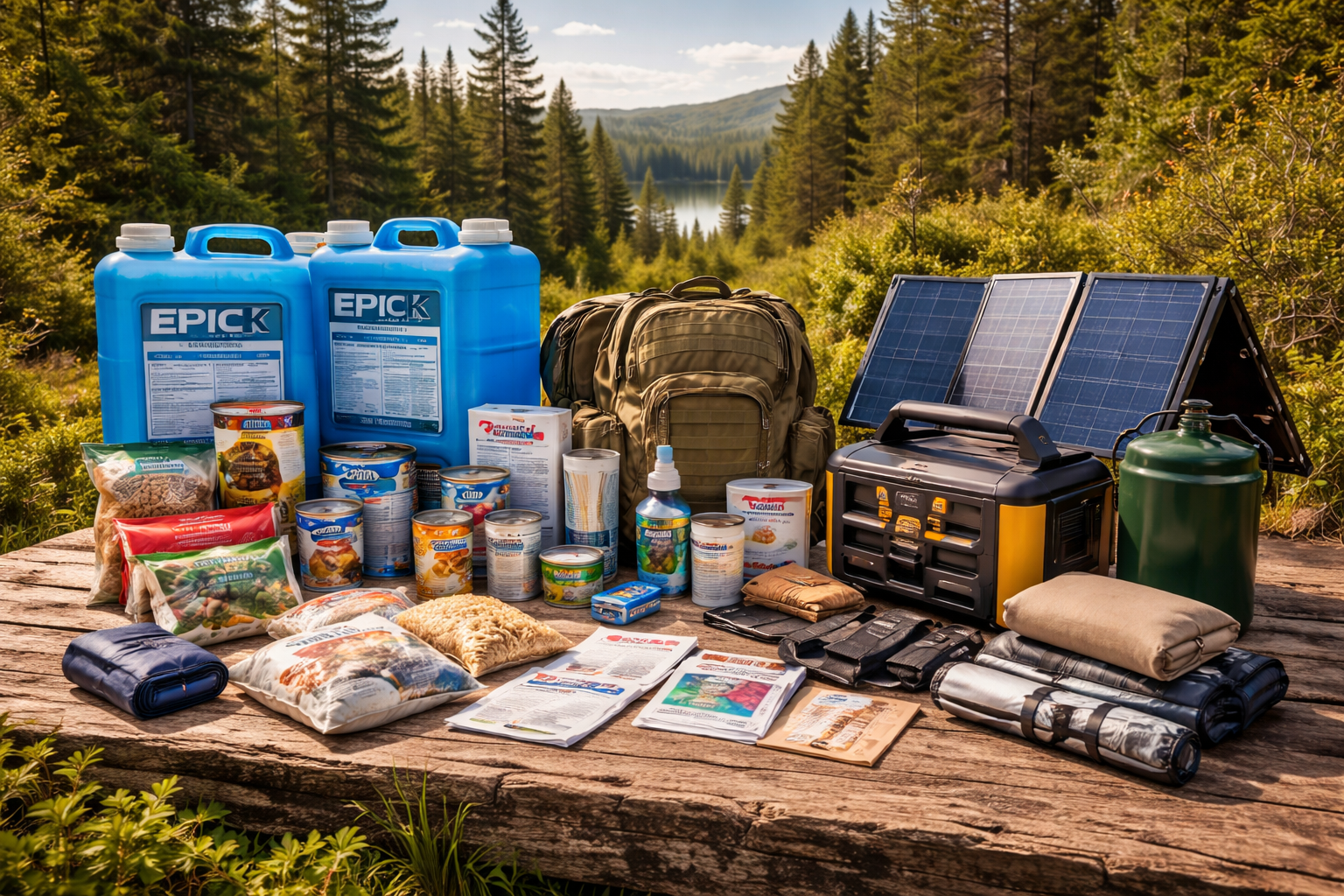
Most people overcomplicate prepping.
They try to prepare for everything at once…
and end up doing nothing properly.
The reality is simpler:
You don’t need more stuff
You need a system
A simple, repeatable system that covers the basics first — then builds from there.
The 5 Core Areas (Everything Fits Into This)
Every prep you have falls into one of these:
- Water
Food
Energy
Medical
Resilience (skills + community)
If you focus on these five — you’re ahead of 90% of people.
Step 1: Cover 72 Hours First
Forget long-term survival at the start.
Ask yourself:
“If everything stopped right now, could I make it 3 days comfortably?”
You need:
- Water (at least 1 gallon per person per day)
Ready-to-eat food (no cooking required)
Basic lighting (flashlights, headlamps)
Phone backup battery
Basic first aid kit
This is your baseline.
Step 2: Extend to 2 Weeks
Once 72 hours is solid, stretch it out.
Now you’re thinking:
- More stored water or filtration
Shelf-stable food you can cook
A simple cooking method (camp stove, propane, etc.)
Better lighting and backup power
This is where most real-world events fall:
- storms
outages
supply disruptions
If you can handle 2 weeks, you’re in a strong position.
Step 3: Add Energy Independence
This is where things change.
Power = options.
Start simple:
- Power banks for devices
Small solar charger
Backup lighting that doesn’t rely on the grid
Then build up:
- Larger battery banks
Solar setups
Generator (with fuel plan)
The goal isn’t full off-grid —
it’s reducing dependence
Step 4: Medical That Actually Works
Most kits are useless beyond minor cuts.
You need to think in layers:
Basic:
Bandages, antiseptic, gauze
Intermediate:
- Wound closure (butterfly strips, steri-strips)
Compression wraps
Burn care
Serious:
- Bleeding control (hemostatic agents)
Ability to manage wounds over days
Because in a real situation:
small injuries become big problems fast
Step 5: Water Is Non-Negotiable
You can last weeks without food.
Water is different.
You need:
Stored water
Backup (filters, purification)
Think:
“What happens when my stored water runs out?”
If you don’t have an answer — fix that first.
Step 6: Build Local Resilience
This is the part people ignore.
At some point:
everything becomes local
You won’t want to travel far
Supply chains won’t matter as much
Your environment matters more than your gear
Focus on:
- Knowing your area
Knowing people nearby
Identifying local resources
Community beats isolation long-term.
Step 7: Test Everything
This is where most people fail.
Don’t just store it — use it.
- Cook with your backup system
Run your power setup
Rotate your food
Use your medical supplies (practice)
Because when something happens:
it’s not the gear that fails — it’s unfamiliarity
Step 8: Keep It Simple
You don’t need:
- 50 gadgets
complicated systems
expensive setups
You need:
reliable basics that work every time
Final Thought
Preparedness isn’t about fear.
It’s about reducing stress when things go wrong.
Start small. Build layers. Keep it simple.
Because when something happens…
the people who stay calm aren’t the ones with the most gear
they’re the ones with a system that works