
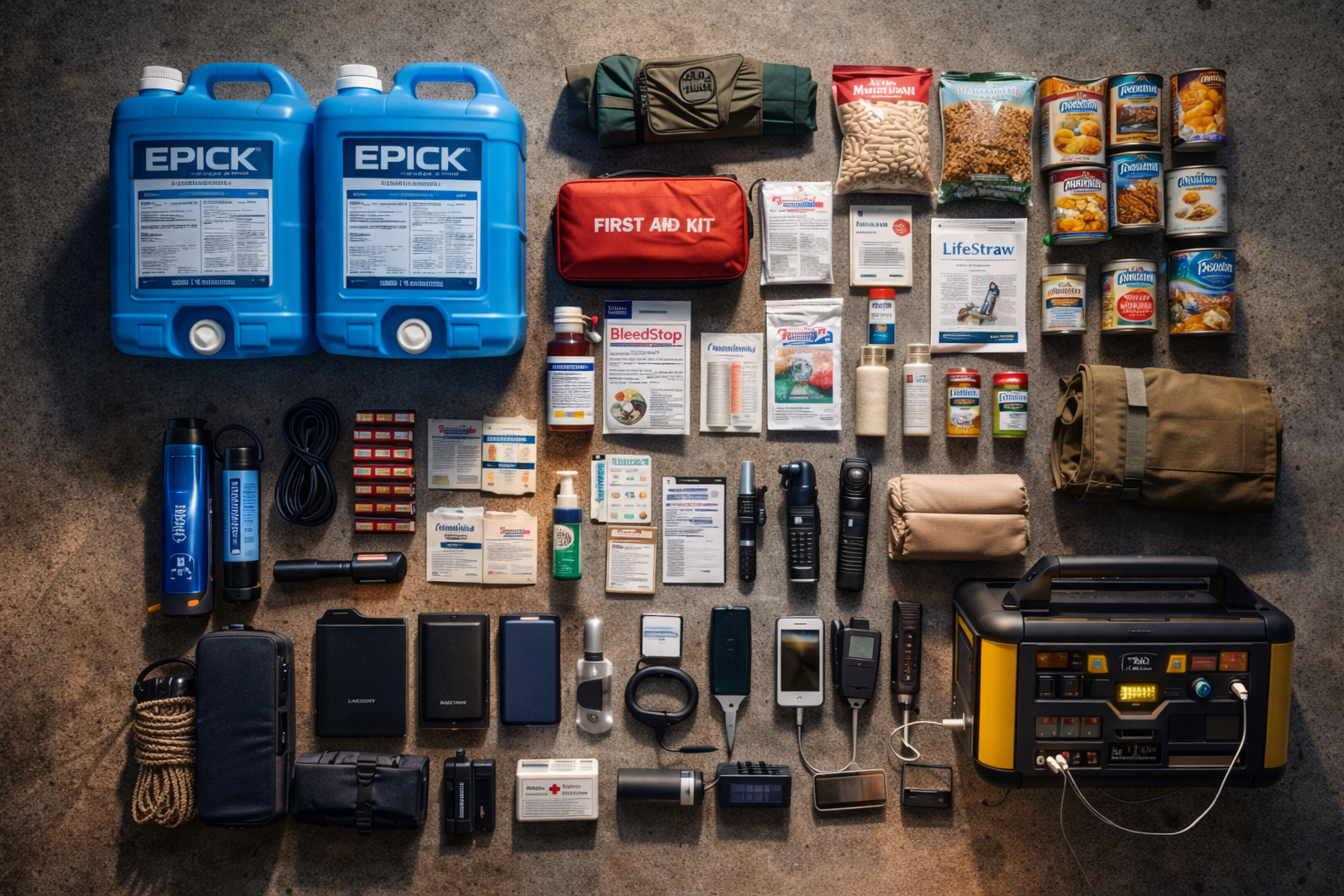
Preparedness Planning Practical Guide: You Can Do Today
Most people think preparedness means stockpiling.
It doesn’t.
It means having a plan that actually works when things go wrong.
Because when something happens…
you won’t have time to figure it out.
Start With One Simple Question
“What breaks first where I live?”
Not globally. Not hypothetically.
Your area. Your situation.
- Power outages?
Winter storms?
Water disruptions?
Job loss?
Start there.
That’s your baseline.
Step 1: Map Your Immediate Reality
Forget gear for a minute.
Look at:
- What’s within walking distance
Where your water comes from
How you heat your home
Where your food actually comes from
Most people realize fast:
they rely on systems they don’t control
That’s the point of planning.
Step 2: Build Your “Stay vs Move” Plan
This is huge — and almost nobody does it.
Ask yourself:
Do I stay… or do I leave?
Staying (most likely):
Secure food, water, heat
Reduce need to travel
Work with neighbors
Leaving (less likely, but possible):
Where are you going?
How are you getting there?
What’s waiting for you there?
If you don’t have clear answers:
staying is your default
Step 3: Cover the Basics First (Tools That Matter)
Don’t overbuy.
Get tools you’ll actually use:
- Water storage + filter
Reliable light (headlamp > flashlight)
Cooking method (propane, camp stove, etc.)
Basic medical kit that goes beyond bandaids
Power backups (small battery packs minimum)
Simple. Reliable. Repeatable.
Step 4: Think in Layers, Not One Solution
Every system fails eventually.
So stack options:
- Water → stored + filter
Power → battery + solar + generator
Food → pantry + freezer + shelf-stable
Cooking → electric + propane + backup
No single point of failure
That’s the goal.
Step 5: Reduce Daily Dependence
Preparedness isn’t just for emergencies.
Start now:
- Cook with your backup system once a week
Use your stored food
Rotate supplies
Practice using your gear
The more you rely on systems now:
the harder it hits when they fail
Step 6: Get Local (This Is Where It All Leads)
At some point:
everything becomes local
- You won’t want to travel far
Fuel may not be available
Supply chains won’t matter
So:
- Know your neighbors
Identify local skills (mechanic, nurse, etc.)
Know nearby resources
Community = resilience
Step 7: Plan for Boring Problems
Most real situations aren’t dramatic.
They’re:
- power out for 2–5 days
stores empty for a week
water issues
heating problems
If you can handle that:
you’re better prepared than most
Step 8: Write It Down (Seriously)
When stress hits, thinking drops.
Write down:
- What you’ll do first
Who handles what
Where things are stored
Simple notes beat guessing under pressure.
What You Can Do Today (No Excuses)
If you want real progress:
- Store 3 days of water
Buy a headlamp
Get a phone power bank
Pick up a basic medical kit
Identify your local water source
Talk to one neighbor
That’s it.
That’s how it starts.
Final Thought
Preparedness isn’t about fear.
It’s about removing uncertainty.
You don’t need to be extreme.
You don’t need to go all-in overnight.
You just need to start.
Because when something happens…
the people with a simple plan do better than the ones with no plan at all