
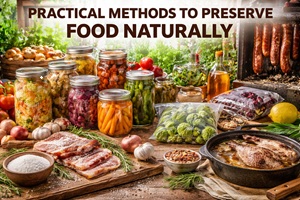
1. INTRODUCTION: WHY NATURAL FOOD PRESERVATION MATTERS
Modern food systems prioritize:
- shelf life
- profit
- scalability
Not:
- nutrition
- long-term health
- independence
Most store-bought foods:
- rely on chemical preservatives
- lose nutritional value over time
- create dependency on centralized supply chains
Natural preservation flips that.
It gives you:
- control over your food
- longer storage without chemicals
- real resilience in a crisis
2. THE CORE PRINCIPLES OF FOOD PRESERVATION
All preservation methods work by controlling one or more of these:
- moisture (remove it or control it)
- oxygen (limit exposure)
- temperature (slow spoilage)
- acidity (kill bacteria)
- salt content (prevent microbial growth)
Master these, and you can preserve almost anything.
3. METHOD 1: CITRUS PRESERVATION (SHORT-TERM CONTROL)
Best For:
- fruits
- fresh cuts
- meal prep
How It Works:
- citric acid slows oxidation
- vitamin C acts as antioxidant
- reduces bacterial growth
Step-by-Step:
- slice fruit (apples, pears, avocados)
- squeeze fresh lemon or lime juice immediately
- coat exposed surfaces evenly
- store in airtight container
Limitations:
- short-term only (hours to 1–2 days)
- not suitable for meat
best used as a first-line preservation method
4. METHOD 2: FERMENTATION (LONG-TERM + NUTRITION BOOST)
Why It’s Powerful:
- preserves food naturally
- increases nutrients
- improves gut health
Basic Formula:
2% salt by weight
Step-by-Step (Vegetables):
- weigh vegetables (example: 1000g cabbage)
- calculate salt (20g)
- mix salt with filtered water
- pack vegetables tightly into jar
- pour brine over vegetables
- ensure everything is submerged
- add weight to keep under liquid
- store in cool, dark place (55–75°F)
Timeline:
- 1 week = mild
- 2–4 weeks = fully fermented
Key Rule:
if it’s not submerged, it can spoil
5. METHOD 3: FREEZING (MODERN BUT EFFECTIVE)
Best For:
- meats
- vegetables
- fruits
Step-by-Step:
- blanch vegetables (2–3 minutes boiling water)
- transfer to ice bath immediately
- dry completely
- vacuum seal or airtight container
- label with date
- store at 0°F (-18°C)
Shelf Life:
- 6–12 months
Mistakes:
- skipping blanching
- leaving air in packaging
- poor labeling
freezing is your high-volume storage solution
6. METHOD 4: SALTING (THE ORIGINAL PRESERVATION METHOD)
Why It Works:
Salt:
- pulls moisture out
- kills bacteria
- creates hostile environment for spoilage
Dry Cure (Meat):
- weigh meat
- apply ~20% salt by weight
- rub thoroughly
- place in container
- refrigerate and rotate
Brine Method:
- 1 cup salt per gallon water
- fully submerge food
- store in cool place
requires no electricity → ideal for off-grid
7. METHOD 5: PICKLING (ACID-BASED PRESERVATION)
Why It Works:
- vinegar creates high acidity
- kills bacteria instantly
Step-by-Step:
- mix:
- 1:1 vinegar + water
- 1 tbsp salt per cup
- bring to boil
- pack vegetables into jars
- pour hot liquid over contents
- leave ½ inch headspace
- seal jars
- optional: water bath for long-term storage
Shelf Life:
- months to years
pickling = long-term + shelf stable
8. METHOD 6: AIR DRYING / DEHYDRATION
Best For:
- fruits
- herbs
- meats (jerky)
Process:
- remove moisture slowly
- prevent bacterial growth
Steps:
- slice food thin
- place in dry, ventilated area
- protect from insects
- allow full drying
Advanced:
- use dehydrator
- use solar drying
dried food = lightweight + long shelf life
9. METHOD 7: ROOT CELLARING (LOW-TECH STORAGE)
Best For:
- potatoes
- carrots
- onions
- squash
Conditions:
- cool (32–50°F)
- dark
- humid
Setup:
- basement
- underground storage
- insulated boxes
one of the most overlooked methods
10. METHOD 8: FAT PRESERVATION (CONFIT)
How It Works:
- food stored under fat
- oxygen blocked
Best For:
- meats
Process:
- cook meat slowly in fat
- fully submerge
- store sealed
traditional, highly effective
11. METHOD 9: SMOKING
Benefits:
- dries food
- adds antimicrobial compounds
Types:
- cold smoking (preservation)
- hot smoking (cooking + preserving)
adds both flavor and shelf life
12. METHOD 10: COMBINED METHODS (ADVANCED)
Best results come from combining methods:
Examples:
- salt + smoke
- ferment + cold storage
- dry + vacuum seal
layering methods increases longevity
13. COMMON MISTAKES
- not sterilizing containers
- improper salt ratios
- exposure to air
- poor storage conditions
- skipping labeling
small mistakes = total loss
14. BUILDING A REAL-WORLD SYSTEM
Start simple:
Step 1:
- freeze extra food
Step 2:
- ferment vegetables
Step 3:
- pickle surplus
Step 4:
- learn salting
Step 5:
- expand into drying and storage
build layers, not complexity
15. PREPPER APPLICATION
These methods give you:
- independence from stores
- protection from shortages
- healthier food supply
- barter capability
preserved food becomes currency
16. LONG-TERM STRATEGY
You want:
- stored food
- preserved food
- renewable food
all three together = resilience
17. FINAL TAKEAWAY
You don’t need chemicals.
You don’t need complicated systems.
You need:
- knowledge
- consistency
- practice
If you can:
- ferment
- salt
- dry
- store
you can feed yourself without relying on fragile systems