
NAVY ENVIRONMENTAL HEALTH CENTER
Technical Manual NEHC-TM PM 6250.1 (September 2000)
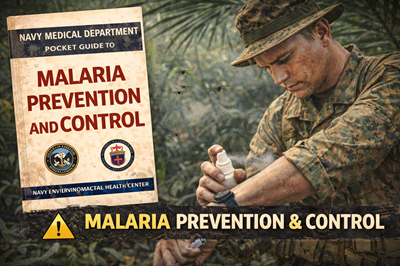
The Navy Medical Department Pocket Guide to Malaria Prevention and Control is a focused, field-ready manual designed to protect personnel operating in high-risk environments where malaria is a serious threat. Developed by the Navy Environmental Health Center, this guide is built around one core objective: maintaining operational readiness by preventing, identifying, and managing malaria in challenging conditions. It is not just a medical reference—it is a practical tool meant to be used in real-world deployments where disease can weaken entire units if not properly controlled .
What makes this publication especially important is its emphasis on prevention as the primary line of defense. The manual outlines a layered approach that includes personal protective measures, medication protocols, and unit-level strategies. It stresses that success depends not just on knowledge, but on discipline and enforcement—highlighting that even the best medical guidance fails if it is not consistently applied. Historical examples included in the guide demonstrate how malaria has crippled forces in the past, reinforcing the importance of leadership and compliance in disease prevention .
The guide also provides a deep understanding of malaria itself, including how it is transmitted, how it develops within the human body, and why it can remain dormant and reappear long after exposure. The life cycle explanation—illustrated in the diagram on page 9—shows how the parasite moves from mosquito to liver to bloodstream, helping readers understand why prevention, early detection, and continued treatment are all critical to stopping the disease . This level of detail gives users the knowledge needed to make informed decisions rather than simply following instructions blindly.
Beyond military use, this manual is highly relevant for preppers, travelers, humanitarian workers, and anyone operating in or traveling through tropical or subtropical regions. In scenarios involving disaster response, off-grid living, or international movement, malaria remains a real and persistent threat. This guide equips readers with the knowledge to reduce risk, protect themselves and their group, and respond effectively if infection occurs—making it a valuable addition to any serious preparedness library.