
The Reality of Natural Medicine
Natural health and herbal remedies are often misunderstood. Many people think of them as optional, outdated, or less effective than modern medicine. In reality, they represent a parallel system of care—one that becomes critical when access to pharmaceuticals or professional care is delayed or unavailable.
In preparedness scenarios, natural medicine fills the gaps. It helps you manage minor issues before they become major problems and gives you tools to handle ongoing conditions when supply chains fail. This isn’t about replacing modern medicine—it’s about ensuring you’re not dependent on a single system.
In a grid-down scenario, supply chain disruption, or even just rural living, access to:
- Pharmacies
- Doctors
- Hospitals
…can become limited or delayed.
Natural medicine becomes:
- Your first line of defense
- Your long-term sustainability plan
- Your backup when everything else runs out
But here’s the truth most people miss:
Herbs without the right gear are just plants.
Gear without knowledge is just clutter.
This guide focuses on the essential gear that actually works—tools that turn raw plants into usable medicine.
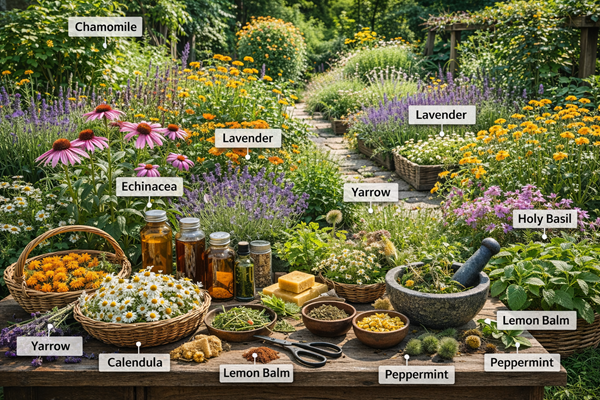
Top 10 Herbal Remedies
| Herb | Primary Uses | How It Helps | Common Forms | Notes |
|---|---|---|---|---|
| Chamomile | Sleep, digestion, inflammation | Calms nervous system, reduces gut irritation | Tea, tincture | Safe, great daily-use herb |
| Lavender | Stress, sleep, wounds | Antimicrobial + calming effects | Oil, tea, salve | Useful for anxiety + skin |
| Peppermint | Digestion, nausea, headaches | Relaxes gut muscles, cooling effect | Tea, oil | Strong—use diluted oil |
| Echinacea | Immune support | Stimulates immune response | Tincture, tea | Best at first sign of illness |
| Yarrow | Bleeding, wounds, fever | Helps clotting, reduces inflammation | Poultice, tea | Excellent field medicine |
| Calendula | Skin healing, infection | Antibacterial + tissue repair | Salve, oil | Top-tier wound herb |
| Garlic | Infection, heart health | Natural antibiotic + immune booster | Raw, tincture | Strong but highly effective |
| Ginger | Nausea, inflammation | Improves circulation, settles stomach | Tea, raw | Great for cold + motion sickness |
| Plantain (leaf) | Bites, wounds, skin issues | Draws out toxins, speeds healing | Poultice, salve | Common and very underrated |
| Holy Basil (Tulsi) | Stress, immune, energy | Adaptogen—balances stress response | Tea, tincture | Long-term resilience herb |
The Core Principle: Processing is Everything
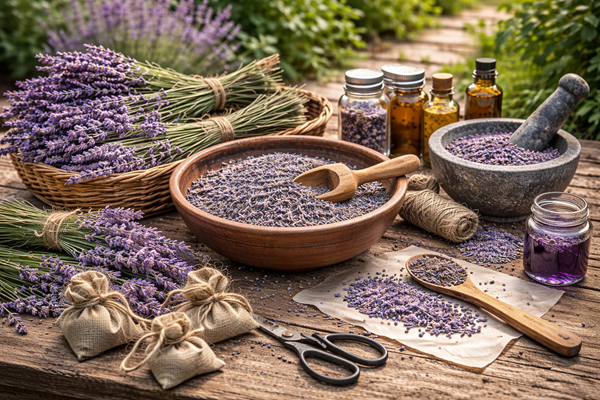 Raw plants are not medicine until they are processed correctly. The difference between an effective remedy and a useless one often comes down to how well you extract, preserve, and apply the plant’s active compounds.
Processing also gives you control. When you understand drying, infusing, and extracting, you can turn the same plant into multiple forms—teas, tinctures, salves—each suited for different situations. This is what transforms herbal knowledge into practical, repeatable capability.
You don’t “use” herbs—you process them.
Every effective herbal system relies on four core processes:
- Drying
- Infusing
- Extracting
- Storing
Without proper tools, you lose:
- Potency
- Shelf life
- Consistency
Your gear determines whether your remedies are:
- Weak or effective
- Short-lived or long-lasting
- Guesswork or repeatable
Drying Equipment (The Foundation of Herbal Medicine)
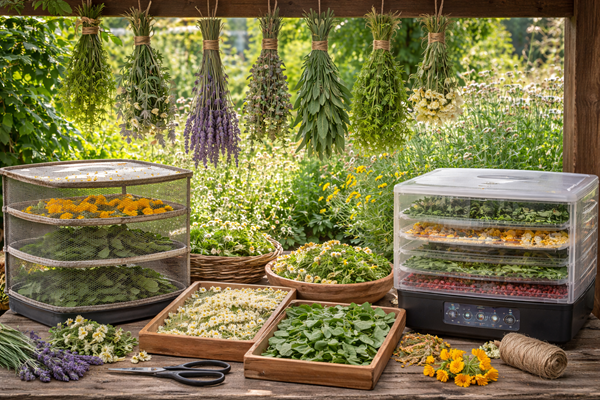 Drying is the first step in preserving herbs for long-term use. Without proper drying, plants can mold, lose potency, or become unsafe. Done correctly, drying allows you to store herbs for months or even years while maintaining their effectiveness.
The key is control. You want airflow without heat, darkness without dampness. Whether you’re using a dehydrator or a simple rack system, the goal is the same: remove moisture while protecting the plant’s medicinal compounds. This is one of the simplest systems to set up—but also one of the most important to get right.
Why It Matters
Fresh plants spoil quickly. Drying preserves:
- Active compounds
- Usability
- Storage potential
Essential Gear
- Drying racks or mesh screens
- Hanging bundles (string/twine)
- Dehydrator (low heat control preferred)
Practical Use
Drying must be:
- Cool
- Dark
- Well ventilated
Heat destroys delicate compounds. Sunlight degrades potency.
Real-World Tip
Even a simple setup—like:
- String lines in a shaded room
- Window screens stacked on bricks
…can outperform expensive gear if done correctly.
Grinding & Processing Tools
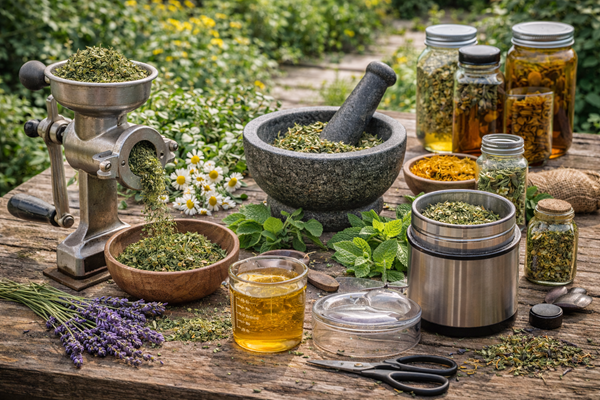 Once herbs are dried, they need to be broken down to be useful. Grinding increases surface area, which improves extraction and makes dosing more consistent. Without this step, many remedies will be weaker than they should be.
Manual tools like a mortar and pestle are invaluable because they don’t rely on power and allow you to process small batches precisely. Electric grinders are faster, but having both options ensures you’re covered in any situation. This stage is where raw material becomes usable and efficient medicine
Why It Matters
Whole herbs are inefficient. You need surface area.
Essential Gear
- Mortar and pestle (manual, reliable)
- Coffee grinder (dedicated to herbs)
- Hand-crank grain mill (for bulk processing)
What This Enables
- Powders for capsules
- Faster extraction
- Better consistency
Practical Insight
Manual tools matter because:
Electricity is a convenience—not a guarantee.
Always have a non-electric backup.
Infusion Equipment (Teas, Oils, and More)
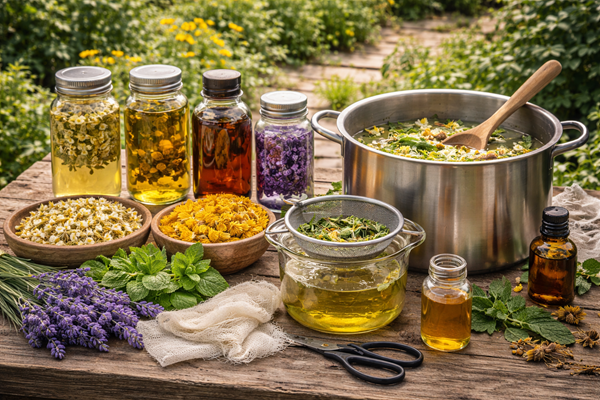 Infusions are one of the most accessible and versatile ways to use herbs. Whether you’re making a tea for internal use or an oil for skin application, the process extracts key compounds into a usable form.
The effectiveness of an infusion depends on time, temperature, and cleanliness. Using proper containers and strainers ensures you get a clean final product. Infusions are often the first step people learn—but mastering them means understanding how to control strength, consistency, and purpose.
Why It Matters
Infusions are the most common way to extract medicinal properties.
Essential Gear
- Stainless steel pots
- Glass jars (heat-safe)
- Fine mesh strainers
- Cheesecloth
Types of Infusions
- Water-based (teas) → fast, short shelf life
- Oil-based (salves, skin treatments) → longer lasting
Real-World Application
You can treat:
- Digestive issues
- Minor infections
- Skin conditions
…with properly prepared infusions.
Tincture-Making Setup (Long-Term Power)
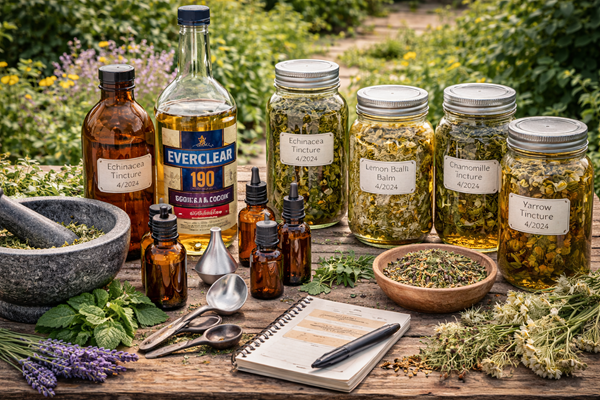 Tinctures are one of the most efficient ways to store herbal medicine long-term. By using alcohol or vinegar, you extract and preserve active compounds in a concentrated form that can last for years.
This makes tinctures ideal for preparedness. They take up little space, are easy to dose, and remain stable over time. Building a tincture system gives you a compact, high-value medical reserve that can be relied on when fresh plants or other preparations aren’t available.
Why It Matters
Tinctures are:
- Highly concentrated
- Long-lasting (years)
- Easy to store and transport
Essential Gear
- Glass mason jars
- High-proof alcohol (or vinegar alternative)
- Dropper bottles (amber glass preferred)
Process Overview
- Chop herbs
- Submerge in alcohol
- Store in dark place
- Shake regularly
Why This Matters for Preppers
Tinctures are one of the best long-term medical storage options outside pharmaceuticals.
Salve & Balm Creation Tools
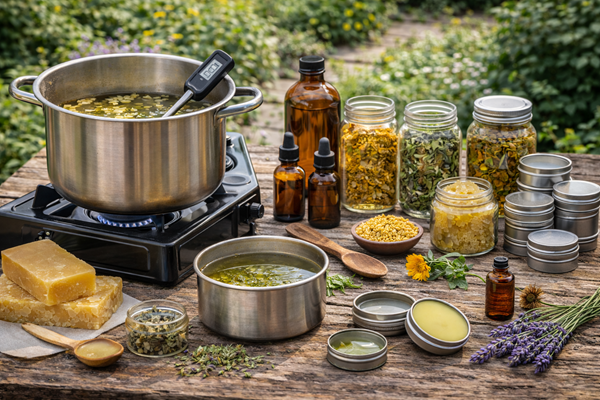 Topical treatments are often overlooked, but they are some of the most immediately useful remedies you can produce. Salves and balms allow you to apply herbal benefits directly to the skin, targeting specific issues like cuts, burns, or irritation.
The process is straightforward, but consistency matters. Proper heating, mixing, and storage ensure that your final product is stable and effective. These preparations are especially valuable because they are easy to use and require minimal training, making them ideal for both individuals and families.
Why It Matters
Topical treatments are essential for:
- Cuts
- Burns
- Skin infections
Essential Gear
- Double boiler (or improvised setup)
- Beeswax
- Storage tins or jars
What You Can Make
- Antibacterial salves
- Burn treatments
- Muscle relief balms
Practical Note
Topical treatments are often:
Safer and easier to apply than internal remedies
Especially for beginners.
Storage Systems (Where Most People Fail)
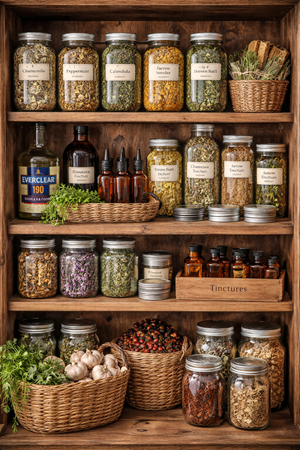 Storage is where many herbal systems break down. Even well-prepared remedies can lose effectiveness quickly if they are exposed to light, heat, or air. Over time, this degrades the compounds you worked to preserve.
A proper storage system protects your investment of time and effort. It also keeps your supplies organized and ready to use. Labeling is critical—not just for identification, but for tracking age and usage. Good storage turns short-term effort into long-term reliability.
Why It Matters
Improper storage destroys effectiveness.
Essential Gear
- Amber glass jars
- Airtight containers
- Labeling system (critical)
- Cool, dark storage area
What to Protect Against
- Light
- Heat
- Moisture
- Air exposure
Hard Truth
Unlabeled herbs become useless.
If you don’t know what it is—you won’t use it.
Field Collection Gear
Harvesting herbs is more than just picking plants—it requires awareness, precision, and responsibility. The quality of your medicine starts with where and how you collect it.
Using the right tools ensures you don’t damage the plant or contaminate your harvest. Just as important is knowing your environment. Clean, safe collection areas and correct identification are essential. This stage connects you directly to your resources and builds true self-reliance.
Why It Matters
You need to gather herbs safely and sustainably.
Essential Gear
- Field knife or scissors
- Gloves
- Collection bags (breathable)
- Field guidebook (offline)
Key Practices
- Never overharvest
- Avoid contaminated areas (roadsides, industrial zones)
- Know exactly what you’re picking
Critical Warning
Misidentification can be dangerous or deadly.
Water & Sanitation Tools
Cleanliness is often underestimated in herbal preparation. Contaminated water or dirty tools can introduce bacteria and ruin otherwise effective remedies. In some cases, this can create more problems than it solves.
Maintaining sanitation ensures that what you produce is safe to use. This becomes even more important in long-term or off-grid situations where infections can become serious quickly. Clean systems protect both your remedies and the people using them.
Why It Matters
Contamination ruins medicine.
Essential Gear
- Clean water supply
- Filtration system
- Boiling capability
- Sanitized tools
Use Cases
- Cleaning herbs
- Preparing infusions
- Preventing bacterial growth
Measurement & Consistency Tools
Consistency is what separates guesswork from reliable results. Without measurement, it’s difficult to reproduce effective remedies or understand what works and what doesn’t.
Using simple tools like scales and measuring spoons allows you to standardize your process. This is especially important if you’re treating recurring issues or supporting others. Consistency builds confidence and turns your system into something you can depend on.
Why It Matters
Guesswork leads to:
- Weak remedies
- Overuse risks
Essential Gear
- Measuring spoons
- Small scale (grams)
- Consistent containers
Prepper Advantage
Consistency = repeatable results
Medical Reference Materials (Offline)
Knowledge is one of your most important tools—but it needs to be accessible when you need it. In a crisis, you won’t have time to search for information or rely on internet access.
Printed materials and personal notes ensure you always have guidance available. Over time, your own experience becomes just as valuable as any book. Building a reference system creates a knowledge base you can rely on under pressure.
Why It Matters
You will forget things under stress.
Essential Gear
- Printed herbal guides
- Personal notes
- Dosage charts
Best Practice
Create your own:
- Tested recipes
- Observations
- What works in your region
Redundancy Planning (Critical)
No single setup is enough. You need layers of capability that match different situations—home, travel, and emergency movement. Each layer should be functional on its own.
Redundancy ensures that losing access to one system doesn’t leave you unprepared. It also allows you to adapt quickly as conditions change. This is a core principle of preparedness: always have a backup plan.
You need layers:
Home Setup
Full processing station
Field Kit
Lightweight essentials
Bug-Out Kit
Minimal but functional:
- Small knife
- Basic herbs
- Compact containers
Common Mistakes to Avoid
Most failures in herbal systems come from simple mistakes—lack of preparation, poor storage, or overcomplication. These issues don’t show up immediately, but they reduce effectiveness over time.
Avoiding these mistakes comes down to discipline and practice. Focus on doing the basics well, and build from there. Simplicity and consistency will always outperform complexity.
- Collecting without processing
- Storing improperly
- Not labeling
- Relying only on memory
- Buying gear without practicing
Summary
Natural health and herbal remedies are not about theory—they are about capability. The right gear allows you to take action, but it’s your understanding and practice that make it effective.
When combined, these elements give you a system that works under real conditions. It allows you to respond, adapt, and sustain yourself when other options are limited. This is what preparedness is about: having the ability to act when it matters most.
Natural health systems are not complicated—but they require:
- The right tools
- The right process
- Consistent practice
This is not about replacing modern medicine.
It’s about:
- Filling the gaps
- Extending your capabilities
- Building long-term resilience
Because when systems fail…
Your ability to create medicine from your environment becomes one of the most valuable skills you can have.
Essential Gear Checklist
1. Core Setup Check (Foundation)
☐ Dedicated herbal workspace (clean, organized)
☐ Dry, dark storage area available
☐ Clean water source accessible
☐ Sanitation process in place (clean tools, surfaces)
2. Drying System Checklist
☐ Drying racks or mesh screens
☐ Hanging lines (string/twine)
☐ Dehydrator (optional but useful)
☐ Low-light drying space
☐ Good airflow (no moisture buildup)
CHECK:
☐ Herbs fully dried (no softness or moisture)
☐ No mold present
3. Grinding & Processing Tools
☐ Mortar and pestle (manual backup)
☐ Electric grinder (optional)
☐ Hand-crank mill (bulk processing)
CHECK:
☐ Herbs processed into consistent size
☐ No cross-contamination between batches
4. Infusion Equipment (Teas & Oils)
☐ Stainless steel pot
☐ Heat-safe glass jars
☐ Fine mesh strainer
☐ Cheesecloth or filter material
CHECK:
☐ Clean infusion process
☐ Proper steeping time followed
☐ No debris left in final product
5. Tincture Setup (Long-Term Storage)
☐ Mason jars (various sizes)
☐ High-proof alcohol or vinegar
☐ Amber dropper bottles
☐ Labels (date + contents)
CHECK:
☐ Herbs fully submerged
☐ Stored in dark location
☐ Shaken regularly during extraction
6. Salve & Balm Tools
☐ Double boiler (or improvised setup)
☐ Beeswax supply
☐ Oil base (olive, coconut, etc.)
☐ Storage tins/jars
CHECK:
☐ Proper consistency (not too soft/hard)
☐ Clean pouring process
☐ No contamination
7. Storage System (Critical)
☐ Amber glass jars
☐ Airtight containers
☐ Labeling system (name + date + use)
☐ Cool, dark storage area
CHECK:
☐ All items labeled clearly
☐ Old stock rotated out
☐ No exposure to heat/light
8. Field Collection Gear
☐ Sharp scissors or knife
☐ Gloves
☐ Breathable collection bags
☐ Printed field guide (offline)
CHECK:
☐ Correct plant identification confirmed
☐ Harvest area is clean (no contamination)
☐ Sustainable harvesting practiced
9. Water & Sanitation
☐ Water filtration system
☐ Boiling capability
☐ Clean cloths/paper towels
☐ Sanitizing method (alcohol, heat, etc.)
CHECK:
☐ All tools cleaned before use
☐ Water safe for preparation
☐ Work area contamination-free
10. Measurement & Consistency
☐ Measuring spoons
☐ Small scale (grams)
☐ Standard containers for repeat use
CHECK:
☐ Recipes repeatable
☐ Dosages consistent
☐ Notes recorded
11. Reference Materials (Offline)
☐ Printed herbal guide(s)
☐ Personal notebook/logbook
☐ Dosage charts
CHECK:
☐ Key remedies documented
☐ Local plants recorded
☐ Tested recipes saved
12. Redundancy Planning
☐ Home herbal setup complete
☐ Mobile/field kit ready
☐ Bug-out herbal kit (lightweight)
CHECK:
☐ Each system works independently
☐ Backup tools available
☐ Supplies distributed (not all in one place)
13. Practice & Readiness
☐ Practiced drying herbs
☐ Practiced making infusions
☐ Practiced making tinctures
☐ Practiced making salves
CHECK:
☐ Confident in basic processes
☐ Can perform without instructions
☐ Can adapt with limited tools
14. Common Failure Points Check
☐ No unlabeled containers
☐ No expired or degraded herbs
☐ No reliance on memory only
☐ No single-point dependency (gear or location)
15. Final Readiness Check
☐ Can I produce medicine from raw plants?
☐ Can I store it long-term?
☐ Can I repeat the process consistently?
☐ Can I do this under stress or limited conditions?
Quick Reference Rule (Memorize This)
Harvest → Dry → Process → Extract → Store → Use