
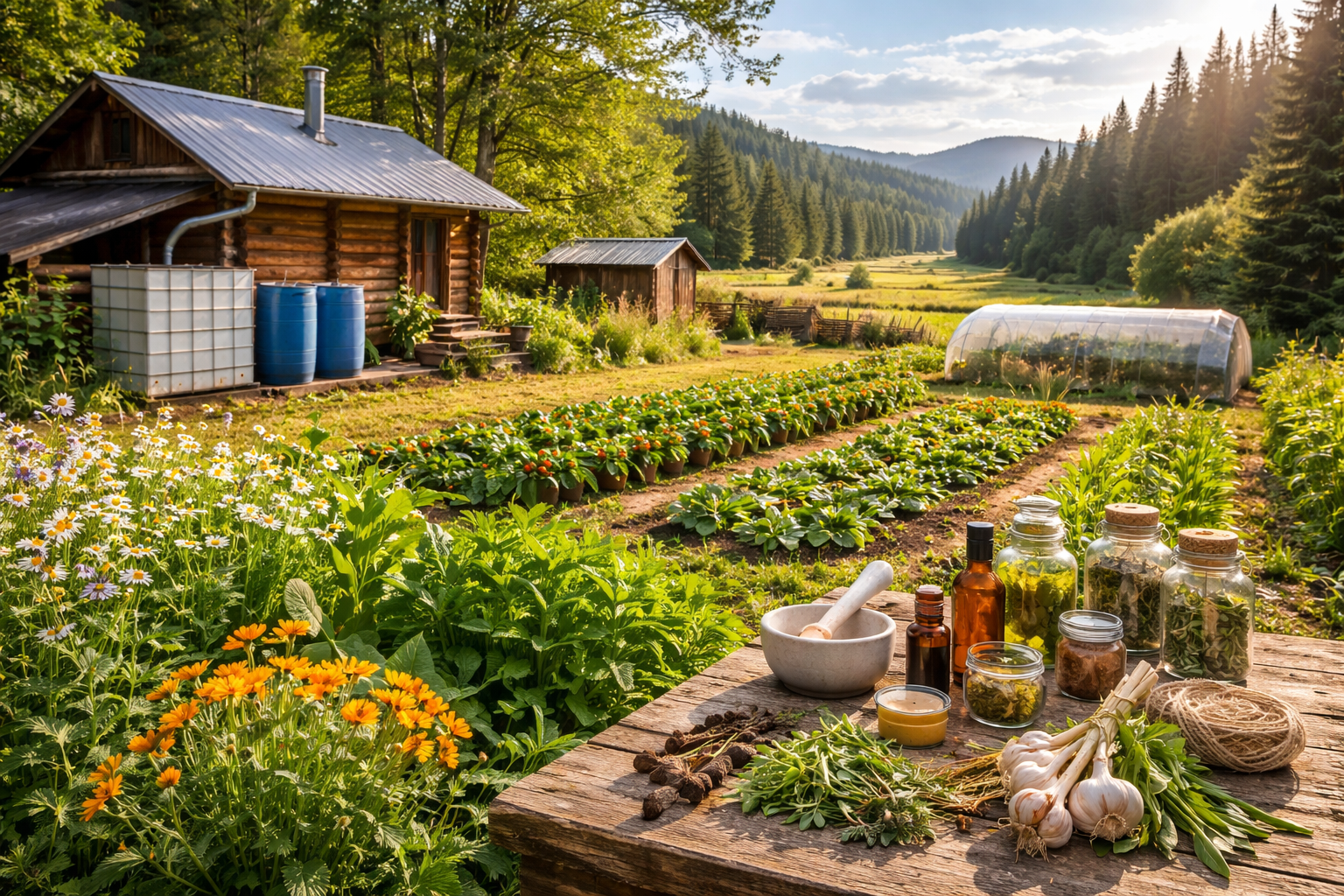
Practical Prepper Guide: Step-by-Step (No Fluff)
When systems fail, medical access becomes limited fast. Pharmacies run out, supply chains stall, and even basic care becomes difficult to obtain.
Natural health and herbal remedies are not a replacement for modern medicine. They are a support system that helps you manage minor conditions, maintain health, and extend your ability to function when resources are constrained.
This guide focuses on building a practical, usable herbal system that works in real-world scenarios.
Step 1: Define Your Objective
- Maintain health when medical access is limited
- Treat minor illnesses and injuries early
- Support recovery and reduce complications
- Build a sustainable, repeatable system
- Reduce dependency on external supply chains
Step 2: Understand Capabilities and Limits
- Herbs support the body rather than override it
- Effectiveness depends on correct use and timing
- Severe trauma, infections, and emergencies still require advanced care
- Misuse or overuse can cause harm
- Proper identification and preparation are critical
Step 3: Build a Core Herbal System (High-Value Only)
Focus on multi-use, proven plants:
- Garlic
- Antimicrobial support
- Immune function
- Circulation support
- Ginger
- Anti-inflammatory
- Digestive aid
- Nausea control
- Peppermint
- Digestive relief
- Mild pain relief
- Respiratory support
- Chamomile
- Calming effects
- Sleep support
- Mild anti-inflammatory
- Echinacea
- Immune response support
- Often used early in illness
- Calendula
- Skin repair
- Wound care
- Anti-inflammatory
- Plantain (wild)
- Draws out irritation
- Bite and sting relief
- Minor wound support
Step 4: Grow Your Own Supply (Control = Resilience)
- Start with easy-to-grow herbs
- Use garden beds, containers, or small plots
- Prioritize plants that regenerate or reseed
- Maintain consistent watering and sunlight exposure
- Learn seasonal growth cycles
Recommended starter plants:
- Mint
- Chamomile
- Calendula
- Garlic
- Aloe vera
Step 5: Learn Preparation Methods (Critical Skill Layer)
Different methods extract different compounds:
- Infusion (tea)
- Leaves and flowers
- Quick preparation
- Short-term use
- Decoction
- Roots and bark
- Longer simmer time
- Stronger extraction
- Tincture
- Alcohol-based
- Long shelf life
- Concentrated
- Salve
- External use
- Skin and wound care
- Poultice
- Fresh plant material
- Direct application
Step 6: Storage and Shelf-Life Management
- Store herbs in cool, dark, dry conditions
- Use airtight containers
- Label with name and date
- Rotate regularly
Typical shelf life:
- Dried herbs: up to 1 year
- Tinctures: multiple years
- Oils and salves: shorter lifespan depending on storage
Step 7: Identification and Safety (Non-Negotiable)
- Never use a plant unless you are 100% certain of identification
- Learn local plant species in your region
- Use reliable field guides or training resources
- Practice identification regularly in real environments
- Avoid plants from contaminated areas
Step 8: Build a Functional Herbal Kit
Include:
- Dried herbs (core set)
- Small glass containers
- Strainers and cloth filters
- Mortar and pestle
- Carrier oils
- Alcohol (for tinctures)
Keep the kit:
- Organized
- Accessible
- Ready for immediate use
Step 9: Integrate With Basic Medical Skills
- Combine herbal knowledge with first aid training
- Maintain hygiene and sanitation
- Use clean water in all preparations
- Understand wound care fundamentals
- Monitor symptoms and progression
Step 10: Barter and Community Value
- Herbal knowledge becomes highly valuable in a crisis
- Ability to treat minor conditions increases trade value
- Dried herbs and tinctures are tradable items
- Skills can be exchanged for food, labor, or supplies
- Community resilience increases when knowledge is shared
Step 11: Practice Before You Need It
- Prepare herbal teas regularly
- Make simple tinctures and salves
- Practice identifying plants in your area
- Test different preparation methods
- Build confidence through repetition
Step 12: Avoid Common Mistakes
- Trying to learn too many herbs at once
- Using herbs without proper identification
- Ignoring dosage and preparation methods
- Relying on herbs without basic medical knowledge
- Failing to rotate and maintain supplies
Real-World Application
In a prolonged disruption:
- Minor health issues become major if untreated
- Access to medications becomes inconsistent
- People seek alternatives quickly
Those prepared:
- Treat issues early
- Maintain health stability
- Support others in their group
Complete Checklist
Knowledge:
- Learn 5–7 core herbs in depth
- Understand preparation methods
- Practice plant identification
Supplies:
- Store dried herbs
- Maintain preparation tools
- Build a usable herbal kit
Growing:
- Start a small herb garden
- Focus on reliable, repeatable plants
Practice:
- Prepare teas and remedies regularly
- Test methods before emergencies
- Build routine use into daily life
Final Thought
Natural health is not about replacing modern medicine.
It’s about:
- Extending your capabilities
- Reducing risk
- Maintaining function when systems fail
Because when access disappears…
- Knowledge becomes your supply
- Skill becomes your security
- Preparation becomes your advantage