
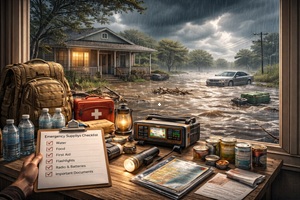
Category: Natural Disasters
Focus: Resilience • Gardening • Homesteading • Tools • Barter
Objective: Build a strategy that actually works when disasters hit—not theory, not gear lists, but real-world survival
1. THE TRUTH ABOUT NATURAL DISASTERS
Natural disasters don’t kill most people.
Bad decisions do.
What actually causes failure:
- waiting too long
- relying on others
- not understanding how fast things change
The difference between success and failure is timing and awareness.
2. HOW DISASTERS REALLY UNFOLD
Most people think:
- something happens
- chaos starts immediately
Reality:
- warning signs appear
- people ignore them
- early movers leave or prepare
- late movers panic
- systems get overwhelmed
You want to be in stage 2 or 3—not 4 or 5
3. THE 3 CORE STRATEGIES (YOU MUST PICK ONE)
OPTION 1: BUG IN (STAY PUT)
Best when:
- home is secure
- area is low risk
- you have supplies
Pros:
- control
- familiarity
- less exposure
Cons:
- trapped if conditions worsen
OPTION 2: BUG OUT (LEAVE)
Best when:
- area becomes unsafe
- fire, flood, or instability is approaching
Pros:
- mobility
- avoids danger zone
Cons:
- risk on the road
- dependent on planning
OPTION 3: HYBRID
Stay until:
- a trigger point is hit
Then:
- leave early
This is the most realistic strategy
4. PHASE 1: PRE-IMPACT (THIS IS WHERE YOU WIN)
This phase determines everything.
What Most People Do:
- wait for confirmation
- wait for news
- wait for orders
What You Should Do:
1. MONITOR CONSTANTLY
- weather alerts
- local news
- unusual activity
2. PRE-STAGE EVERYTHING
- food ready
- water filled
- fuel topped off
- gear accessible
3. SECURE YOUR POSITION
- bring loose items inside
- reinforce weak points
- prepare blackout conditions
4. DECIDE EARLY
Ask:
- stay or go?
indecision kills time
5. PHASE 2: IMPACT (SURVIVE THE EVENT)
This is where most people panic.
PRIORITIES (IN ORDER)
- shelter
- water
- medical
- communication
WHAT TO DO
- stay inside unless necessary
- avoid roads
- stay informed but not distracted
- conserve resources
KEY RULE
Do nothing unnecessary during impact
6. PHASE 3: POST-IMPACT (MOST DANGEROUS)
This is where things get unpredictable.
WHAT HAPPENS:
- infrastructure damage
- shortages begin
- people start reacting
WHAT YOU DO:
1. ASSESS
- injuries
- damage
- supplies
2. SECURE
- lock down your area
- stay low profile
3. SWITCH TO CONSERVATION
- ration food
- ration water
4. AVOID EXPOSURE
- don’t go out unless needed
7. THE 10 BIGGEST REAL-WORLD MISTAKES
1. WAITING TOO LONG
If you’re stuck in traffic—you’re too late.
2. NO WATER PLAN
Water fails first.
3. DEPENDING ON GOVERNMENT RESPONSE
They are overwhelmed quickly.
4. POOR ROUTE PLANNING
Main roads = choke points
5. NO BACKUP POWER
Power loss = loss of everything
6. OVERPACKING
Too much slows you down
7. UNDERPACKING
Too little leaves you vulnerable
8. IGNORING SECURITY
Post-disaster risk increases
9. NO COMMUNICATION PLAN
Phones fail
10. NO PRACTICE
Plans fail without testing
8. REAL-WORLD EVACUATION STRATEGY
BEFORE YOU LEAVE:
- fuel up
- grab essentials only
- confirm routes
ON THE MOVE:
- avoid highways if possible
- stay low profile
- don’t stop unnecessarily
IF BLOCKED:
- reroute immediately
- don’t wait in traffic
movement is about flow, not speed
9. BUG-IN STRATEGY (ADVANCED)
YOU NEED:
- 7–14 days supplies minimum
- water storage
- backup power
- cooking method
DEFENSIVE MINDSET:
- stay unseen
- stay quiet
- stay inside
KEY RULE:
Your home becomes your system
10. LONG-TERM RESILIENCE (WHERE MOST FAIL)
After 72 hours:
- systems don’t return instantly
YOU NEED:
- food production (gardening)
- water sourcing
- repair capability
- trade ability
short-term survival is easy
long-term survival requires systems
11. THE COMMUNITY FACTOR
TRUTH:
Lone wolf = limited
BETTER:
- neighbors
- shared resources
- shared awareness
trusted people multiply survival
12. THE MINDSET THAT WINS
You don’t need:
- the best gear
- the biggest setup
You need:
- calm thinking
- early action
- adaptability
13. REAL-WORLD TESTING (CRITICAL)
Test your plan:
- no power for 24–72 hours
- live off stored supplies
- simulate evacuation
this exposes real weaknesses
14. ADVANCED INSIGHT
Disasters don’t look like chaos at first
They look like:
- delays
- confusion
- mixed information
by the time it’s obvious—it’s late
15. FINAL TAKEAWAY
Natural disasters don’t give second chances.
If you:
- act early
- stay flexible
- prepare realistically
you stay ahead of the majority