
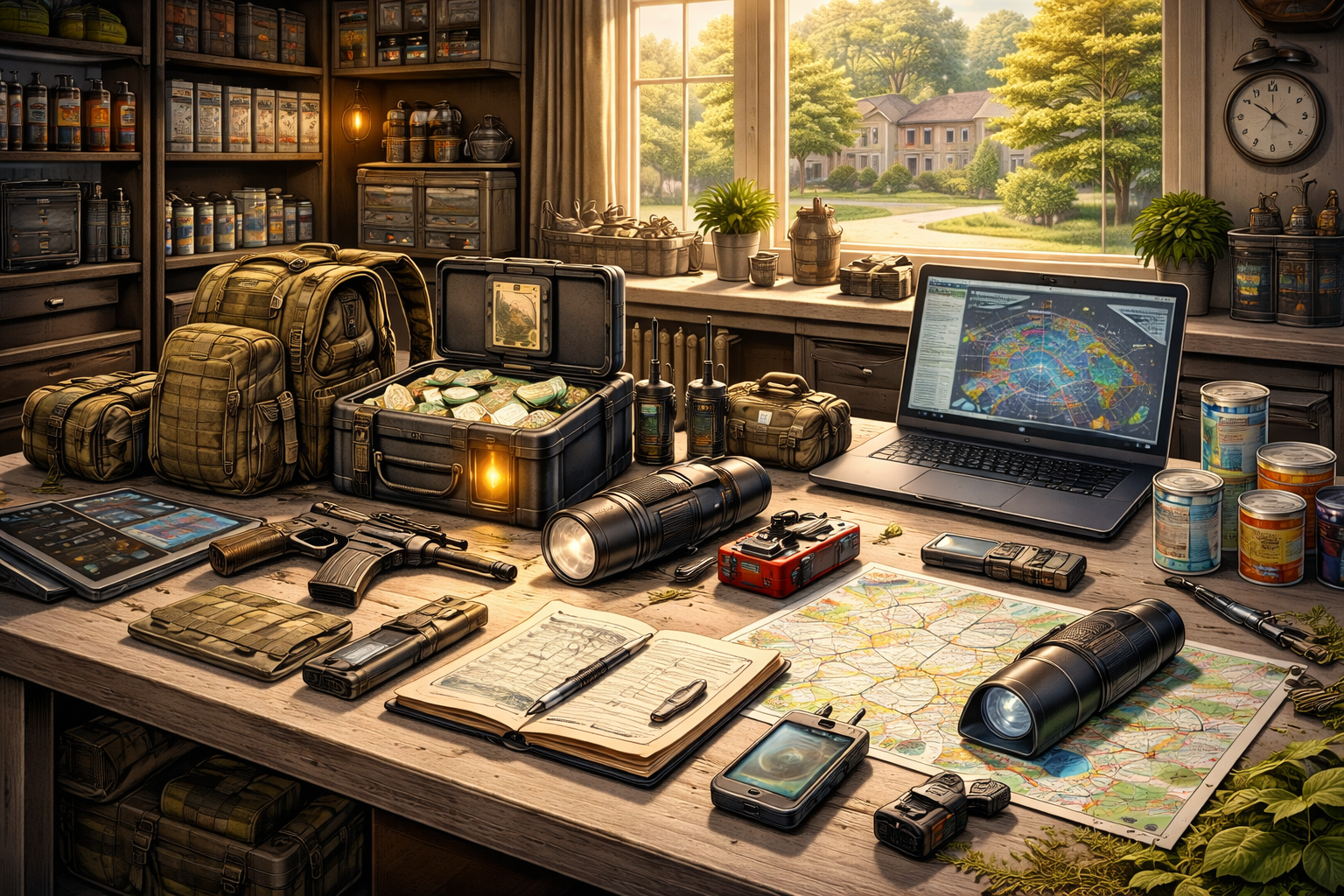
Mindset, Awareness and Planning Matter More Than Gear
Most people think they’re prepared because they have:
- Food
- Water
- Tools
- Maybe even defensive gear
But the real failures happen in:
- Exposure
- Predictability
- Poor decision-making under stress
You don’t lose because you lack equipment—you lose because you were seen, tracked, or misunderstood the situation.
Core Mindset (No Fluff)
- The less people know about you, the safer you are
- Attention is risk
- Patterns get noticed
- Simple plans work under stress, complex ones fail
- Community beats isolation every time
Top Mistakes to Avoid (Advanced Breakdown)
1. Oversharing (Digital and Real-World)
What people do:
- Post their setups online
- Talk about supplies with the wrong people
- Casually mention locations, routines, or plans
Why it fails:
Information spreads faster than you think—especially in stressful situations
What to do instead:
- Keep your setup private
- Limit conversations about preps
- Assume anything said publicly will spread
2. Poor Digital Hygiene
What people do:
- Reuse passwords
- Keep location services on
- Use unsecured apps
Why it fails:
Your digital footprint builds a map of your life
Fix:
- Use a password manager
- Enable 2-factor authentication
- Disable location tagging
- Separate personal vs sensitive communications
3. Storing Everything in One Place
What people do:
- One storage area
- One house = everything
Why it fails:
One event = total loss
Fix:
- Split supplies into multiple locations
- Keep a ready-to-go kit
- Consider off-site backups
4. Standing Out
What people do:
- Tactical gear in public
- Obvious prepping setups
- Drawing attention unintentionally
Why it fails:
In a stressed environment, anything different stands out
Fix:
- Dress neutral
- Blend into your environment
- Avoid signaling capability or resources
5. Predictable Routines
What people do:
- Same routes
- Same times
- Same habits
Why it fails:
Patterns are easy to track and anticipate
Fix:
- Vary your routines
- Rotate routes
- Avoid being easy to read
6. No Layered Security
What people do:
- Rely on one line of defense
Why it fails:
Once that fails, everything fails
Fix:
Build layers:
- Perimeter awareness
- Controlled access
- Internal fallback positions
7. Relying Too Much on Technology
What people do:
- Depend on apps, GPS, internet
Why it fails:
Systems go down or get restricted
Fix:
- Paper maps
- Offline communication methods
- Manual backups for critical systems
8. Ignoring Community
What people do:
- Try to do everything alone
Why it fails:
You can’t watch everything or handle everything solo
Fix:
- Build relationships early
- Identify trustworthy people
- Share limited but useful information
9. No Real-World Testing
What people do:
- Make plans but never practice
- Assume everything will work
Why it fails:
Stress exposes weaknesses instantly—gear you’ve never used will fail you
Fix:
- Run drills regularly
- Test communication methods
- Simulate short-term outages (power, water, mobility)
- Identify and fix weak points before they matter
10. No Exit Strategy
What people do:
- Assume they’ll always stay put
- No backup plan
Why it fails:
Situations change fast—waiting too long traps you
Fix:
- Pre-pack essential gear
- Identify multiple evacuation routes
- Have at least two fallback locations
- Know your trigger points for leaving early
Step-by-Step (No Fluff Execution)
Step 1: Reduce Visibility
- Remove identifying markers
- Limit exposure online and offline
Step 2: Secure Your Information
- Lock down digital access
- Separate sensitive data
Step 3: Break Up Your Risk
- Distribute supplies
- Create redundancy
Step 4: Build Layers
- Early warning
- Access control
- Internal fallback
Step 5: Test Everything
- Practice scenarios
- Adjust based on weak points
Advanced Insight
Most threats don’t start with force—they start with:
- Observation
- Information
- Opportunity
If you remove those three, you remove most of the risk.
Final Takeaway
You don’t need more gear—you need fewer mistakes.
Stay low profile
Stay unpredictable
Stay prepared
That’s what actually keeps you safe when things go sideways.