
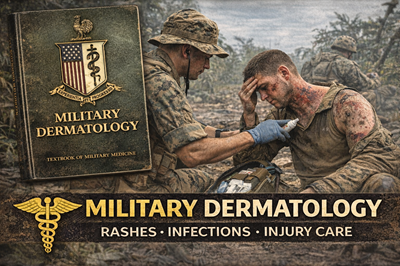
Textbook of Military Medicine Published by the Office of The Surgeon General Department of the Army, United States of America
Military Dermatology is a specialized medical reference developed by the U.S. Army as part of the Textbook of Military Medicine series, focusing on one of the most overlooked—but operationally critical—areas of health: skin disease. While often dismissed as minor, this publication makes it clear that dermatologic conditions can have a massive impact on effectiveness, readiness, and survival in harsh environments. As emphasized early in the text, even non-lethal skin conditions can incapacitate large numbers of personnel, reducing combat strength and operational capability .
What makes this manual especially valuable is its real-world, environment-driven perspective. It goes far beyond basic dermatology by addressing how extreme conditions—heat, humidity, cold, prolonged wetness, insects, and poor hygiene—interact with the human body. The table of contents highlights this breadth, covering topics such as cold injuries, immersion foot, tropical infections, insect-borne diseases, fungal conditions, and even reactions to chemical and biological warfare . This makes it not just a clinical reference, but a survival-focused guide to maintaining health in hostile environments.
The publication also draws heavily on historical military data, demonstrating how skin conditions have repeatedly impacted armies throughout history. As noted in the early chapters, diseases like scabies, fungal infections, and insect-borne illnesses have caused significant losses in manpower—sometimes exceeding the impact of battlefield injuries in certain environments . These lessons reinforce a critical point: prevention, early diagnosis, and proper treatment of “minor” conditions are essential to maintaining operational capability.
While written for military medical professionals, this manual has clear relevance beyond the battlefield. It is highly valuable for preppers, survivalists, outdoor workers, and anyone operating in remote or extreme environments. Whether dealing with prolonged exposure, limited hygiene, or environmental stressors, the principles outlined in this publication provide practical insight into preventing and managing conditions that can quickly escalate if ignored. In a true off-grid or crisis scenario, understanding skin health isn’t optional—it’s a key part of staying functional and resilient.