
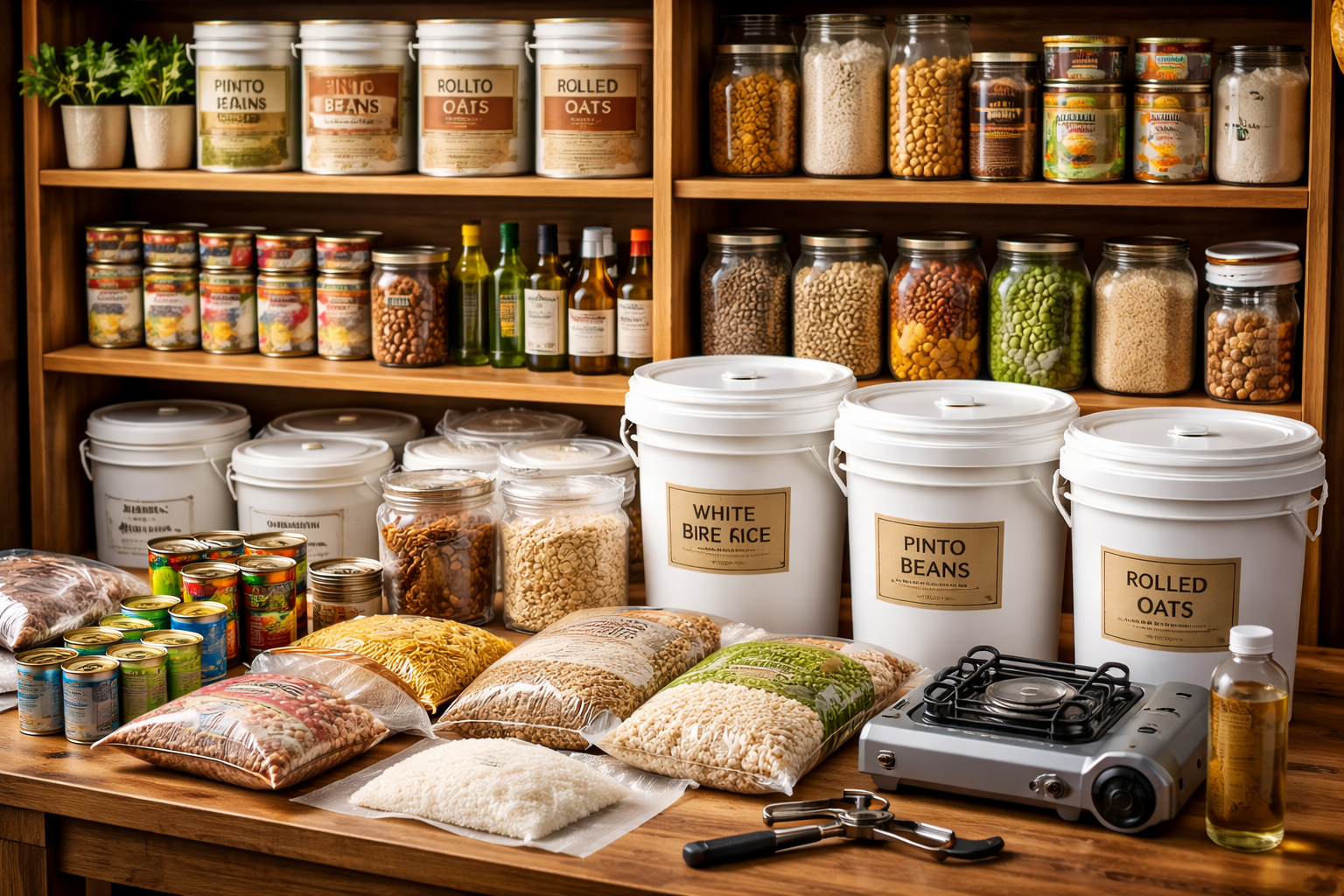
In uncertain times, many families are rediscovering the value of keeping a well-stocked pantry. A thoughtful food storage plan is not about panic or hoarding. It is about building resilience so that your household can continue functioning normally during disruptions such as supply shortages, storms, economic challenges, or unexpected emergencies.
A strong pantry provides stability. It allows you to cook meals without worrying about empty store shelves and helps protect your family from sudden price spikes or supply interruptions. With the right approach, food storage becomes a practical part of everyday life rather than a stressful project.
The key is to build your pantry gradually and intelligently.
Why a Prepared Pantry Matters
Food supply systems are efficient but fragile. Modern grocery stores rely on constant deliveries from warehouses, farms, and processing facilities. When transportation or distribution is disrupted, store shelves can empty quickly.
Having food stored at home helps in several ways:
It protects your family during temporary shortages.
It reduces reliance on frequent grocery trips.
It allows you to take advantage of sales and bulk purchases.
It ensures you always have nutritious meals available.
Most importantly, a well-planned pantry replaces uncertainty with confidence.
Start Small and Build Over Time
One of the biggest mistakes people make when starting food storage is trying to do everything at once. Building a pantry is much easier when done gradually.
A simple approach is to set aside a small amount of money each week for pantry items. Over time, this steady effort builds a significant reserve without straining your budget.
Another helpful strategy is to buy extra items during grocery sales. When staples like rice, beans, or canned goods are discounted, purchasing a little extra helps expand your pantry while saving money.
Preparedness works best when it becomes part of your regular routine.
Choose the Right Pantry Staples
Long-lasting foods are the backbone of any survival pantry. These items store well, provide essential nutrients, and can be used in a wide variety of meals.
Common staples include:
Rice
Beans and lentils
Pasta
Oats
Flour
Cornmeal
Dehydrated vegetables
Canned meats and vegetables
Cooking oils
Salt and spices
Whole grains and legumes are especially valuable because they provide protein, fiber, and long-lasting energy.
Foods that your family already enjoys should always be prioritized. A pantry filled with unfamiliar foods may go unused.
Proper Storage Makes All the Difference
Even shelf-stable foods can spoil if stored improperly. Heat, moisture, air, and pests are the biggest threats to long-term storage.
The best storage locations are cool, dry, and dark areas such as basements, closets, or pantry shelves away from appliances that generate heat.
Many experienced food storage planners use a two-layer protection system for dry goods:
First, food is sealed inside Mylar bags with oxygen absorbers.
Second, the bags are placed inside sturdy containers or buckets.
This method protects food from oxygen, light, and pests while dramatically extending shelf life.
Airtight containers are essential for protecting grains and beans from insects.
Rotate Your Pantry Regularly
A successful pantry is not meant to sit untouched for years. The best systems follow a simple rule:
Use the oldest food first and replace it with new stock.
This process is known as rotation. It ensures that nothing expires and keeps your food supply fresh.
A helpful habit is to review your pantry every six to twelve months. Check expiration dates, reorganize supplies, and replace anything that is running low.
Using your stored food in everyday cooking also helps your family stay familiar with the ingredients you keep on hand.
Buy Smart When Purchasing in Bulk
Bulk buying can be a powerful way to build your food supply while saving money. Large containers such as #10 cans or bulk bags often offer lower prices than smaller packages.
However, it is important to compare prices carefully. Calculating the price per ounce or per pound helps determine which option truly offers the best value.
Bulk purchases should also match your household’s storage space and consumption habits. Buying more food than you can store properly defeats the purpose of long-term storage.
Plan for Food Preparation During Emergencies
Food storage is only part of preparedness. You must also consider how food will be prepared if power or utilities are unavailable.
Backup cooking options may include:
Portable butane stoves
Propane camp stoves
Solar ovens
Outdoor grills
Rocket stoves
Simple tools can also become critical during outages. For example, a manual can opener ensures that canned food remains accessible even without electricity.
Water storage and purification should also be considered alongside food storage.
Keep Nutrition in Mind
A survival pantry should provide more than just calories. Nutritional balance helps maintain health and energy during stressful situations.
Including a variety of foods ensures your family receives protein, carbohydrates, fats, vitamins, and minerals.
Good nutritional additions include:
Beans and lentils for protein
Whole grains for energy
Dried fruits for vitamins
Seeds and nuts for healthy fats
A diverse pantry also keeps meals more enjoyable, which can make a difficult situation easier to handle.
Preparedness Brings Peace of Mind
Building a food pantry is not just about preparing for worst-case scenarios. It is about creating stability and reducing stress.
A well-stocked pantry allows you to face unexpected events with confidence rather than worry. It turns uncertainty into manageable action.
The most effective approach is steady progress. Small weekly steps add up over time, eventually creating a strong and dependable food reserve.
In a world where supply chains can change quickly, having your own reliable pantry is one of the simplest and most practical forms of self-reliance.