
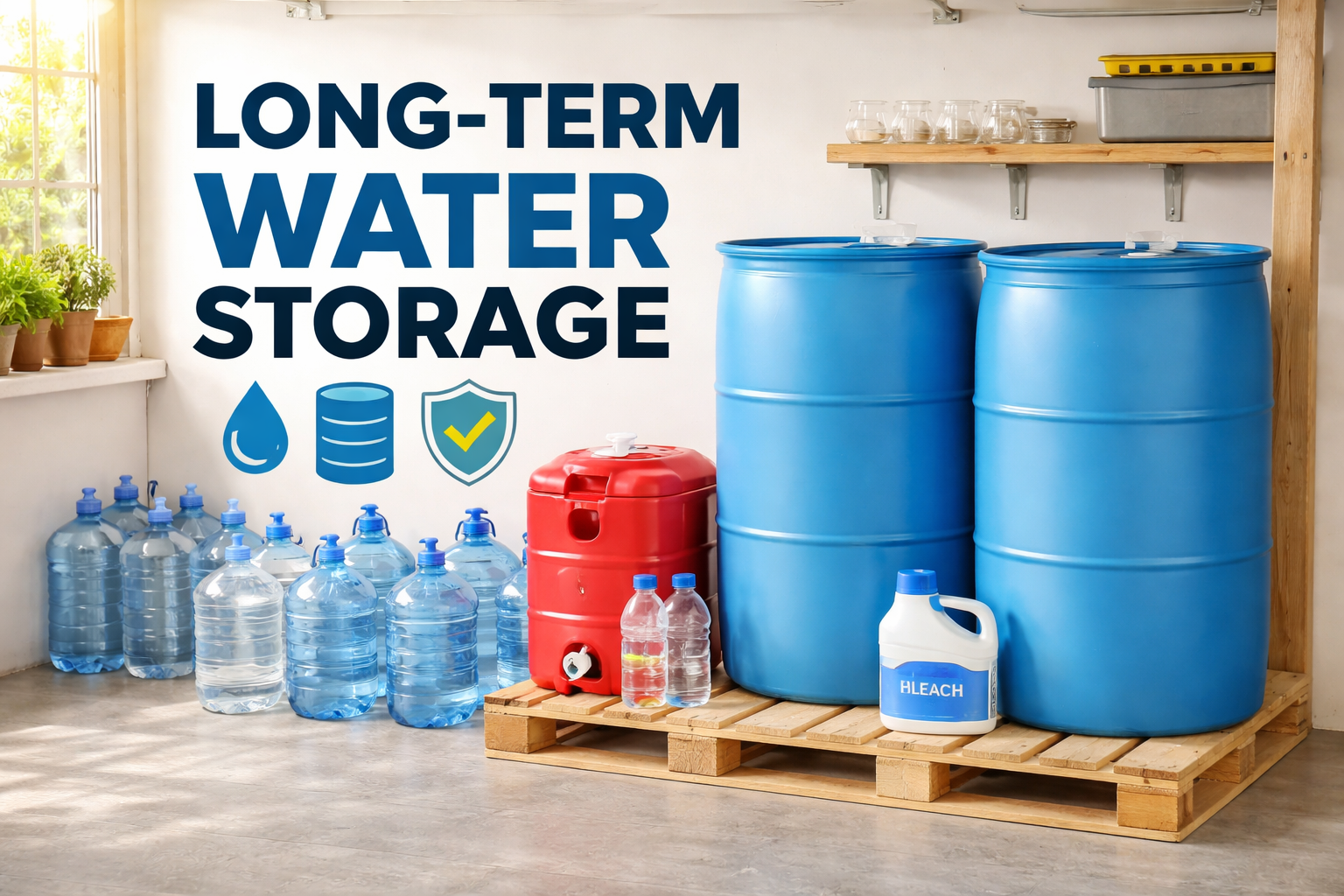
When it comes to preparedness, water is not optional—it’s foundational. You can go weeks without food, but only a few days without water. And unlike food, water systems are often the first to fail or become unreliable.
Most people store a few bottles and call it good. But real preparedness means thinking long-term, building redundancy, and understanding how water behaves over time.
Why Long-Term Water Storage Matters
In most real-world scenarios, systems don’t collapse overnight—they degrade.
Supply chains become inconsistent
Municipal systems fail temporarily
Power outages interrupt pumping and treatment
Natural disasters disrupt access
Having your own stored water gives you independence and stability when everything else becomes uncertain.
How Much Water Do You Really Need?
A common baseline:
1 gallon per person per day (minimum)Drinking
Basic hygiene
Food prep
For true preparedness:
2–3 gallons per person per day is more realistic
Example:
Family of 4 (minimum):
4 gallons/day = 120 gallons/month
360 gallons for 3 months
This adds up quickly—which is why bulk storage matters.
Best Containers for Long-Term Storage
✅ Food-Grade Plastic Drums (Most Practical)
55-gallon drums are common
Affordable and scalable
Easy to treat and rotate
✅ Water Storage Containers (5–7 gallon)
Portable and easy to use
Good for short-term + backup
⚠️ Other Options
Stainless steel (excellent but expensive)
Glass (safe but fragile and impractical in bulk)
Storage Setup (CRITICAL)
Where and how you store water matters just as much as the container.
Key Rules:
Store in a cool, dark place (basement ideal)
Avoid sunlight (prevents algae + degradation)
Keep containers sealed
Important Tip:
Do NOT store directly on concrete
Place cardboard, wood, or a pallet underneath
Helps prevent long-term container degradation and potential leaching
Treating Water for Long-Term Storage
If you’re storing tap water, it’s often already treated—but long-term storage still benefits from stabilization.
Common Treatment:
Sodium hypochlorite (unscented bleach)
General guideline:
~1/8 teaspoon per gallon (varies by concentration)
Alternative:
Chlorine dioxide (longer-lasting, more stable)
How Long Does Stored Water Last?
Properly Stored:
6–12 months (standard guidance)
Up to 5+ years if:Properly treated
Sealed
Stored in ideal conditions
Key Insight:
Water itself doesn’t “expire”—
the treatment does.
Extending Storage Life
You don’t always need to dump and replace.
Instead:
Re-treat water after several years
Inspect for:Cloudiness
Smell
Discoloration
If it looks and smells fine:
→ Re-treat and continue using
Rotation Strategy
You have options:
Conservative:
Rotate every 6–12 months
Practical:
Rotate every 2–3 years
Advanced:
Re-treat every 3–5 years
Choose what fits your system and effort level.
What Happens Over Time?
Even properly stored water can:
Lose dissolved oxygen → tastes “flat”
Slightly change in taste
Develop issues if treatment degrades
How to “Freshen” Stored Water
If water tastes stale:
Shake the container (reintroduces oxygen)
Pour between containers
Stir or aerate
Filter through a system (e.g., gravity filter)
Boil if needed
Simple fixes can dramatically improve taste.
Final Safety Layer (IMPORTANT)
Always have a plan to treat water before use if needed.
Options:
Boiling
Filtering (Katadyn, Berkey, etc.)
Chemical treatment
Aeration
Stored water is step one—usable water is the goal.
Advanced Strategy: Passive Water Storage Systems
Instead of just storing water:
Use well + pressure tanks
Store hundreds of gallons in-system
Refill with generator if needed
This turns your daily water system into your emergency system
The Big Takeaway
Preparedness isn’t about panic—it’s about stability.
The people who struggle most during disruptions aren’t the ones who didn’t escape…
they’re the ones who never built systems where they already live.
Water is one of the easiest and most powerful systems you can build.
Start simple. Build layers. Improve over time.
Action Steps
Start here:
Store at least 2 weeks of water
Add bulk storage (drums or containers)
Treat and label your water
Create a rotation or re-treatment plan
Add a backup purification method
If you get water right…
everything else becomes easier.