
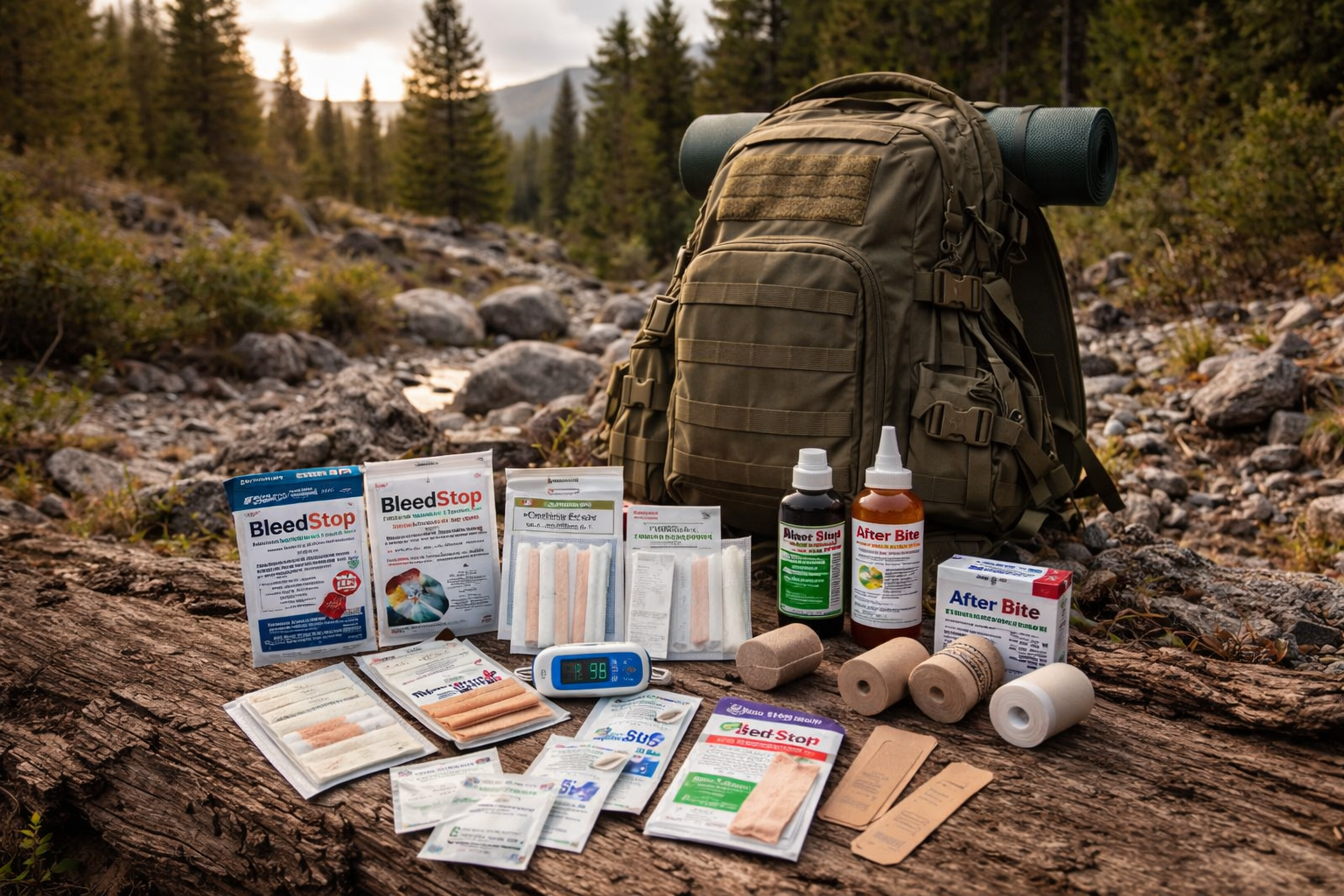
Most people stock food, water, maybe some gear…
but injuries are what actually take people out early.
Not dramatic stuff either – it’s the small things that spiral:
- a deep cut that won’t stop bleeding
a dirty wound that gets infected
a burn that isn’t treated properly
breathing issues you didn’t catch early
That’s where a real first aid setup matters.
Bleeding Is Your First Problem
If someone is bleeding heavily, you don’t have time to think.
Regular bandages won’t do anything.
You need:
- Hemostatic agents (like Bleedstop) → poured directly into the wound to speed clotting
Pressure + gauze → and a lot more than you think
When blood is pooling fast, you’re buying time — that’s it.
Wound Closure (Most People Skip This)
Covering a wound is NOT the same as closing it.
If it’s open:
- it keeps bleeding
it keeps getting contaminated
You need:
- Steri-strips / butterfly closures → pull the skin together
Laceration closures → for deeper or longer cuts
These replace stitches when you don’t have access to help.
But here’s the key:
Never close a dirty wound
Clean it first — or you trap infection inside.
Cleaning Is What Prevents Long-Term Problems
This is where most kits fail.
You should have:
- Povidone iodine (prep pads or solution)
Isopropyl alcohol (for tools, not deep wounds)
Sterile gauze for cleaning + dressing
A 30-second proper clean can be the difference between:
-healing normally
-or dealing with infection days later
And infections in a grid-down situation are serious.
Dressings That Actually Work
You’re not just covering a wound once — you’re managing it over days.
You need:
- Gauze in multiple sizes (you’ll go through it fast)
Wraps that don’t stick to wounds (so you don’t rip it open again)
Tough bandages that stay on during work
Fingertip bandages (hands get injured constantly)
People underestimate how much daily wear and tear matters.
Monitoring (What You Can’t See)
This is one of the most overlooked tools:
Pulse oximeter
It tells you:
oxygen levels
heart rate
Someone can look fine… and still be in trouble.
Smoke, illness, shock, blood loss — this helps you catch it early.
Normal is ~95–100%
Below 90% → serious problem
Small Problems That Become Big Ones
People laugh at this stuff — until it matters.
- Insect bites → scratching → infection
Blisters → open wounds → infection
Bruising/swelling → mobility issues
Even basic things like anti-itch or bruise treatment help keep you functional.
Specialized Prep (Situational)
Depending on your risk level:
- Potassium iodide → protects thyroid in nuclear scenarios
Wound seal powders → fast sealing for awkward injuries
Not everyday items — but high impact if needed.
The Reality Most People Miss
This isn’t “use it once and done.”
You may need to:
- clean wounds repeatedly
change dressings daily
monitor symptoms over time
This is ongoing care, not a one-time fix.
The Big Takeaway
The gap between:
a survivable injury
and a fatal one
…is often just having the right supplies and knowing how to use them.
And once things go bad:
- shelves empty fast
supply chains stop
medical help gets overwhelmed
These exact items disappear first.
Final Thought
You don’t need to build a hospital.
But you do need to cover:
- bleeding
cleaning
closing
protecting
monitoring
Because when something happens…
the person who can stop bleeding, clean a wound, and manage care
becomes the most valuable person around.