
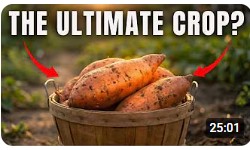

🍠 Sweet Potatoes: The “Lazy Gardener” Super Crop
🌱 Imagine a crop that barely asks for attention but pays you back with serious nutrition, steady calories, and a shelf life that doesn’t require canning, freezing, or refrigeration. That’s why so many homesteaders call sweet potatoes the ultimate one-plant food insurance.
🥇 Why Sweet Potatoes Win
✅ Low effort, high reward — tolerant of drought and rough soil
✅ Nutrient-dense — especially vitamin A, plus fiber and minerals
✅ Dual-purpose — you can eat the greens and the roots
✅ Stores for months after curing, even without a root cellar
✅ Big calories in small space compared to grain crops
🧑🌾 “My garden failed… but the sweet potatoes didn’t”
🐴 Even when everything else goes sideways — bad timing, animals in the garden, or a chaotic season — sweet potatoes can still produce. They’re the kind of crop that can quietly carry a harvest even when you can’t baby your garden.
🌿 Growing Sweet Potatoes the Easy Way
🌱 Start With Slips
🍃 Sweet potatoes don’t grow from seed — they grow from slips (little shoots).
You can buy them, or make your own from last year’s sweet potatoes.
✂️ One Trick for Better Roots
🌿 Trim back extra leaves on new slips so the plant puts more energy into roots, not greenery.
🧪 Feed the Roots, Not the Leaves
🧂 Too much nitrogen = lots of vines, fewer tubers
🌾 Sweet potatoes prefer soil that supports root growth — think phosphorus + potassium.
🧹 Stop the Vines From Re-rooting Everywhere
🪴 The vines try to root wherever they touch the ground, which can steal energy from tuber growth later in the season.
A quick rake-back or trimming the edges once or twice can help focus growth downward.
📍 Where and When to Plant
🌡️ Don’t plant too early.
Sweet potatoes love warmth and hate cold soil. Wait until the soil is consistently around 65–70°F.
🏜️ Best soil is loose, sandy, and well-draining.
They can survive poor soil, but looser soil = easier harvest and better tubers.
💧 Watering Without Overthinking It
☀️ A little wilting in the heat of the day is normal.
🌙 If they’re still droopy after dark, they need a deeper watering.
Too much water can invite fungus and reduce tuber development.
🐭 Pests That Actually Matter
🪲 Flea beetles can damage leaves
🍄 Fungal issues show up with too much moisture + cold
🐀 Underground critters (mice, gophers, etc.) can ruin the harvest fast
⛏️ Harvesting Tips
🍂 When vines start yellowing, it’s usually harvest time
❄️ Harvest before the first frost
🧑🌾 Loosen the soil first with a fork, then dig gently by hand to avoid damaging the skins
🔥 The Secret Step: Curing
🧺 Sweet potatoes only store long-term if you cure them first.
🚫 Don’t wash them before curing — the skins are fragile right after harvest.
🌬️ Cure them one layer deep with airflow for 7–10 days
This toughens the skin and improves flavor as starches convert to sugars.
🏠 Storing Without a Root Cellar
🪣 After curing, store them in a cool, stable spot like a closet or pantry.
🚫 Don’t put sweet potatoes in the fridge — it ruins flavor and can shorten storage life.
🧠 The “Free Forever” Trick
🏆 Save your biggest, healthiest sweet potatoes each year and use them next season to grow slips.
Over time, you end up with sweet potatoes adapted to your soil and climate, and your yields tend to improve year after year.