
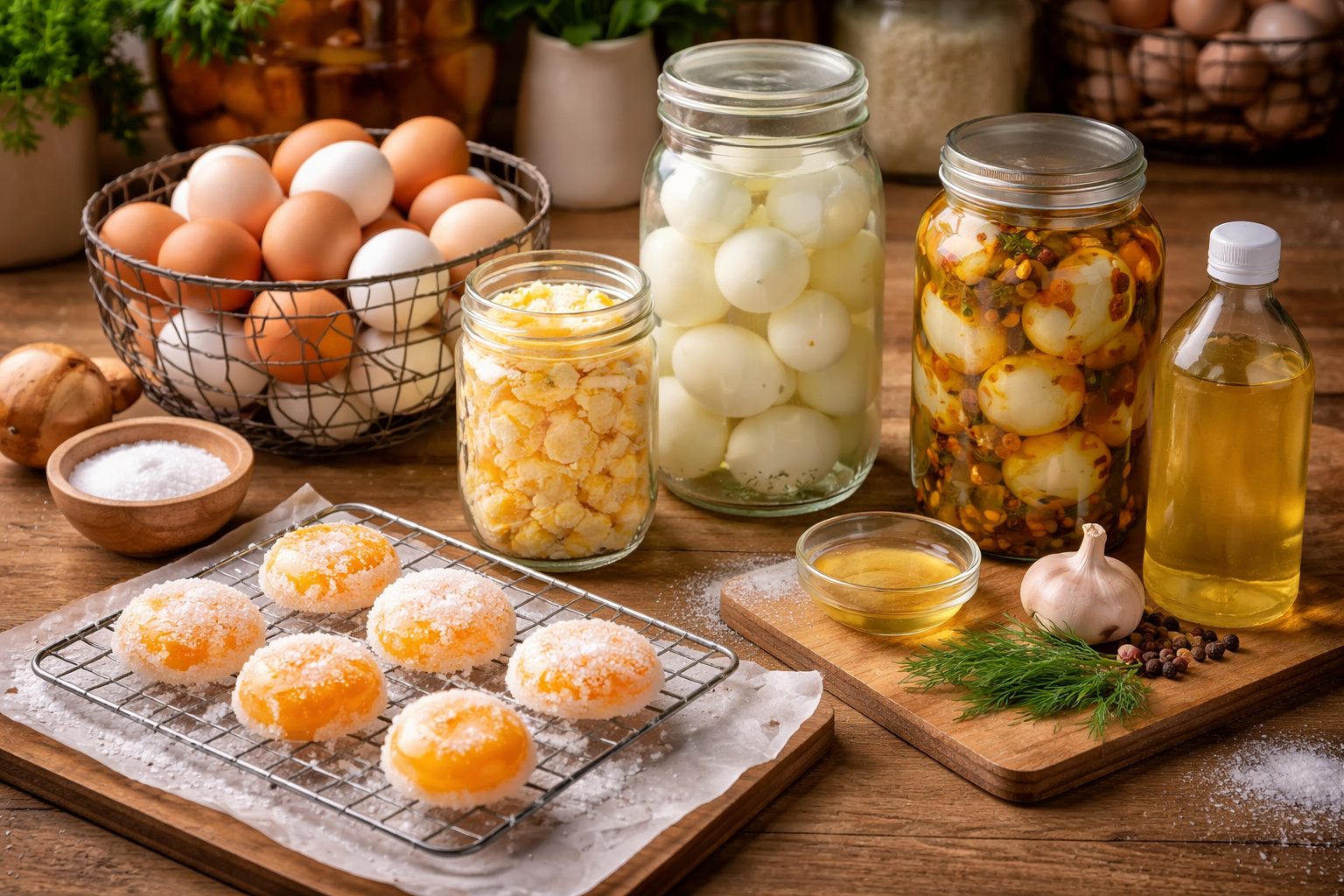
If you keep backyard chickens or regularly buy farm eggs, you already know that egg production comes in waves. In the warmer months, hens often produce more eggs than most families can eat. Then during winter, production drops and eggs can become harder to come by.
Learning how to preserve eggs helps you save that surplus so you can still use them later. People have been preserving eggs for centuries, long before modern refrigerators existed. Today, there are several simple methods that allow you to store eggs for weeks, months, or even longer depending on the technique.
Below are some practical ways to preserve eggs at home and when each method works best.
Why Preserve Eggs?
There are a few common reasons people preserve eggs:
Surplus eggs
Backyard flocks often produce more eggs than a household can use during peak laying months.
Seasonal production changes
Egg production usually slows in winter due to shorter daylight hours.
Emergency preparedness
Stored eggs provide a valuable source of protein during supply disruptions.
Reducing food waste
Instead of giving away or throwing away extra eggs, preservation lets you use them later.
Important Safety Tips
Before preserving eggs, keep a few safety basics in mind:
Use fresh eggs whenever possible.
Avoid eggs with cracks or damage.
Use clean tools and containers.
If an egg smells strange or looks questionable after storage, do not eat it.
Different preservation methods have different safety considerations, so always research and follow reliable food safety practices.
Common Ways to Preserve Eggs
Freezing Eggs
Freezing is one of the simplest and most reliable ways to preserve eggs.
Eggs should not be frozen in the shell. Instead, crack them open and mix them lightly before freezing.
Basic freezing method:
Crack eggs into a bowl.
Lightly scramble them until blended.
Pour the mixture into ice cube trays or muffin tins.
Freeze until solid.
Transfer frozen portions into freezer bags.
Frozen eggs are great for baking, scrambled eggs, omelets, and casseroles.
Properly stored frozen eggs can last up to one year in the freezer.
Dehydrating Eggs
Another option is drying cooked eggs and turning them into egg powder.
To do this:
Scramble eggs without oil or butter.
Cook until fully done and dry.
Place the cooked eggs in a dehydrator until completely dry.
Grind the dried eggs into powder using a blender or grinder.
The powder can be rehydrated later for cooking.
This method is popular for camping food and emergency storage, though the flavor may not be exactly the same as fresh eggs.
Pickled Eggs
Pickled eggs are a traditional preservation method that also adds flavor.
To pickle eggs:
Hard boil and peel the eggs.
Prepare a vinegar-based brine with salt and spices.
Place eggs in a clean jar.
Pour the hot brine over the eggs.
Refrigerate and allow them to absorb the flavor for several days.
Pickled eggs are typically stored in the refrigerator and eaten as snacks or added to salads.
Water Glassing Eggs
Water glassing is an old homestead technique used to keep fresh eggs for long periods.
This method uses a solution made with pickling lime and water.
Important rules:
Only use fresh, unwashed eggs from backyard chickens.
The natural protective coating on the shell (called the bloom) must remain intact.
Basic process:
Mix pickling lime with water.
Place fresh eggs carefully into a jar or container.
Pour the lime solution over the eggs until fully covered.
Store the container in a cool, dark place.
This method has historically been used to store eggs for many months or even longer.
Mineral Oil Coating
Another technique involves coating eggs with mineral oil to seal the shell.
The oil blocks air from entering the egg and slows spoilage.
To do this:
Warm food-grade mineral oil slightly.
Rub a thin layer over clean eggs.
Store eggs point-side down in a carton.
The eggs can then be stored in a cool place or refrigerator for extended shelf life.
Salt-Cured Egg Yolks
Salt curing is a unique preservation method used mostly for egg yolks.
The process removes moisture from the yolk and turns it into a firm ingredient similar to cheese.
Basic steps:
Separate yolks from egg whites.
Place yolks in a container of salt.
Cover completely with more salt.
Refrigerate for about a week.
Dry the yolks afterward.
The finished yolks can be grated over pasta, salads, or vegetables.
Choosing the Right Method
Different preservation methods serve different purposes.
Freezing works well for everyday cooking.
Pickling creates flavorful snacks.
Dehydrating or freeze-drying is useful for long-term storage.
Water glassing keeps eggs closest to their fresh state.
The best choice depends on how you plan to use the eggs later.
Final Thoughts
Preserving eggs is a skill that has been used for generations. Whether you raise chickens, buy eggs in bulk, or simply want to waste less food, knowing a few preservation techniques can make a big difference.
With the right method, extra eggs today can become valuable food weeks or months down the road.
For anyone focused on homesteading, gardening, or self-reliance, egg preservation is a practical skill worth learning.