
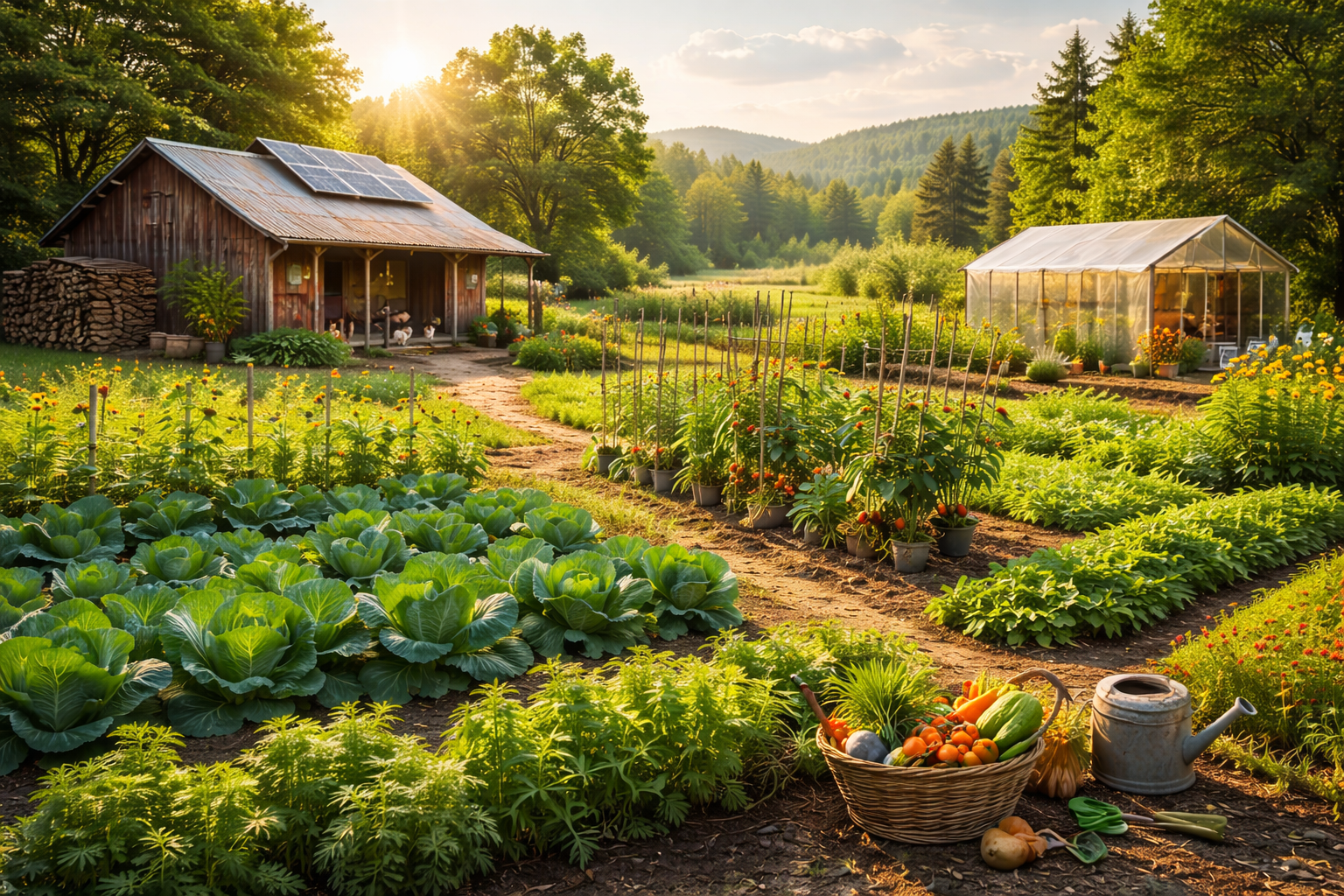
General Information
Practical Prepper Guide: Beginner to Advanced
Homesteading is not just about land or growing food.
It’s about building a system that:
- Produces
- Sustains
- Adapts
- Survives disruptions
Most people approach it backwards – buying land or animals before building the skills and systems needed to support them.
This guide walks through how to build a real, functional homestead from beginner to advanced level.
Step 1: Define Your Purpose and Scope
- Decide if your goal is supplemental or full self-sufficiency
- Identify how many people the homestead must support
- Determine climate, growing season, and local risks
- Define what “success” looks like (food, energy, independence)
- Start small and scale intentionally
Step 2: Secure Reliable Water First
- Identify primary and backup water sources
- Use wells, rain collection, or nearby natural sources
- Store water for short-term disruptions
- Build filtration and purification capability
- Ensure year-round access, including winter conditions
Step 3: Build Soil Before Growing Food
- Healthy soil produces reliable crops
- Use composting to build nutrients
- Add organic matter regularly
- Avoid over-reliance on store-bought fertilizers
- Test and improve soil over time
Step 4: Start With High-Yield, Reliable Crops
- Focus on calorie-dense foods (potatoes, beans, squash)
- Add fast-growing crops for quick returns
- Choose plants suited to your climate
- Use crop rotation to maintain soil health
- Save seeds for future planting
Step 5: Establish Food Preservation Systems
- Canning (water bath and pressure)
- Dehydrating
- Freezing (if power available)
- Root cellaring
- Fermentation
- Practice regularly before relying on it
- Build storage that protects from temperature swings
Step 6: Introduce Livestock Gradually
- Start with low-maintenance animals (chickens, rabbits)
- Ensure feed, water, and shelter are sustainable
- Understand breeding cycles and care requirements
- Plan for veterinary limitations
- Avoid scaling too fast
Step 7: Develop Energy Independence
- Identify current energy needs
- Reduce consumption first
- Add solar, wood, or alternative energy sources
- Store backup fuel where possible
- Plan for long-term outages
Step 8: Build Tools and Infrastructure
- Invest in durable, repairable tools
- Maintain backups for critical items
- Learn manual alternatives to powered tools
- Build storage, fencing, and shelter systems
- Keep repair materials on hand
Step 9: Strengthen Security and Awareness
- Understand local risks (theft, wildlife, instability)
- Build visibility and awareness of surroundings
- Secure buildings, tools, and supplies
- Maintain communication options
- Avoid drawing unnecessary attention
Step 10: Develop Practical Skills (Most Important)
- Gardening and soil management
- Animal care
- Food preservation
- Basic carpentry
- Mechanical repair
- First aid
- Skills matter more than equipment
- Practice consistently
Step 11: Build Redundancy Into Everything
- Multiple water sources
- Backup food production methods
- Extra tools and supplies
- Alternative energy options
- Secondary plans for failures
- Assume systems will fail and plan accordingly
Step 12: Create a Community Layer
- Connect with nearby homesteaders
- Share knowledge and resources
- Trade goods and services
- Support each other during disruptions
- Build trust over time
Beginner Phase
- Learn basic gardening
- Store food and water
- Practice simple preservation methods
- Build foundational skills
Intermediate Phase
- Expand garden production
- Add small livestock
- Improve storage and infrastructure
- Begin energy independence steps
Advanced Phase
- Produce majority of your own food
- Maintain full preservation systems
- Operate with reduced external dependency
- Build strong local networks
Common Mistakes to Avoid
- Trying to do everything at once
- Buying land without understanding the environment
- Ignoring water access
- Overextending with livestock
- Not practicing skills before relying on them
- Failing to plan for seasonal changes
Real-World Application
In a disruption:
- Supply chains slow or stop
- Prices rise
- Access becomes limited
A functioning homestead:
- Produces food
- Maintains water access
- Supports daily living
- Reduces dependency
What You Can Do Today
- Start a small garden
- Store basic food and water
- Learn one new skill
- Identify your local growing conditions
- Begin building your system
Final Thought
Homesteading is not a project.
It’s a system built over time through:
- Consistency
- Skill
- Adaptation
The goal is not perfection.
It’s resilience.
Because when systems around you fail…
- Production matters
- Skills matter
- Preparation matters
And those who build early…
- Adapt faster
- Recover quicker