
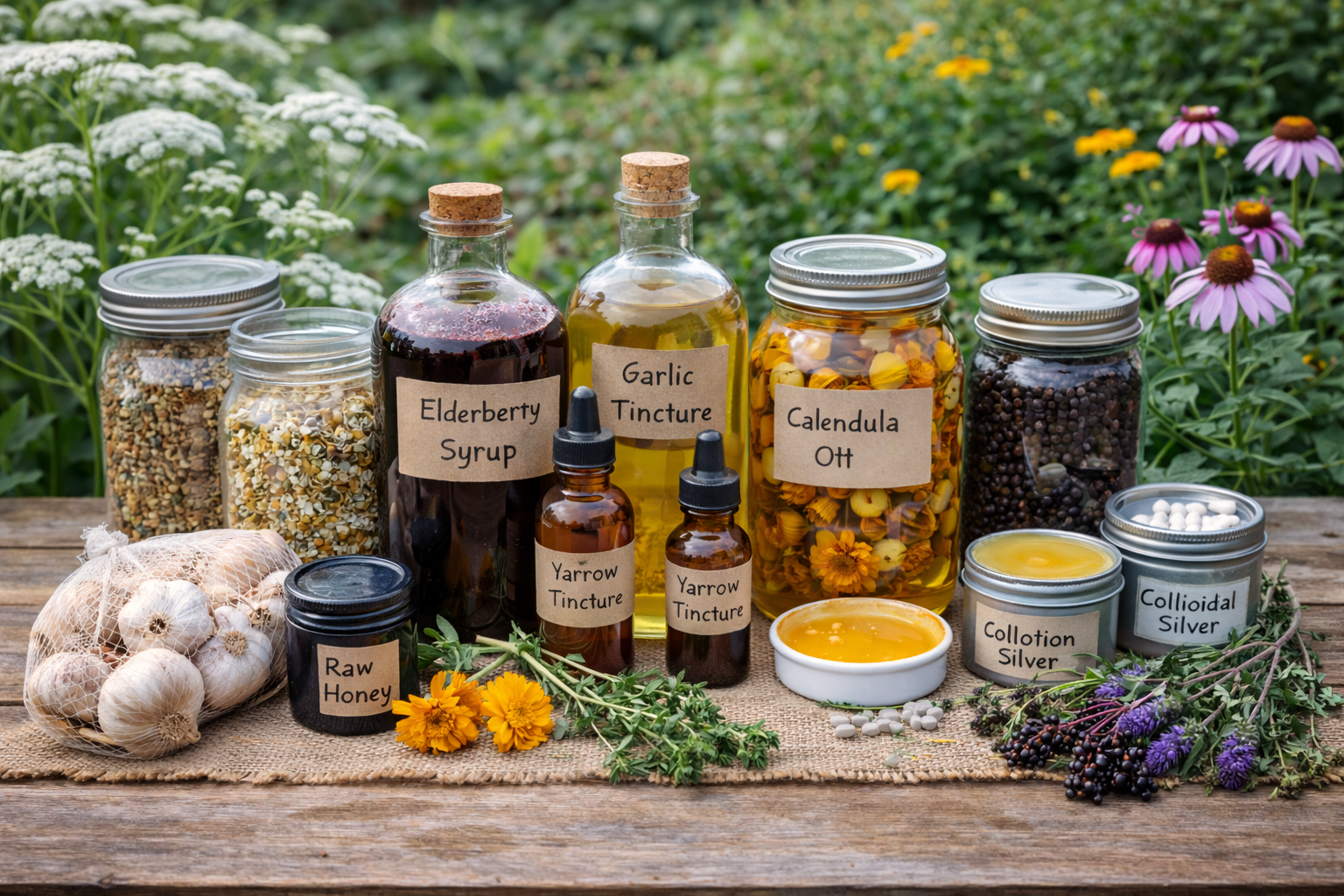
Modern healthcare has produced remarkable advances, but it also depends heavily on global supply chains, specialized manufacturing, and centralized distribution systems. Many medications and medical supplies travel long distances before reaching pharmacies and hospitals. When disruptions occur—whether from natural disasters, transportation problems, or manufacturing shortages—access to medicines can quickly become uncertain.
For this reason, many people interested in preparedness and homesteading are rediscovering an older tradition: growing and preparing basic plant-based remedies at home. A household medicine garden cannot replace modern medical care, but it can provide valuable support for minor ailments, basic first aid, and everyday wellness.
Learning these skills reconnects people with traditional knowledge that communities relied on for centuries before modern pharmaceutical systems existed.
Why Natural Remedies Are Being Rediscovered
For most of human history, healing came from plants, food, and traditional knowledge passed down through generations. Herbs were used to treat wounds, support digestion, fight infections, and strengthen the immune system.
Even today, many modern medications are derived from compounds originally discovered in plants. The difference is that modern pharmaceuticals isolate and concentrate specific chemicals, while traditional herbal medicine often uses whole plants and natural preparations.
Interest in homegrown remedies has increased in recent years for several reasons:
Growing awareness of supply chain vulnerabilities
Rising healthcare costs
Interest in natural and holistic wellness
The desire for greater self-reliance
Rather than replacing modern medicine, many households are exploring ways to combine conventional healthcare with practical herbal knowledge.
What a Home Medicine Garden Can Provide
A well-planned medicinal garden can support several common health needs.
Some plants help with minor cuts and wounds. Others support the immune system, soothe inflammation, or assist digestion. Certain herbs can be turned into teas, tinctures, salves, or infused oils that store well and remain useful throughout the year.
A small medicine garden often becomes a valuable extension of a household food garden, offering both nutrition and wellness support.
Plants Often Found in Traditional Medicine Gardens
Many useful medicinal plants are easy to grow and adapt well to backyard gardens.
Garlic has long been valued in many cultures for its antimicrobial and immune-supporting properties. It is also simple to grow and stores well after harvest.
Yarrow has traditionally been used to support wound care and minor bleeding control. It grows easily in many climates and produces delicate white or yellow flowers.
Elderberry shrubs are valued for their dark berries, which are commonly used in syrups and teas during cold and flu season.
Chamomile is widely used as a calming tea that supports relaxation and digestion. Its small flowers can be dried and stored for months.
Calendula is another common garden plant used in herbal salves and skin preparations.
Honey, while not a plant itself, has historically been used for wound care and food preservation. When combined with herbs, it can create soothing syrups or infused remedies.
These examples represent only a small portion of the plants traditionally used in herbal medicine, but they illustrate how accessible many remedies can be.
Learning to Prepare Herbal Remedies
Growing medicinal plants is only the first step. Understanding how to prepare them properly is equally important.
Traditional herbal preparations include several basic forms.
Herbal teas are one of the simplest preparations. Leaves, flowers, or roots are steeped in hot water to extract beneficial compounds.
Tinctures are concentrated extracts made by soaking herbs in alcohol or glycerin for several weeks. These preparations often store well for long periods.
Salves and balms combine herbal oils with natural waxes to create topical treatments for skin care.
Infused oils are created by soaking herbs in carrier oils, allowing plant compounds to slowly transfer into the oil.
Fermented foods such as sauerkraut or kimchi can also support health by promoting beneficial gut bacteria.
These traditional preparations require patience and practice, but many homesteaders find them rewarding to learn.
The Importance of Responsible Use
While herbal knowledge can be valuable, it is important to approach plant medicine responsibly.
Some plants interact with medications or may not be appropriate for certain medical conditions. Others must be used in correct doses to avoid unwanted effects.
Anyone interested in herbal medicine should study reliable sources, consult trained herbalists when possible, and continue working with healthcare professionals for serious conditions.
Herbal remedies are best viewed as complementary tools rather than replacements for professional medical care.
Building Local Knowledge and Community
Traditional healing knowledge was historically shared within communities. Families learned from elders, healers, and experienced growers.
Today, many people are rebuilding those connections through gardening groups, herbal workshops, and local skill-sharing events. These networks help preserve knowledge and encourage responsible learning.
Communities that share knowledge about food growing, herbal medicine, and first aid often become more resilient during times of disruption.
A Balanced Approach to Preparedness
Preparing for uncertain times does not mean rejecting modern healthcare. Instead, it involves strengthening personal knowledge and practical skills so households are not completely dependent on external systems.
Growing medicinal plants, learning basic herbal preparation, and maintaining a small supply of essential medical items can provide valuable layers of resilience.
A backyard medicine garden is not a replacement for hospitals or pharmacies. But it can become a useful supplement to modern healthcare and a meaningful way to reconnect with traditional knowledge.
In a world where systems occasionally falter, practical skills and self-reliance remain some of the most valuable tools a household can develop.