
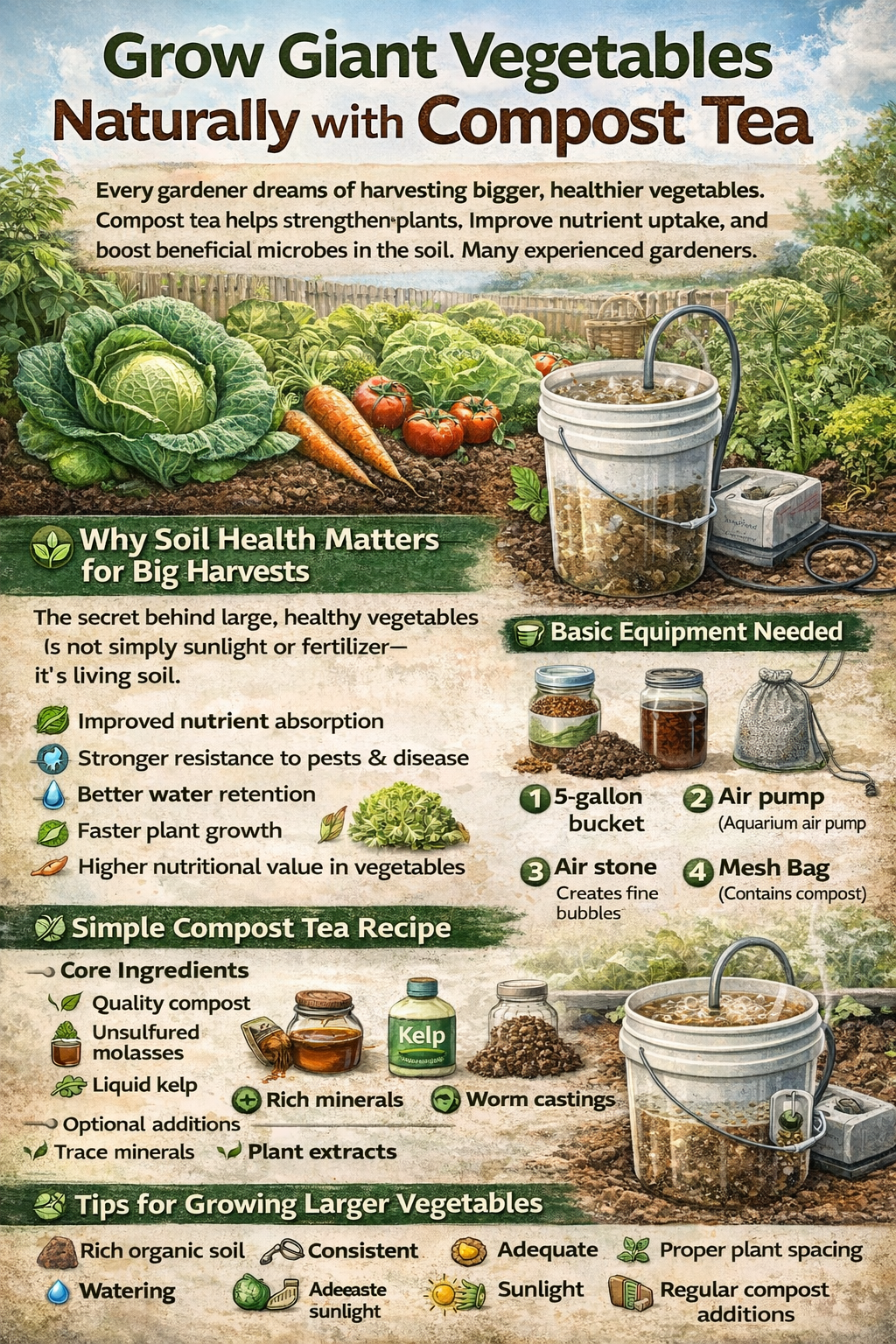
Every gardener dreams of harvesting bigger, healthier vegetables. While giant vegetables might seem like something only professional growers can achieve, the truth is that soil biology often matters far more than expensive fertilizers or complex equipment. One technique that has gained significant attention among organic gardeners is compost tea—a nutrient-rich liquid made from compost that can dramatically improve soil health and plant growth.
When used properly, compost tea helps strengthen plants, improve nutrient uptake, and encourage beneficial microorganisms in the soil. Many experienced gardeners credit it as one of the most effective natural tools for growing stronger crops.
🧑🌾 Why Soil Health Matters for Big Harvests
The secret behind large, healthy vegetables is not simply sunlight or fertilizer—it’s living soil.
Healthy soil contains billions of microorganisms that help plants absorb nutrients, resist disease, and grow stronger roots. When soil biology is thriving, plants can focus their energy on growth rather than survival.
Benefits of healthy soil include:
🌿 Improved nutrient absorption
🦠 Stronger resistance to pests and disease
💧 Better water retention
🌱 Faster plant growth
🥕 Higher nutritional value in vegetables
Compost tea works by boosting these beneficial soil microbes.
☕ What Is Compost Tea?
Compost tea is a liquid extract made by steeping compost in water while encouraging beneficial microorganisms to multiply.
The process is similar to brewing tea. Organic compost is placed in water and aerated so helpful bacteria and fungi multiply rapidly. Once brewed, the liquid becomes a powerful natural fertilizer and soil booster.
Key benefits of compost tea include:
🦠 Introduces beneficial microbes into the soil
🌱 Enhances plant nutrient uptake
🍃 Improves plant immunity against disease
🌿 Supports stronger root development
🐛 Helps discourage certain pests naturally
Rather than replacing compost in your garden, compost tea enhances the effects of good soil practices.
🧰 Basic Equipment Needed
Making compost tea at home requires only a few simple items.
🪣 Brewing Container
A 5-gallon bucket works well for small garden batches.
💨 Air Pump
An aquarium air pump helps oxygenate the water and encourages beneficial aerobic bacteria.
🫧 Air Stone or Diffuser
This creates fine bubbles that distribute oxygen evenly through the mixture.
🧺 Strainer or Mesh Bag
Used to contain the compost material while allowing microbes to flow into the water.
🌿 Simple Compost Tea Recipe
While every gardener develops their own preferred formula, a basic compost tea mix often includes the following ingredients.
Core Ingredients
🌱 Quality compost – provides beneficial microbes
🍯 Unsulfured molasses – feeds microbial growth
🌊 Liquid kelp – supplies trace nutrients and encourages fungal activity
🪱 Worm castings – rich in minerals and beneficial bacteria
Optional additions sometimes include trace mineral powders or plant extracts that improve microbial diversity.
🔄 Brewing Process
Creating compost tea takes about 24–36 hours.
Step-by-Step Brewing
1️⃣ Fill your bucket with clean, non-chlorinated water.
2️⃣ Add compost to a mesh bag or directly into the water.
3️⃣ Add microbial foods like molasses or kelp.
4️⃣ Run the air pump continuously to keep the mixture oxygenated.
5️⃣ Allow the tea to brew for roughly 24–48 hours.
Proper aeration is important because beneficial microorganisms thrive in oxygen-rich environments.
🌻 How to Use Compost Tea
Compost tea can be applied in two primary ways.
🌱 Soil Application
Pour diluted compost tea directly onto the soil around plant roots. This feeds soil microbes and helps plants absorb nutrients more efficiently.
🍃 Foliar Spray
Spray diluted tea onto leaves using a garden sprayer. This allows plants to absorb nutrients directly through their leaves while creating a protective microbial layer.
Both methods can improve plant health when used consistently.
📈 Benefits Gardeners Often See
Gardeners who regularly apply compost tea often report improvements such as:
🥬 Larger vegetables
🌿 Faster plant growth
🍅 Improved flavor and sweetness
🌱 Healthier soil structure
🐛 Reduced pest pressure
Plants grown in biologically active soil frequently produce stronger leaves and more productive harvests.
⚠️ Common Compost Tea Mistakes
Even though compost tea is simple to make, a few common issues can reduce its effectiveness.
Strong or Unpleasant Smell
This usually means the mixture lacked oxygen and became anaerobic. Increase aeration during brewing.
Weak Plant Response
This may indicate poor-quality compost or insufficient microbial food sources.
Overbrewing
Leaving compost tea too long without fresh oxygen can reduce microbial activity.
🌎 Tips for Growing Larger Vegetables
Compost tea works best when combined with other good gardening practices.
Key factors include:
🌿 Rich organic soil
💧 Consistent watering
☀️ Adequate sunlight
🪴 Proper plant spacing
🌱 Regular compost additions
When these factors work together, plants receive balanced nutrition that supports strong growth.
🧠 Final Thoughts
Growing bigger and healthier vegetables often starts with improving the life inside your soil. Compost tea is a simple, natural way to boost beneficial microbes and support stronger plant growth without relying on synthetic fertilizers.
With just a bucket, quality compost, and a small air pump, home gardeners can create a powerful soil booster that helps vegetables thrive. Over time, healthier soil leads to stronger plants—and better harvests.
Sometimes the biggest gardening secret isn’t what you add to your plants, but what you add to the soil beneath them.