
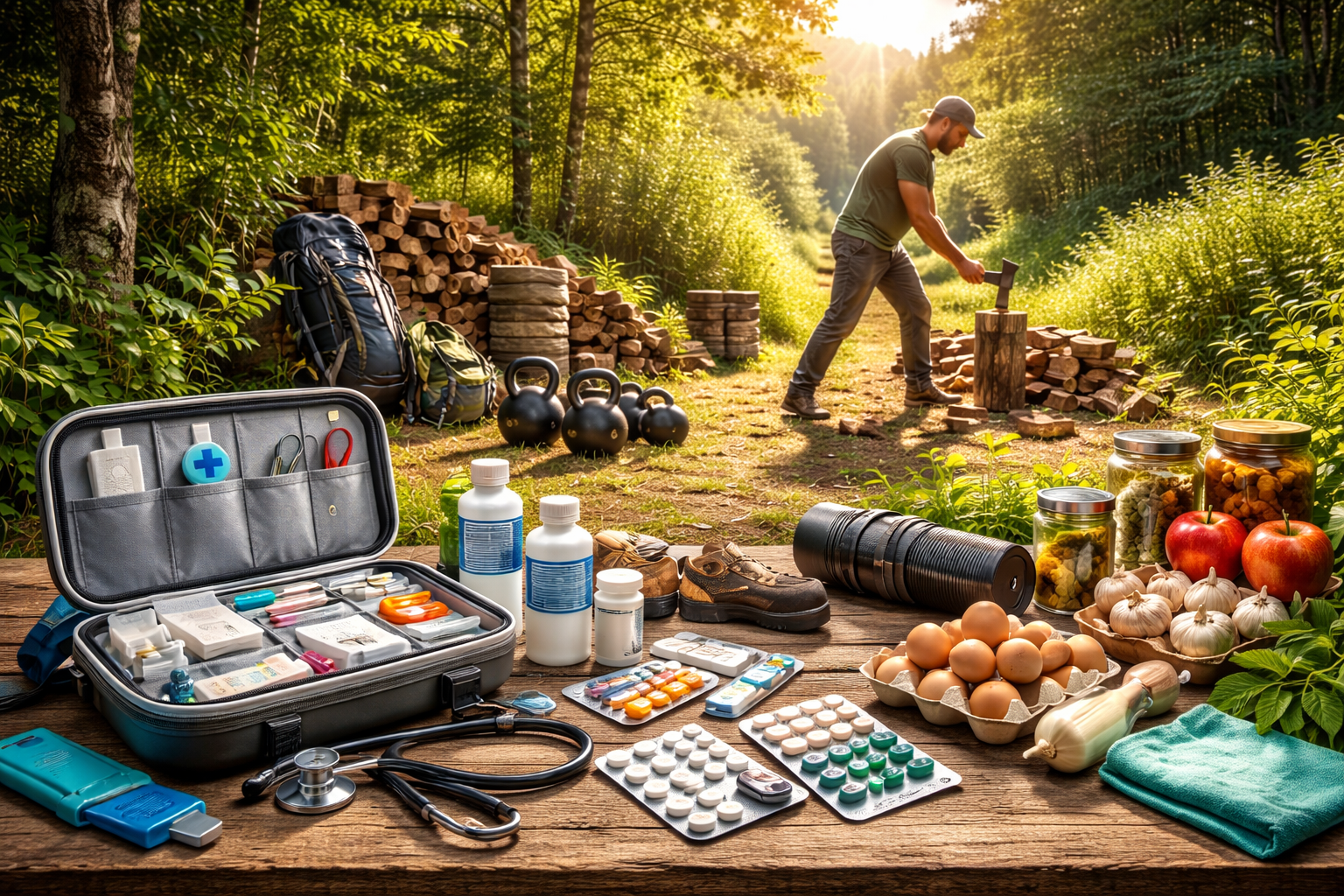
Practical Prepper Guide: Before It’s Too Late
Most people treat health as something they deal with after something goes wrong.
Preppers can’t afford that mindset.
In a real disruption, there is:
- No quick doctor access
- No guaranteed medication supply
- No immediate emergency response
- Your health becomes your responsibility.
This guide focuses on building real, functional health resilience – not just “being healthy,” but being capable under pressure.
Step 1: Redefine Health (Prepper Standard)
Health isn’t just:
- Looking fit
- Feeling good
It’s:
Your ability to function, recover, and endure stress
Ask:
- Can I work all day physically?
- Can I recover quickly from illness or injury?
- Can I operate under fatigue?
This is survival health—not comfort health
Step 2: Build Physical Readiness (Foundation)
You don’t need a gym.
You need capability.
Core Areas:
1. Endurance
- Walking long distances (5–10+ km)
- Carrying weight (packs, water)
2. Strength
- Lifting, carrying, digging, chopping
3. Mobility
- Prevent injury
- Maintain flexibility
Practical Training:
- Daily walking (with weight if possible)
- Bodyweight exercises (push-ups, squats, pull-ups)
- Functional work (yard work, wood splitting)
Train for real tasks—not appearance
Step 3: Nutrition That Actually Supports You
Most modern diets fail under stress.
Focus On:
- Whole foods
- Protein sources
- Stable calorie intake
Prepper Staples:
- Rice, beans, oats
- Canned meats
- Stored fats (critical for energy)
Key Rule:
Eat what you store, store what you eat
Step 4: Build a Personal Medical System
Do not rely on “figuring it out later.”
Core Kit:
- First aid supplies
- Wound care materials
- Pain management
- Basic medications
Advanced Layer:
- Antibiotics (where legally accessible)
Medical references/books
Training (first aid, CPR, trauma care)
Gear without knowledge is useless
Step 5: Illness Prevention (Underrated Priority)
In a crisis:
- Illness spreads faster
- Treatment is limited
Critical Practices:
- Hand hygiene
- Clean water use
- Food safety
Overlooked Risk:
Poor sanitation
One infection can take you out of action fast
Step 6: Sleep and Recovery (Performance Multiplier)
People ignore this – until it’s gone.
Why It Matters:
- Impacts decision-making
- Slows recovery
- Weakens immune system
Prep Strategy:
- Create a sleep routine
- Limit stress where possible
- Build resilience to operate on less sleep
You won’t always get perfect rest—prepare for that
Step 7: Mental Resilience (Critical)
Your mindset determines your outcome.
Reality:
- Stress will be constant
- Uncertainty will be high
Build:
- Calm decision-making
- Problem-solving ability
- Emotional control
Practical Training:
- Put yourself in controlled discomfort
- Practice problem-solving under pressure
Panic is more dangerous than the situation
Step 8: Energy Management (Often Ignored)
This is about output over time.
Mistake:
Going all-out early → burnout
Strategy:
- Pace your work
- Prioritize tasks
- Maintain calorie intake
Sustainable effort beats short bursts
Step 9: Injury Prevention (Biggest Threat)
Most injuries are preventable.
Common Causes:
- Fatigue
- Poor lifting technique
- Rushing
Prevention:
- Move deliberately
- Use proper tools
- Take breaks when needed
An injury can stop everything
Step 10: Community Health (Force Multiplier)
You don’t operate alone.
Strong Groups:
- Share knowledge
- Share workload
- Support recovery
Weak Groups:
- Spread illness
- Create stress
- Drain resources
Health is a group asset
Real-World Scenario
In a prolonged disruption:
- Day 1–3: adrenaline carries people
- Day 4–10: fatigue, poor diet, stress hit
- Day 10+: injuries, illness, burnout begin
Prepared individuals:
- Maintain energy
- Avoid injury
- Recover faster
What You Can Do Today
Today:
- Walk 20–30 minutes
- Review your medical kit
- Improve one meal
This Week:
- Start a basic fitness routine
- Learn first aid fundamentals
- Improve sleep habits
This Month:
- Build out your medical supplies
- Test your physical limits
- Identify weaknesses
Final Thought
Health is not something you prepare when things go wrong.
It’s something you build before they do.
Because when systems fail…
- Your body becomes your most important tool.
And tools that aren’t maintained…
- Fail when you need them most.