
Every gardener runs into problems sooner or later. It doesn’t matter if you’ve been gardening for thirty years or you just planted your first tomato plant this spring—issues will happen. Pests show up, plants wilt unexpectedly, or soil simply doesn’t perform the way you hoped.
The truth is that gardening is a lifelong learning process. Even experienced gardeners are constantly experimenting, observing, and adjusting their methods.
Whether you are maintaining tools, learning when to plant certain crops, building raised beds, or experimenting with compost, each season teaches new lessons.
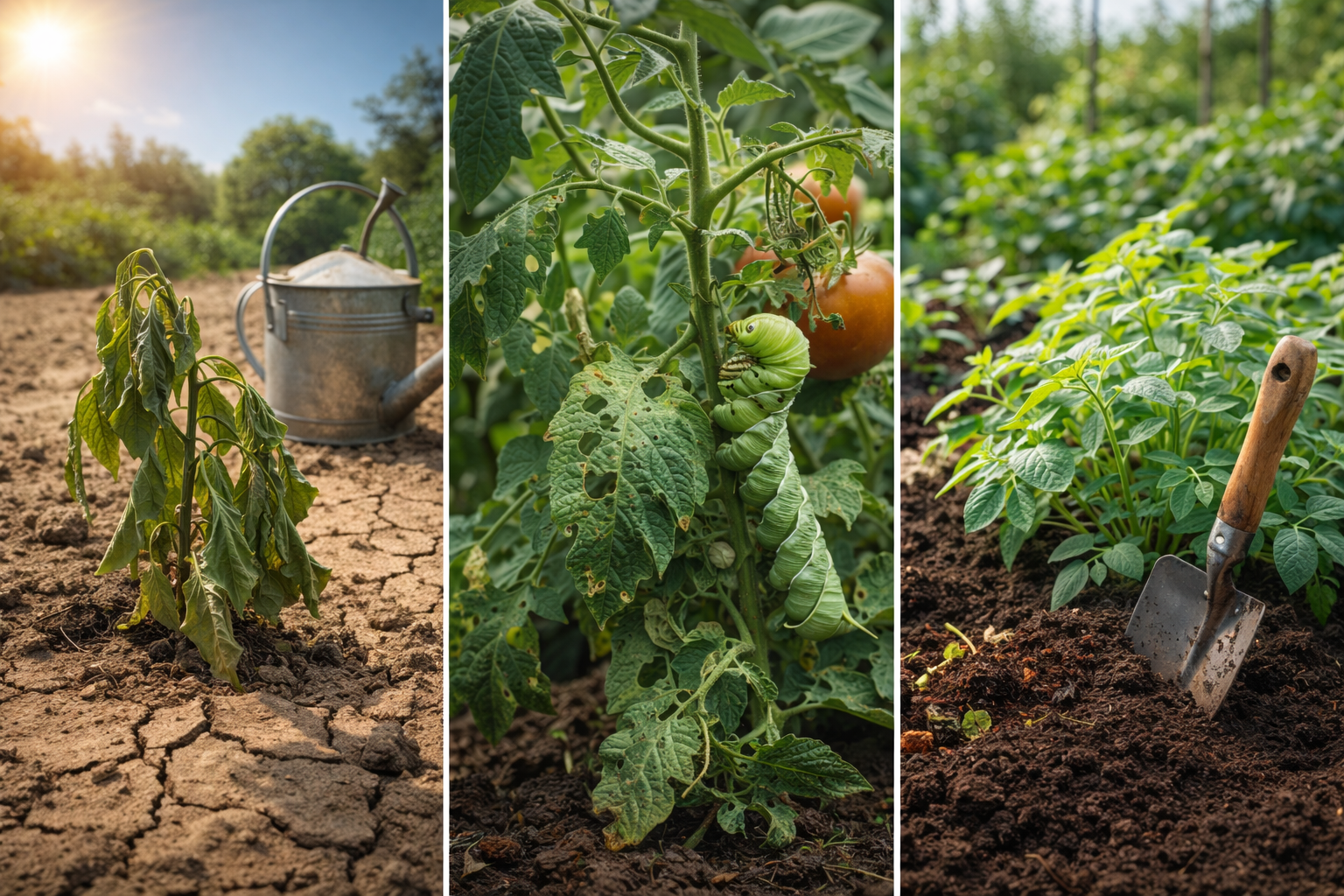
Most garden problems, however, usually fall into three main categories:
Water problems
Pests and disease
Soil health
Understanding how these three factors interact with your plants can dramatically improve the success of your garden.
1. Water Problems: Too Much or Too Little
Watering mistakes are one of the most common reasons plants struggle.
Many people assume that more water automatically helps plants grow better, but that isn’t always true. In fact, overwatering can damage plants just as badly as underwatering.
Overwatering
Plant roots need access to oxygen in the soil. When soil stays constantly soaked, the roots become deprived of oxygen and begin to suffocate.
Overwatering can lead to several problems including:
• Root rot
• Fungal infections
• Mold growth
• Weak root development
A simple way to test whether your soil is holding too much water is to grab a handful of soil about an hour after watering. If you squeeze it and water runs out easily, your soil may be retaining too much moisture.
Poor drainage or overly frequent watering can both create these conditions.
Improving drainage by adding compost or organic matter can help loosen heavy soil and allow excess water to escape.
Underwatering
The opposite problem—too little water—can stress plants quickly, especially during hot weather.
Plants often give warning signs when they need water. Leaves may begin to curl slightly or look dull instead of vibrant. This is usually the first signal that moisture levels are dropping.
If the plant becomes limp, droopy, or wilted, it is already under significant stress.
When leaves become brittle, brown, and dry, the plant may be severely dehydrated and recovery becomes less likely.
The key is consistency. Deep watering less frequently often produces stronger root systems than shallow daily watering.
2. Pests and Disease
Sooner or later, every garden attracts pests. Insects, fungal diseases, and plant damage are simply part of the gardening process.
Not all pests cause serious harm, though. Some insects chew small holes in leaves but do not significantly damage the plant.
The important skill for gardeners is learning how to identify what is actually causing the damage.
Common garden pests include:
• Aphids
• Flea beetles
• Slugs and snails
• Caterpillars
• Hornworms
For example, tomato hornworms can devour large sections of tomato plants quickly if they are not removed. Fortunately, they are large and easy to spot once you know what to look for.
Removing pests by hand is often the simplest solution.
Natural garden predators can also help maintain balance. Birds, beneficial insects, spiders, and even backyard chickens can dramatically reduce pest populations.
Many gardeners also encourage helpful insects like ladybugs, which feed heavily on aphids.
Companion planting can also deter pests naturally. Certain plants release scents that insects dislike.
Common natural pest deterrents include:
• Marigolds
• Garlic
• Onions
• Herbs like basil and rosemary
These plants can help reduce insect pressure without the need for chemical sprays.
If you suspect a disease or fungus, remove affected leaves quickly and dispose of them away from the garden. Cleaning tools between plants also helps prevent spreading infection.
3. Soil Health
Healthy soil is the foundation of a productive garden. Poor soil can cause plants to struggle even if watering and pest control are perfect.
Soil problems often show up in several ways:
• Seeds fail to germinate
• Plants grow slowly or remain stunted
• Soil dries out too quickly
• Plants require frequent watering
Improving soil is usually a long-term project rather than a quick fix.
Adding organic matter is one of the best ways to strengthen soil. Compost improves nutrient content, increases moisture retention, and supports beneficial microbes.
Many gardeners also experiment with soil-building techniques such as raised beds or hugelkultur beds, which incorporate wood and organic materials into the soil structure.
Healthy soil produces stronger plants that are naturally more resistant to pests and drought.
When plants grow in nutrient-rich soil with balanced moisture and healthy microorganisms, they are better able to withstand environmental stress.
Gardening Is a Continuous Learning Process
One of the most important things to remember about gardening is that mistakes are part of the process. Every growing season provides new information about your soil, your climate, and your plants.
The more time you spend observing your garden, the better you become at recognizing problems early and adjusting your approach.
By focusing on proper watering habits, managing pests naturally, and continually improving soil quality, most gardeners can dramatically increase the health and productivity of their gardens.
Strong soil, balanced ecosystems, and attentive care create gardens that become easier to manage each year.
And perhaps the best part is that every season offers another opportunity to learn, experiment, and grow better plants than the year before.