
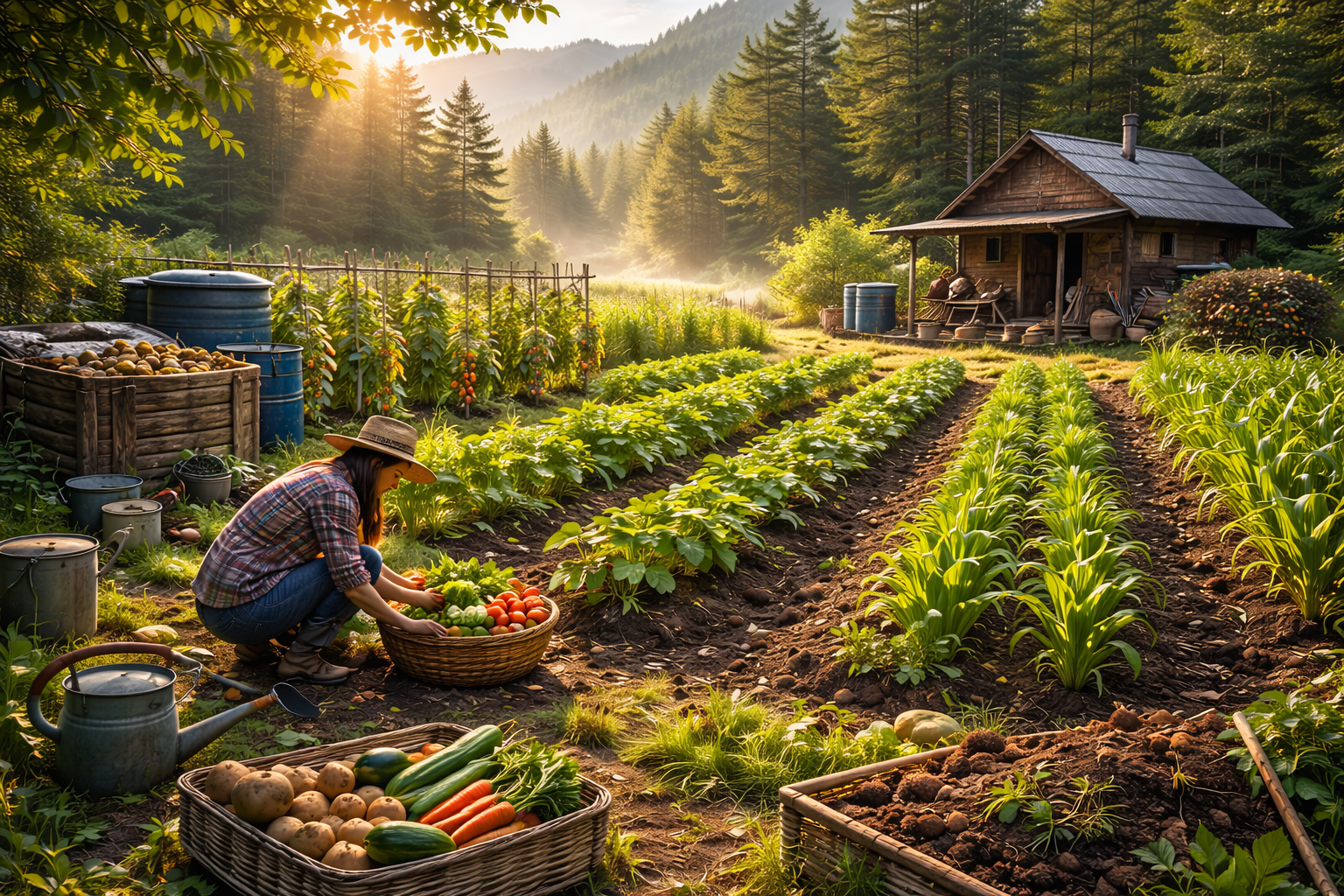
Practical Prepper Guide for Real Food Security
Gardening isn’t just a hobby anymore.
It’s one of the most reliable ways to build long-term food security, independence, and resilience.
But most people approach it the wrong way:
- They plant too late
Grow the wrong crops
Ignore water and soil
Don’t plan for preservation
This checklist is designed to take you from beginner → capable → self-reliant.
Phase 1: Planning (Where Most People Fail)
If you skip this step, everything else suffers.
Define Your Goal:
Supplemental food
Partial self-sufficiency
Full calorie production
Be honest. This determines everything.
Space Assessment:
Backyard / acreage
Raised beds / containers
Sun exposure (6–8 hrs minimum)
Wind and drainage conditions
Crop Selection (Critical):
Focus on:
High-calorie crops → potatoes, beans, squash
Easy growers → lettuce, radish, zucchini
Storage crops → carrots, onions, garlic
Avoid:
Crops you don’t eat
Crops that don’t store well
Phase 2: Soil & Bed Preparation
Soil is everything.
- Checklist:
Test soil (basic pH + nutrients)
Add compost / organic matter
Remove weeds and debris
Build raised beds if needed
Advanced Prep:
Mulch heavily to retain moisture
Rotate crops each season
Start compost system NOW
Healthy soil = consistent yields
Phase 3: Water Strategy (Non-Negotiable)
No water = no garden
Core Setup:
Garden hose or drip irrigation
Rainwater collection (barrels)
Backup water plan
Efficiency Upgrades:
Mulch to reduce evaporation
Water early morning or evening
Use drip systems instead of spraying
Water planning is survival planning
Phase 4: Planting Strategy
Don’t just plant—sequence your production
Key Moves:
Stagger planting every 1–2 weeks
Mix fast + slow crops
Companion plant where possible
Example:
Lettuce (fast) + carrots (slow)
Beans climbing corn
This creates continuous harvests instead of one big spike
Phase 5: Protection & Security
Your food is a target:
- Animals
Insects
Weather
Theft (in extreme situations)
Protection Checklist:
Fencing (rabbits, deer)
Netting (birds)
Natural pest control (companion plants, sprays)
Wind barriers
If you don’t protect it—you won’t keep it
Phase 6: Harvest & Preservation
Growing food is only half the system.
Harvest Timing:
Pick at peak ripeness
Don’t wait too long → spoilage risk
Preservation Methods:
Pressure canning (meats, low-acid foods)
Water bath canning (fruits, sauces)
Dehydration
Root cellaring
Your goal: extend harvest into months—not days
Phase 7: Storage Integration
Your garden should feed your storage system.
Build a Flow:
Garden → Harvest → Preserve → Store → Use → Replant
Storage Focus:
Cool, dark environment
Label everything
Rotate regularly
Gardening without storage = short-term success only
Phase 8: Community & Redundancy
You don’t have to do this alone.
Build Local Strength:
Share seeds
Trade produce
Learn from experienced growers
Build small networks
Strong communities survive longer
Phase 9: Testing Your System
Most people never test.
Do This:
Eat only from your garden + storage for 3–7 days
Track what you run out of
Identify weaknesses
This is where real learning happens
Gardening Complete: What You Can Do Today
Start simple—but start now.
Today:
Pick 3–5 crops you will grow
Check your sunlight exposure
Start a basic plan
This Week:
Prepare soil or containers
Buy seeds (before shortages hit)
Set up water access
This Month:
Plant your first crops
Start composting
Learn one preservation method
Final Thought
Gardening isn’t just about food.
It’s about:
Control
Stability
Independence
Most people wait until food becomes expensive or scarce.
Preppers build systems before that happens.
Because when supply chains fail…
The people who grow food don’t panic.
They harvest.