
 When people begin preparing for emergencies, food is usually one of the first concerns. Grocery stores feel permanent and reliable, but modern food systems depend on transportation networks, electricity, fuel, labor, and supply chains that can be disrupted surprisingly quickly. Storms, power outages, transportation strikes, or broader disruptions can interrupt deliveries and leave store shelves empty faster than most people expect.
Building a resilient food supply is not about fear or extreme scenarios. It is about creating stability for your household so that unexpected disruptions do not immediately become a crisis. A strong food plan combines short-term storage, long-term staples, and the ability to produce and preserve food locally.
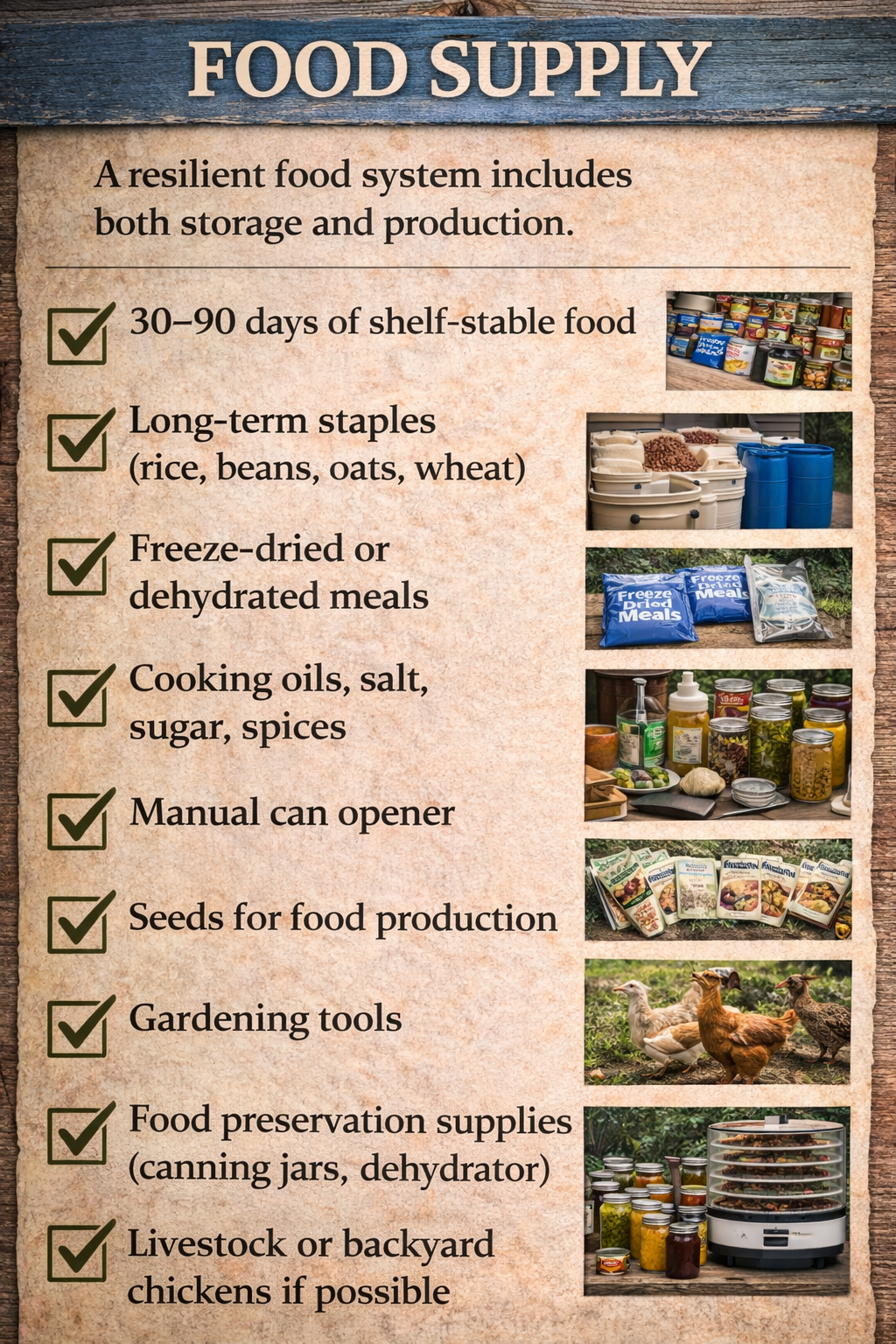
Start with a 30–90 Day Food Reserve
A practical starting point for most households is building a food reserve that can last between 30 and 90 days. This buffer allows families to ride out temporary shortages, severe weather events, or economic disruptions without scrambling for supplies.
The key is storing foods that your household already eats and knows how to prepare. Items that store well and require minimal preparation are ideal.
Examples of shelf-stable foods include:
Canned vegetables, fruits, and meats
Pasta and sauces
Dry beans and lentils
Peanut butter and nut butters
Shelf-stable milk alternatives
Crackers and grains
Canned soups and stews
Rotating food regularly keeps supplies fresh and prevents waste. When new items are added to storage, the older items are moved forward and used first.
Long-Term Staple Foods
Long-term staples form the backbone of many preparedness food plans. These foods are inexpensive, calorie-dense, and capable of lasting for years when stored properly.
Common staples include:
Rice
Dry beans
Oats
Wheat berries
Corn
Lentils
These foods provide energy, protein, and nutrition when combined together. Stored in sealed containers with oxygen absorbers, they can remain usable for many years.
For many households, staples are stored in:
Food-grade buckets
Mylar bags
Airtight containers kept in cool, dark spaces
Building a supply of staple foods provides a reliable calorie base that can support a household through longer disruptions.
Freeze-Dried and Dehydrated Foods
Freeze-dried and dehydrated foods offer another layer of preparedness. These foods are designed for long shelf life and often require only water to prepare.
Benefits include:
Very long storage life
Lightweight packaging
Simple preparation
Minimal cooking required
Common freeze-dried foods include:
Fruits and vegetables
Complete meals
Meat products
Soups and stews
These foods are especially useful during power outages or situations where cooking resources are limited.
Essential Cooking Ingredients
A well-rounded food supply also includes basic ingredients that allow meals to be prepared from stored foods. Without these items, even a large supply of staples can be difficult to use effectively.
Important pantry essentials include:
Cooking oils
Salt
Sugar or honey
Baking supplies
Spices and seasonings
These ingredients improve flavor, nutrition, and cooking flexibility. They also allow households to maintain normal meal routines even when relying heavily on stored foods.
Manual Food Preparation Tools
Many modern kitchens rely heavily on electricity. In a power outage or infrastructure failure, simple tools become extremely valuable.
One of the most overlooked items in emergency food planning is a manual can opener. Without electricity, electric openers and many appliances become unusable.
Other useful tools include:
Manual grain grinders
Hand-powered mixers
Non-electric cooking tools
Portable camp stoves
These tools ensure that stored food can still be prepared under difficult conditions.
Seeds for Future Food Production
Food storage is important, but true resilience includes the ability to produce food locally. Seeds allow households to begin producing vegetables, herbs, and other crops when supply chains are disrupted.
Seeds commonly stored for preparedness include:
Tomatoes
Beans
Peas
Squash
Lettuce
Carrots
Storing seeds designed for home gardening ensures that families can transition from stored food to fresh production when needed.
Seeds should be kept in cool, dry environments to maintain viability for future planting seasons.
Gardening Tools and Equipment
Having seeds alone is not enough. Gardening tools make planting, maintaining, and harvesting crops far easier and more productive.
Useful tools include:
Shovels and spades
Hand trowels
Garden rakes
Pruning shears
Watering cans or irrigation systems
Even small backyard gardens can provide a surprising amount of fresh food during growing seasons. Over time, gardening knowledge becomes just as valuable as the tools themselves.
Food Preservation Skills
Growing food creates another challenge: preserving the harvest so it lasts beyond the growing season. Food preservation techniques allow households to extend the usefulness of garden produce for months or even years.
Common preservation methods include:
Canning fruits, vegetables, and meats
Dehydrating produce
Freezing foods
Fermenting vegetables
Tools commonly used for preservation include:
Canning jars and lids
Pressure canners
Water bath canners
Dehydrators
These skills allow families to turn seasonal abundance into long-term food security.
Livestock and Backyard Chickens
For households with space and the ability to care for animals, small livestock can provide a steady source of fresh food.
Backyard chickens are especially popular because they provide:
Eggs throughout much of the year
Natural pest control in gardens
Manure that improves soil fertility
Other small livestock options may include rabbits, goats, or bees depending on local regulations and property size.
Animals require planning, shelter, feed, and care, but they can significantly strengthen long-term food independence.
Creating a Balanced Food Preparedness Plan
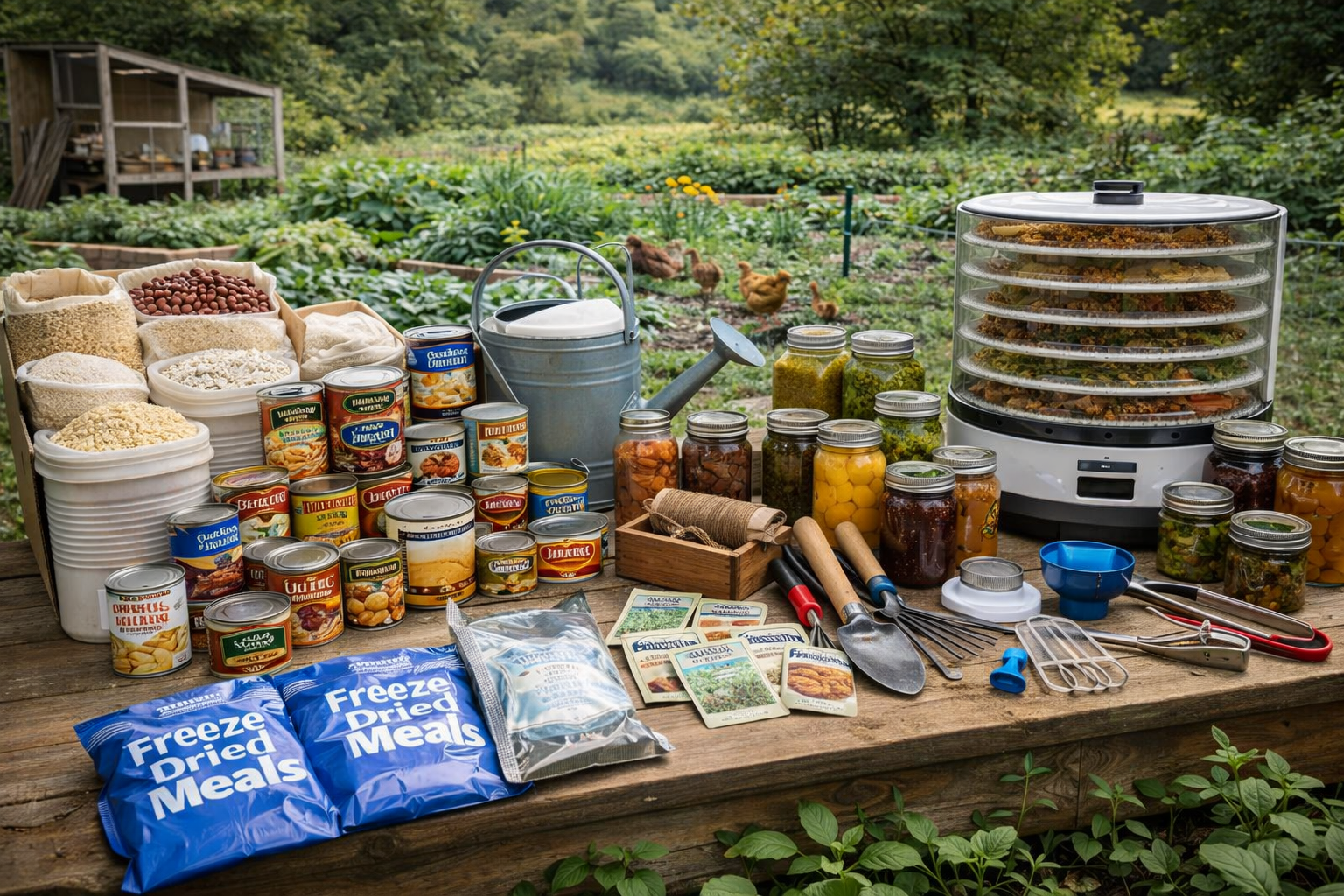
A resilient food system is built in layers. Instead of relying on a single solution, preparedness combines several strategies:
A short-term supply of ready-to-eat foods
Long-term staple ingredients
Freeze-dried or dehydrated meals
Cooking essentials and preparation tools
Seeds and gardening capability
Food preservation knowledge
Small-scale food production where possible
When these layers work together, households gain something incredibly valuable: stability. Even when supply chains become unreliable, a prepared household can continue feeding itself while adapting to changing conditions.
Food security is not about stockpiling endlessly. It is about building practical systems that support your household through uncertainty while strengthening everyday resilience.