
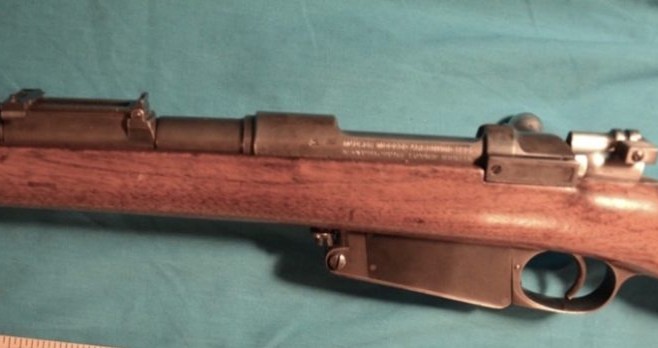
America is a wonderful place to live. We enjoy great prosperity and far more freedom than the citizens of most other nations. Our right to keep and bear arms is enshrined in the Constitution. But, as a union of 50 sovereign States, we also live with a patchwork of laws. Something that is perfectly legal in one State can be a misdemeanor or even a felony in another. I feel fortunate to live in a very gun-friendly state in the Northern Rockies with permitless open carry, permitless concealed carry, and permitless vehicular carry. Here, nobody blinks an eye when they see a holstered pistol or a rifle in the back window of a pickup truck. But, meanwhile, gun owners who live in “blue” states often live in fear of violating some obscure state law or local ordinance. They cannot walk into a gun show and buy a modern gun from a fellow Private Party, and walk out the door. And, sadly, ever since 1968, nobody living in any state can buy a modern (post-1898) gun across state lines without processing the transaction through a FFL, filling out a Form 4473, and — more recently — passing a NICS (FBI) background check.
Another important legal change took place in 1968: There became two distinct categories of guns in the United States: Post-1898 “Firearms” and pre-1899 “Antiques.” Antique guns (and blackpowder replicas) can be freely bought and sold across state lines. Under Federal law, they are treated like slingshots and BB guns: no paperwork and no Federal jurisdiction. It all comes down to the date of manufacture of the gun’s frame or receiver. A Winchester Model 1894 .30-30 with a frame made in 1898 is an Antique, but one on a frame made in 1899 is a Firearm, with all the requisite paperwork. Note that to be legally “antique” (i.e. from 1894 to 1898 production) a Winchester Model 1894 must have a serial number below 147,685.
Functionally, many antique and modern production guns are identical, but legally, they are in different worlds. Rebarreling, rechambering, rebluing, sporterizing, scoping, or otherwise altering a pre-1899 Antique gun does not change its legal category. The only exception is shortening the barrel of an Antique cartridge gun to less than 18 inches for shotguns or 16 inches for rifles. That would place them under the National Firearms Act (NFA) of 1934 restrictions.