
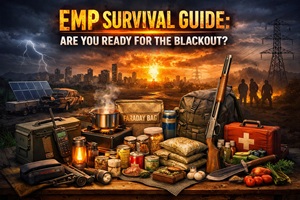
1. Understanding the Threat: What an EMP Really Means
An electromagnetic pulse (EMP) is not just another disaster—it’s a system-wide failure event. Unlike storms, earthquakes, or even war, an EMP doesn’t destroy buildings directly. It destroys systems—and systems are what keep modern life functioning.
An EMP can come from:
- A high-altitude nuclear detonation
- A solar flare (coronal mass ejection)
- Specialized non-nuclear EMP weapons
The result is immediate:
- Power grids collapse
- Vehicles stop working
- Communications go silent
- Water systems fail
Within hours, society begins to shift. Within days, it changes completely.
The key takeaway:
This is not a short-term emergency. It’s a long-term survival scenario.
2. The Four Pillars of EMP Survival
To survive an EMP event, everything comes down to four pillars:
- Sustenance (Food & Water)
- Security (Defense & Awareness)
- Skills (Self-Reliance)
- Shielding (Protected Electronics)
If one fails, your system weakens. If two fail, survival becomes unlikely.
3. Water: Your First and Most Critical Priority
Water is the fastest problem to become life-threatening.
Step 1: Storage
- Minimum: 1 gallon per person per day
- Target: 30–90 days stored
- Use:
- Food-grade barrels
- Stackable containers
- Bathtub liners for emergency capture
Step 2: Filtration
You need redundancy:
- Gravity filters (Berkey-style)
- Pump filters (portable backup)
- Boiling capability
Step 3: Purification
- Chlorine tablets
- Unscented bleach (emergency use)
- UV purifiers (if protected from EMP)
Step 4: Water Sourcing
Know your local:
- Rivers, lakes, streams
- Rain catchment options
- Wells (manual access preferred)
Prepper mindset:
Stored water buys time. Skills and sources provide long-term survival.
4. Food: Building a Multi-Layer Survival System
Food planning is not about one pantry—it’s about layers.
Layer 1: Daily Rotation (0–6 months)
- Foods you already eat
- Canned goods, pasta, rice
- Rotate constantly
Layer 2: Long-Term Storage (1–10 years)
- Rice
- Beans
- Lentils
- Freeze-dried meals
Layer 3: Ultra-Long-Term
- Honey
- Salt
- Sugar
- Vinegar
Calories Matter
- Adult needs ~2,000–2,500 calories/day
- That’s 700,000+ calories per year per person
Storage Rules
- Cool, dark, dry
- Pest-proof containers
- Hidden locations if possible
5. Security: Protecting What You’ve Built
After an EMP, scarcity drives behavior.
Immediate Risks
- Looting
- Desperation
- Breakdown of law enforcement
Home Defense Basics
- Reinforced doors and windows
- Clear lines of sight
- Motion detection (non-electric if possible)
Tools
- Firearms (where legal and trained)
- Bladed tools
- Defensive lighting (manual/solar)
Layered Defense
- Awareness (early detection)
- Deterrence (visible readiness)
- Defense (last resort)
6. Community: The Force Multiplier
Going solo is one of the biggest mistakes.
Why Community Matters
- Shared labor
- Skill diversity
- 24/7 security rotation
- Emotional resilience
Who to Include
- Trusted neighbors
- Skilled individuals (medical, mechanical, farming)
- People with similar values
How to Prepare Now
- Build relationships early
- Discuss plans quietly
- Train together when possible
Strong groups survive longer than strong individuals.
7. Transportation Without Technology
Most modern vehicles may fail.
Primary Alternatives
- Bicycles (with cargo trailers)
- Walking routes
- Animal transport (advanced setups)
Prep Your Mobility
- Spare tires and tubes
- Repair kits
- Physical conditioning
Route Planning
- Avoid major highways
- Identify back routes
- Know terrain and choke points
8. The Return to Analog Tools
Electric tools become useless overnight.
Must-Have Manual Tools
- Hand saws
- Hammers
- Axes
- Shovels
- Manual can openers
Lighting
- Oil lamps
- Candles
- Hand-crank flashlights
Communication
- Hand-crank or solar radios
- Two-way radios (protected from EMP)
9. Skills That Will Determine Survival
Supplies run out. Skills don’t.
Critical Skills
- Gardening and food production
- Food preservation (canning, drying)
- First aid and trauma care
- Fire starting
- Navigation without GPS
Advanced Skills
- Herbal medicine
- Animal processing
- Carpentry and shelter building
- Water system setup
Learning Strategy
- Books (physical copies)
- Practice now, not later
- Teach others
10. EMP Protection: Understanding Shielding
This is where EMP prep becomes unique.
What Gets Destroyed
- Microchips
- Circuit boards
- Grid infrastructure
What You Must Protect
- Radios
- Solar generator components
- Medical devices
- Backup electronics
11. Faraday Protection: Your Electronic Lifeline
A Faraday container blocks electromagnetic energy.
Options
- Faraday bags
- Metal ammo cans (properly lined)
- DIY metal containers
How to Use Them
- Store devices inside BEFORE an event
- Avoid contact between device and metal walls
- Keep sealed until safe
What to Store
- Backup phone
- Radios
- USB drives with knowledge
- Solar charge controllers
Even one working device can give you a massive advantage.
12. Medical Preparedness Without Systems
Hospitals rely on electricity.
Stockpile Basics
- First aid kits
- Antibiotics (where legally obtained)
- Pain relief
- Bandages and wound care
Learn
- Infection control
- Wound treatment
- Basic diagnostics
Long-Term
- Herbal alternatives
- Sanitation practices
13. Mental Preparedness and Decision-Making
Stress will be constant.
Common Failures
- Panic
- Poor decisions
- Freezing under pressure
Train Yourself
- Scenario planning
- Simple decision frameworks
- Staying task-focused
Rule to Remember
Do the next most important thing. Then the next.
14. Common Mistakes to Avoid
- Relying only on stored food
- Ignoring water systems
- Not preparing for security
- Skipping skill development
- Failing to protect electronics
- Trying to go it alone
15. Final Strategy: Building a Complete System
EMP preparedness is not one action—it’s a system.
Your Checklist
- Water secured
- Food layered
- Security planned
- Skills developing
- Electronics protected
- Community forming
Mindset Shift
You are not preparing for comfort.
You are preparing for continuity.
Final Thoughts
An EMP event is a low-frequency but high-impact scenario. It doesn’t give warnings. It doesn’t give second chances.
Preparedness is not about fear—it’s about options.
When systems fail, the people who adapt, organize, and act deliberately are the ones who make it through.
Start small. Build steadily. Stay consistent.
That’s how resilience is built.