
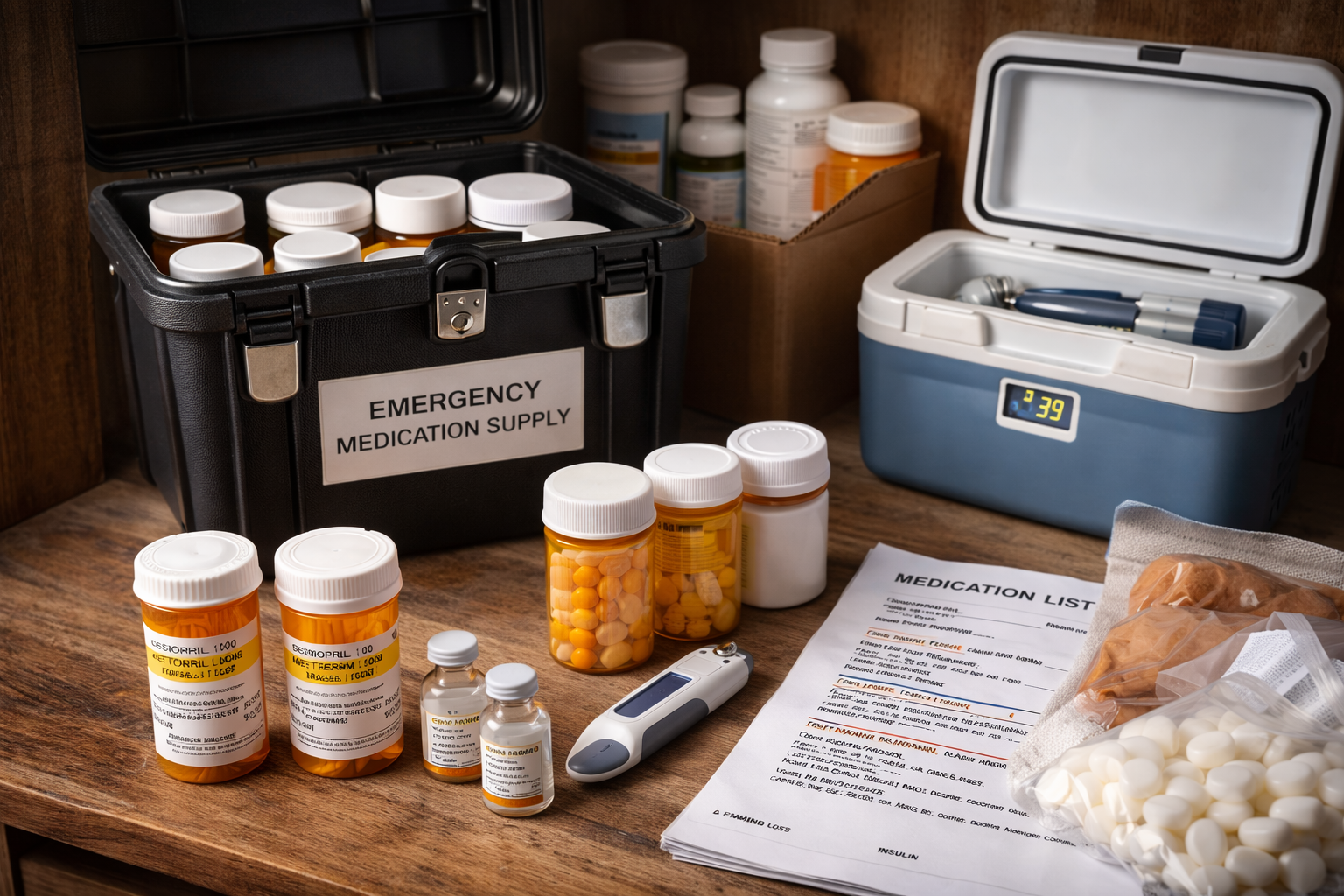
In everyday life, picking up prescriptions is routine. But when emergencies happen—power outages, natural disasters, supply shortages, or evacuations—access to medication can quickly become uncertain. For many people who rely on daily medications for conditions such as diabetes, heart disease, asthma, or mental health, even a short interruption can have serious consequences.
Preparing a small, well-organized medication reserve is one of the most practical steps a household can take. With proper storage, thoughtful planning, and regular rotation, families can ensure that essential medicines remain safe, effective, and available when normal systems are disrupted.
Why Proper Storage Matters
Medications are carefully manufactured to remain stable within specific environmental conditions. When exposed to heat, moisture, or light, many drugs begin to degrade, sometimes long before their expiration date.
One of the most common mistakes people make is storing medicines in the bathroom. Steam from showers and fluctuating temperatures create a humid environment that can shorten the life of tablets, capsules, and other medications.
A better approach is to store medications in a location that remains:
Cool
Dry
Dark
Consistently room temperature
Interior closets, bedroom cabinets, or dedicated storage drawers often work well. Avoid areas near windows, kitchen stoves, heating vents, or exterior walls where temperature swings are more common.
Most medications are designed to remain stable at typical room temperatures between roughly 68–77°F. Prolonged exposure to higher temperatures—such as during summer heat or extended power outages—can weaken their effectiveness.
Building a Small Medication Reserve
Many people assume they cannot legally maintain extra medications, but there are responsible and lawful ways to create a small reserve supply.
One of the best steps is simply having a conversation with your doctor. For chronic conditions that require long-term treatment, physicians are often willing to prescribe 90-day supplies rather than the standard 30-day refill cycle. This provides a larger buffer in case of disruptions.
Another common strategy is refilling prescriptions as soon as insurance allows. Many pharmacies permit refills a few days before the previous supply runs out. Over time, those extra days accumulate and gradually create a modest emergency buffer.
This approach keeps everything within normal pharmacy systems while slowly building preparedness.
The Importance of Medication Rotation
Having a reserve only works if it stays fresh.
A simple method called First-In, First-Out keeps medications from expiring unnoticed. When you receive a new refill, place it behind the older bottle or package. Continue using the oldest medication first.
Review supplies several times per year and check expiration dates regularly. Rotating medications into everyday use ensures nothing sits unused for years.
This habit also keeps families familiar with their stored medications, eliminating confusion during stressful situations.
Planning for Refrigerated Medicines
Some medications require refrigeration, including insulin and certain specialty injections. These medicines must remain within a narrow temperature range to stay effective.
During short power outages, the best option is usually leaving the refrigerator closed. The cold air trapped inside can maintain safe temperatures for several hours.
For longer disruptions, a backup cooling plan becomes essential. Possible solutions include:
Portable power stations capable of running a small refrigerator
Insulated medical coolers with ice packs
Battery-powered travel refrigerators
Care must also be taken to avoid freezing medications. Freezing can damage many drugs just as quickly as excessive heat.
Having a plan for both cooling and transportation can protect these medicines during emergencies or evacuations.
Keep Clear Medical Documentation
Medication storage should always include documentation.
In an emergency, you may need medical care from a new doctor or clinic that has never seen your records. Having clear information available can prevent dangerous mistakes.
Create a printed list that includes:
Medication names
Dosages and schedules
Prescribing doctors
Pharmacy contact information
Known allergies
Store one copy with your medication supplies and another in your emergency kit or travel bag. Digital copies on a phone or secure cloud storage can also be helpful backups.
For families caring for children, elderly relatives, or pets, include special dosing instructions and ensure measuring tools are stored with liquid medications.
Organizing Medicines for Emergencies
A well-organized system makes a huge difference during stressful events.
Consider storing emergency medications in a durable container that protects them from moisture, heat, and damage. Hard-sided cases or small lockable boxes work well because they keep everything together and prevent accidental spills or contamination.
For households in areas prone to evacuation, it may also be wise to prepare a portable medication kit that can be grabbed quickly when leaving home.
Urban households may prioritize portability and organization, while rural homes often focus on protecting medicines from temperature extremes.
Regular Maintenance and Review
Preparedness works best when it becomes part of normal routines.
Every few months, review medications and check expiration dates. Replace anything that is approaching its limit and update documentation if prescriptions change.
This regular maintenance keeps emergency supplies reliable and ensures that medications remain effective when they are needed most.
A Practical Step Toward Resilience
Medication preparedness is not about fear—it is about responsibility and planning ahead. By storing medicines properly, building a small reserve, rotating supplies, and keeping clear records, households can protect their health during disruptions.
Unexpected events will always occur. But with a thoughtful medication storage plan in place, families gain confidence knowing that one of the most important parts of daily life—access to essential medicines—will remain secure even when circumstances change.