
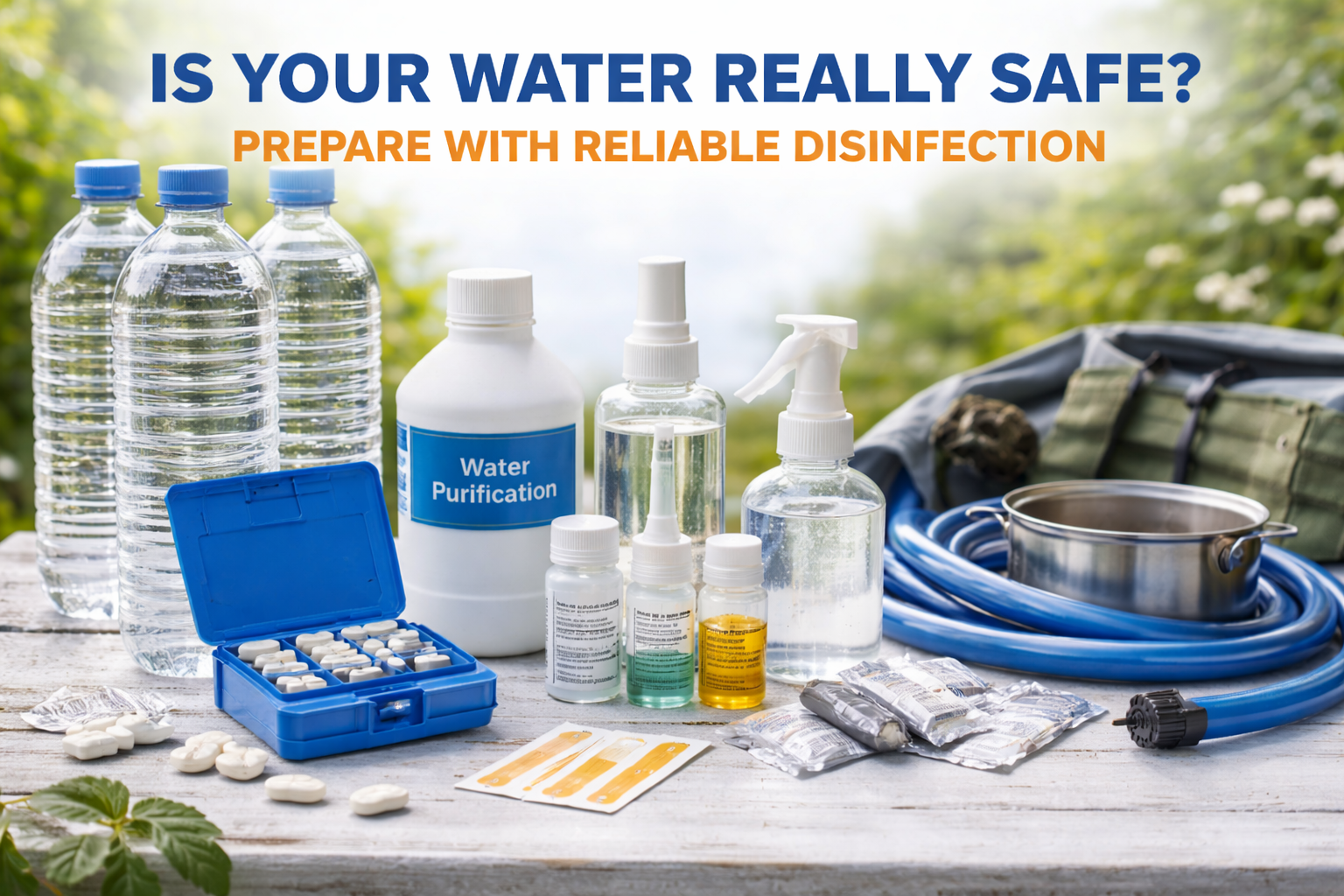
Filtration Is Step One – But It’s Not the Whole System
Most people preparing for emergencies think about water in a simple way:
Store it.
Filter it.
Done.
But that’s only part of the equation.
Because when conditions get worse — not just inconvenient, but unstable — water becomes one of the most dangerous variables you face.
Not because of quantity
But because of what’s in it
The Gap in Most Water Plans
A lot of setups rely on:
stored water
basic filters
boiling
And those are important.
But they don’t always cover:
viruses
chemical contamination
biological buildup over time
That’s where many people run into trouble.
The Reality of Water in a Crisis
When systems fail, water sources change fast.
What used to be safe:
may be contaminated
may carry pathogens
may look clean but still be unsafe
And once you’re using:
collected rainwater
natural sources
stored containers over time
Your risk increases.
Filtration vs Disinfection
This is where clarity matters.
Filtration:
removes particles
improves clarity
reduces some contaminants
Disinfection:
neutralizes microorganisms
targets bacteria and viruses
helps make water safer to consume
You need both.
Not one or the other
Why Disinfection Matters More Over Time
Early on, you may rely on stored water.
But as time goes on, you start using:
alternative sources
reused containers
questionable supply
That’s when disinfection becomes critical.
Because contamination isn’t always visible.
And by the time symptoms show up…
you’re already behind.
A Multi-Use Approach to Sanitation
One of the smartest things you can do is focus on solutions that go beyond just water.
A proper disinfection strategy should also help with:
surfaces
food cleaning
basic hygiene
equipment sanitation
Because in a real scenario, contamination spreads through:
hands
tools
living spaces
Not just drinking water.
The Role of Long-Term Stability
A lot of common solutions degrade over time.
Some lose effectiveness.
Some become unreliable.
That creates a hidden problem in long-term preparedness.
You think you’re covered…
but your supplies may not be as effective as you expect.
That’s why stability and shelf life matter when choosing what to rely on
Practical Uses That Matter in the Real World
A strong disinfection approach can be used across multiple situations:
Water treatment
Making questionable sources safer to use
Surface cleaning
Reducing contamination in high-use areas
Food preparation
Helping clean items before consumption
Basic wound care support
Reducing risk when medical care is limited
This isn’t about replacing everything else.
It’s about adding a layer of protection
The Biggest Mistake: Waiting Until You Need It
Most people don’t test their systems.
They don’t:
practice using them
understand proper ratios or usage
know how they perform under stress
And that’s where problems start.
Because in a real situation, you don’t want to be:
guessing
experimenting
figuring it out under pressure
Build a System — Not Just a Supply
Instead of thinking:
“I have water covered”
Start thinking:
How do I treat different water sources?
How do I prevent contamination from spreading?
How do I maintain sanitation over time?
That’s a system.
And systems hold up under pressure.
The Bigger Picture
Water isn’t just about drinking.
It affects:
health
hygiene
food safety
overall living conditions
If water becomes a problem…
everything becomes a problem.
Community Discussion
What’s your current water setup?
Do you rely more on:
storage
filtration
or disinfection
And have you actually tested it?
Final Thought
Preparedness isn’t about assuming things will work.
It’s about knowing they will
Because when it comes to water…
you don’t get many second chances.