

Article by Practical Self Reliance
Canning yams (or sweet potatoes) is a simple way to preserve them for year-round use. Grab a jar off the shelf and you’ve got a killer side dish or the beginnings of an unbelievable homemade pie.
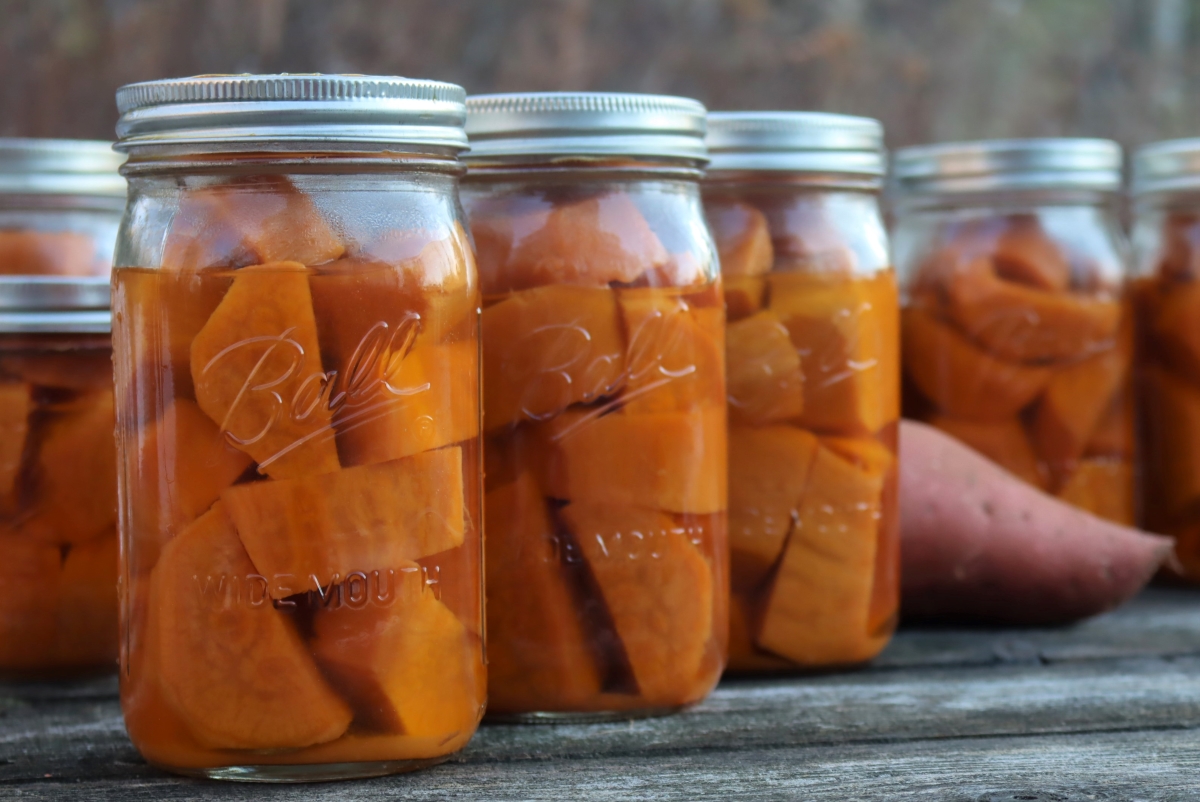
Sweet potatoes are a staple in my household, and one of my family’s favorite healthy treats. Rich in minerals and low on the glycemic index, they’re a delicious addition to any dinner plate.
Most of the year, sweet potatoes sell for $2.50 to $3 a pound here in the north country. Prices drop quickly in November and December, and you can pick them up for as little as 69 cents a pound.
Stocking up on sweet potatoes is one of the ways my family saves money on our grocery bill, planning ahead in December for the rest of the winter’s eating.
Canning sweet potatoes mean I have cooked and ready to eat food on my pantry shelf, and I don’t have to worry about spoilage.
Even better? My kids know how to pop open a jar and heat them on the stove. A little preparation on my part means they’ll make their own dinner, which is a lifesaver on busy weeknights.
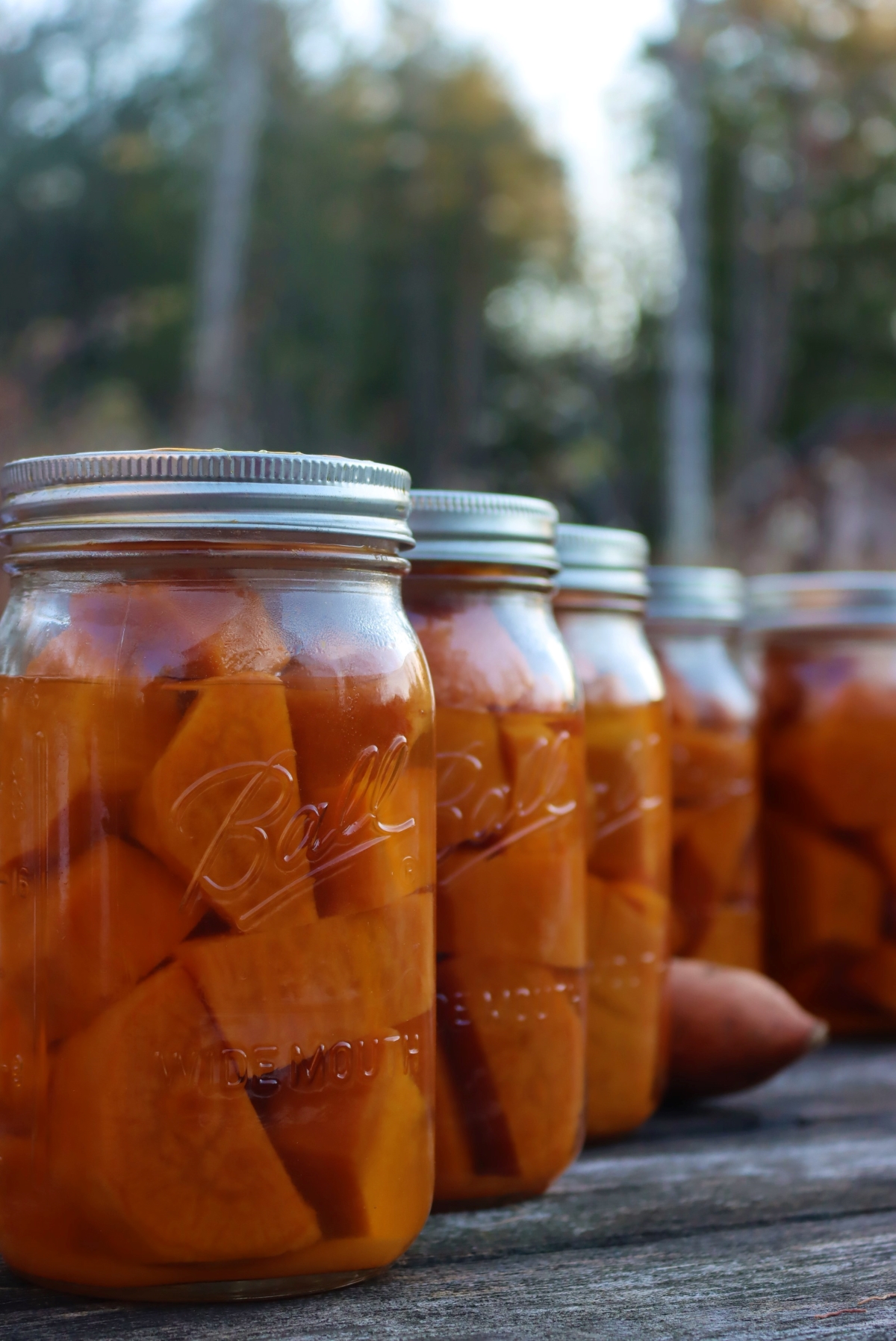
Yields for Canning Sweet Potatoes
The National Center for Food Preservation says that you’ll need 2 1/2 pounds per quart or 17 1/2 pounds per canner load of 7 quarts (weighed before processing). I’ve always found their estimates high, and always end up with a good bit of food leftover once the canner is packed.
I found it was more like 2 pounds or 14 pounds per canner load of 7 quarts.
Once processed, that 2 pounds of fresh sweet potatoes ended up being about 1 1/4 pounds of cooked, peeled, and chopped sweet potato per quart jar.
For pint jars, I needed a smidge over a pound of fresh sweet potatoes per jar. Once processed, I was able to pack about 2/3rds of a pound of sweet potato chunks into each pint.
The total amount needed is obviously going to depend on how efficient you are at peeling the sweet potatoes, and how much trimming needs to be done to remove any imperfections within the yams.
I’d suggest having roughly 14 to 16 pounds of raw sweet potatoes on hand for a 7-quart batch, and 9 to 10 pounds for a 9-pint canner batch.
(I use a 30 quart All American Canner, which is an extra-large double-decker canner. I do batches of 14 quarts at a time, thus I’m making a double batch with about 30 pounds of sweet potatoes.)
Liquid for Canning Sweet Potatoes
Sweet potatoes can be canned either plain water or syrup.
Obviously, the healthier option is to use plain water, but unfortunately, it’s not the tastiest. Sweet potatoes will leach a lot of flavor into the water, and lose some of their sweetness.
If you plan on canning sweet potatoes in water, you’ll likely be a bit disappointed at how bland they taste.
Personally, I like to can sweet potatoes in an extra light syrup, which mimics their natural sweetness. It’s not going to make them sweeter, it’s mostly just going to prevent their natural sweetness from being lost in the canning liquid.
To make the extra light syrup:
- For a 7 Quart Canner batch ~ Mix 10 1/2 cups water and 1 1/4 cup sugar.
- For a 9 Pint Canner Batch ~ Mix 6 1/2 cups water and 3/4 cups sugar.
Of course, you can also choose to candy the yams and use anywhere from light all the way up to heavy syrup. You can find the measurements for each syrup level here.
For a more natural canning liquid, feel free to use either honey or maple syrup, which will add flavors that compliment the sweet potatoes. Personally, I love canning with our own homemade maple syrup.
When canning with honey or maple, use only about 3/4 as much as you would sugar, as they taste much sweeter in the finished canned goods.
Preparing Sweet Potatoes for Canning
Before canning, sweet potatoes need to be cooked. This helps drive off the air within their tissues and prevent it from expanding and breaking them apart in the canner.
Believe it or not, pre-cooking the sweet potatoes (and most foods when canning) will actually result in finished canned goods that hold together better and are of better quality.
For sweet potatoes, that means boiling or steaming them whole for 15 to 20 minutes before peeling and slicing.
I put a steamer basket at the bottom of my large 5-gallon stockpot and packed it nearly full with 14-15 pounds of sweet potatoes. That was just about right for a 7-quart canner batch.
If you don’t have a pot that big, you’ll need to work in batches.
Once the sweet potatoes are steamed, allow them to cool just enough to handle and then peel away their skins. Chop them as necessary so they fit neatly into the canning jars.
(Small ones can even be left whole, but all of mine were much too large, so I went with 1-2” pieces.)
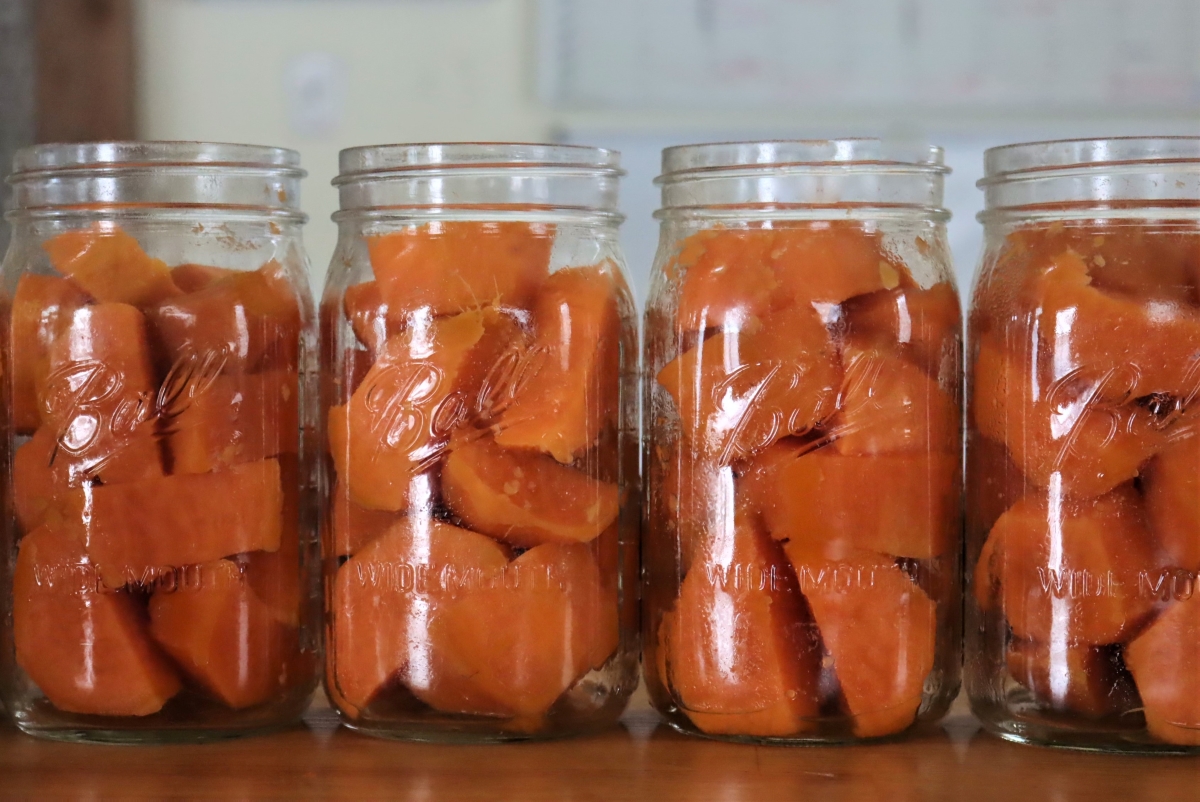
Pack the prepared pieces into canning jars, leaving one-inch headspace.
How to Can Sweet Potatoes
Once you’ve prepared the sweet potatoes and packed them into jars, it’s time to get the canner pre-heated and prepare the syrup.
Add 2-3 inches of water to the bottom of your pressure canner, along with the bottom trivet, and bring the water to a low simmer. (Or follow the instructions on your canner, as they can differ slightly.)
In a separate saucepan, mix the sugar (if using) into water and bring it to a boil.
Pour the boiling water or syrup over the sweet potato pieces, maintaining a 1-inch headspace. Be sure to remove any air bubbles trapped within the jars, then adjust the headspace to maintain 1 inch.
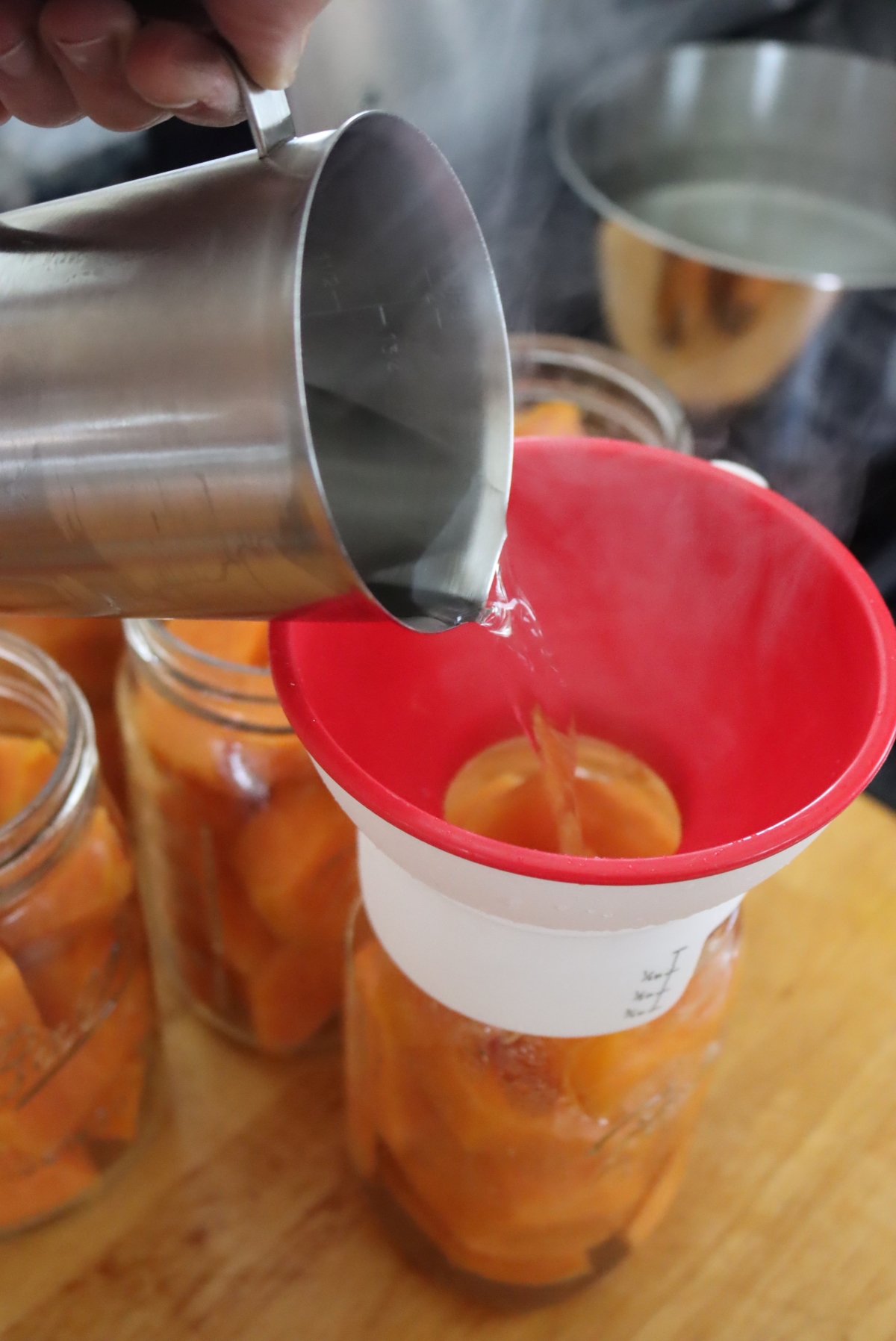
Seal the jars with 2 part canning lids, and then load them into the pre-heated pressure canner.
Place the lid on the canner and tighten the lid shut, but don’t put on the canning weight just yet. The canner needs to “steam off” for 10 minutes with the stove on high heat to completely fill the chamber with steam.
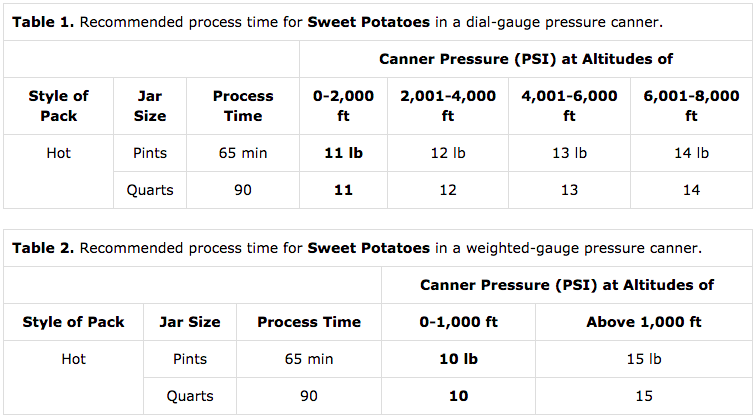
After 10 minutes have passed, place the canning weight on the canner and bring it up to pressure. Once at pressure, process the jars for 90 minutes for quarts and 65 minutes for pints.
The total pressure will depend on altitude and whether you’re using a weighted or dial gauge pressure canner. I’m using an All American Pressure canner, which is a weighted gauge, and I’m just below 1000 feet, so I can sweet potatoes at 10 pounds pressure.
See the table below for altitude adjustments for canning sweet potatoes:
Are Yams the same as Sweet Potatoes?
A quick note…in the US, we often use the term “sweet potatoes” and “yams” interchangeably. Sometimes, “yams” just refers to that well known holiday dessert where sweet potatoes are candied and topped with marshmallows for an over the top sugar bomb treat.

Technically though, yams are an entirely different vegetable.
Yams are a starchy vegetable that’s more like yucca root, and they’re not sweet at all. You’d be hard-pressed to find any true “yams” in an American grocery store.
That said, there’s plenty of interesting veggies available in grocery stores these days, especially in the cities. Be sure you’ve got “sweet potatoes” rather than yams.
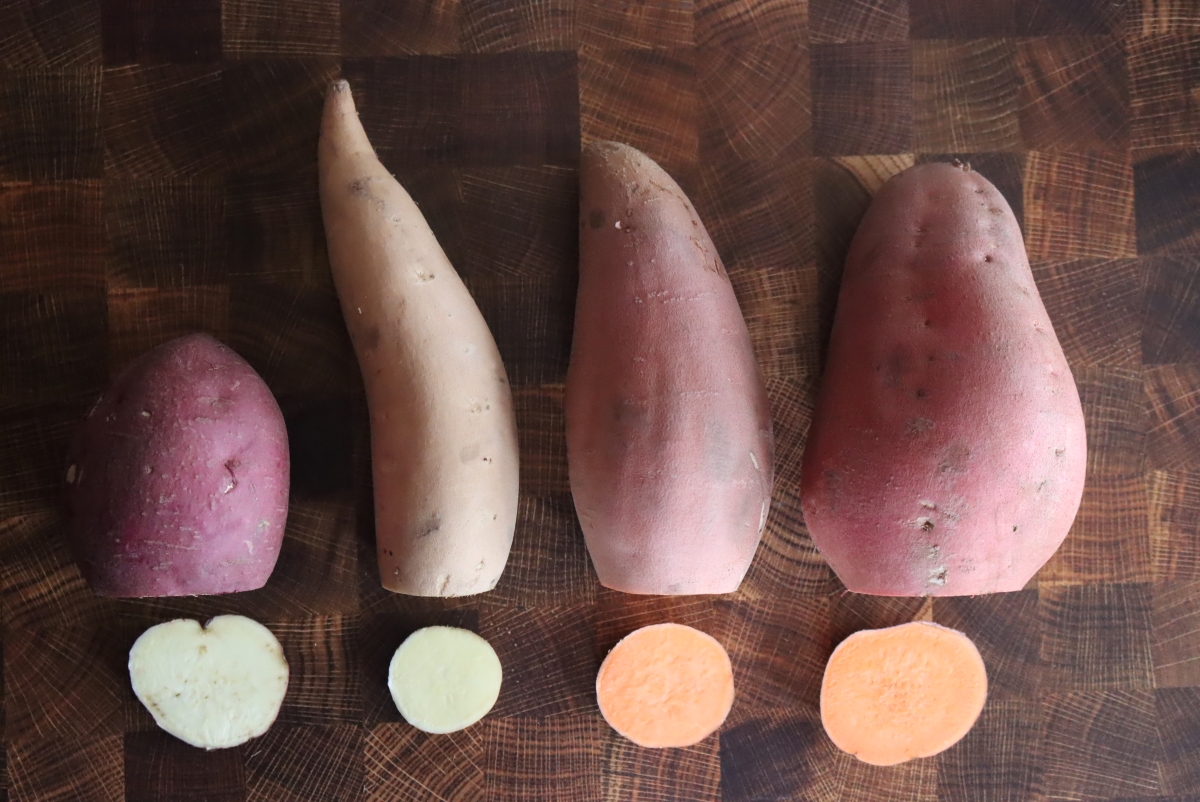
They should be sweet fleshed, though they come in many different colors. Most commonly, you’ll find orange-fleshed sweet potatoes, either Jewel or Garnet varieties.
Sweet potatoes also come in white, like Japanese sweet potatoes. Occasionally you can even find purple sweet potatoes from heirloom growers, though that’s rare outside of farmer’s markets around here.
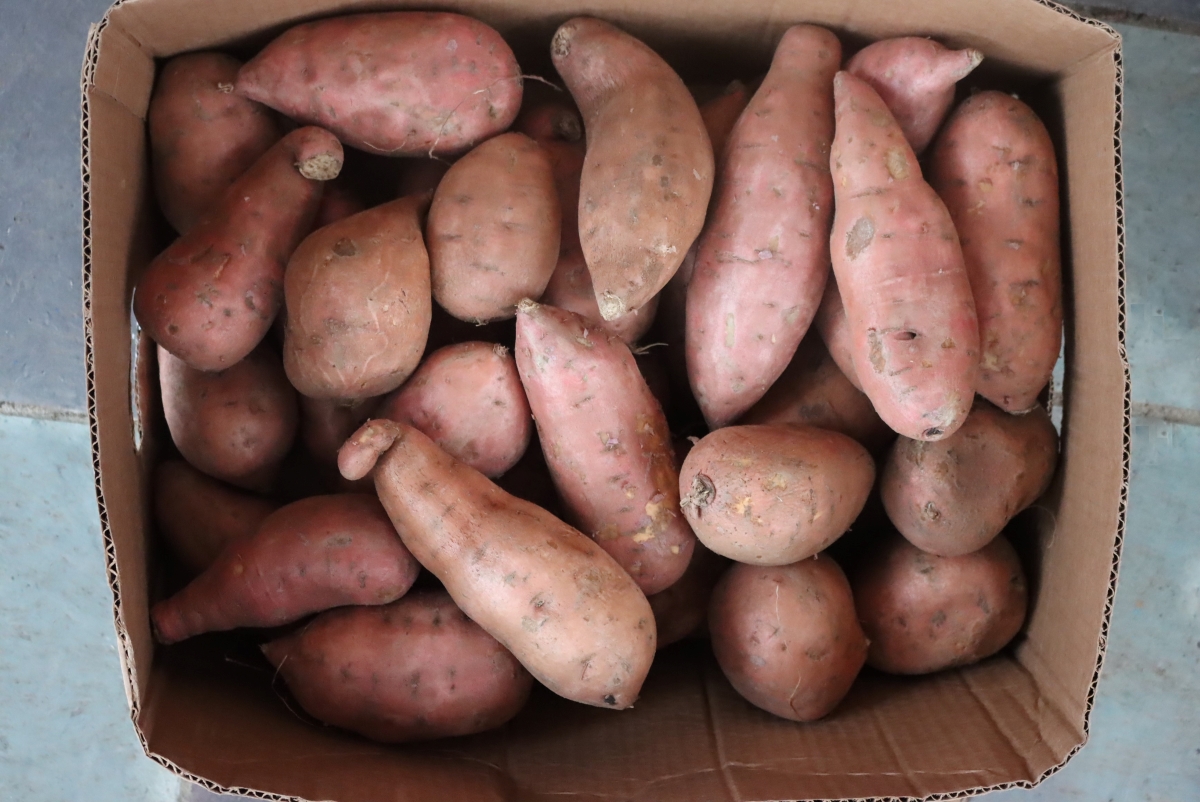
All of the ones pictured below are sweet potatoes, though two of them were sold as yams in the store.
The difference at this point is pretty technical, and they’ve been called yams in the US for ages. If you want to say, “Hold on mom, I’m canning yams” when she calls right in the middle of your processing day, she’ll definitely know what you mean.
(Important Note ~Though this method works for both orange and white sweet potatoes, there is a different method for “regular” or “Irish” potatoes. Here’s where you can find instructions for canning potatoes, which have a much shorter process time in the pressure canner and different pre-canning preparation steps.)
Click Here for the Recipe
Notes
As a rough estimate, I’d suggest having roughly 14 to 16 pounds of raw sweet potatoes on hand for a 7-quart batch, and 9 to 10 pounds for a 9-pint canner batch. (A bit over 1 pound per pint, or two pounds per quart.)
Canning Syrup – Sweet potatoes may be canned in water or syrup (extra light to heavy). I’d personally suggest using extra light syrup, as it helps prevent their natural sweetness from being lost to the canning liquid. For “candied” sweet potatoes, choose light syrup (or medium syrup, but I warn you, that’s a bit over the top).
To make the extra light syrup:
- For a 7 Quart Canner batch ~ Mix 10 1/2 cups water and 1 1/4 cup sugar.
- For a 9 Pint Canner Batch ~ Mix 6 1/2 cups water and 3/4 cups sugar.
For other syrup measurements, see this table of syrups for canning.