
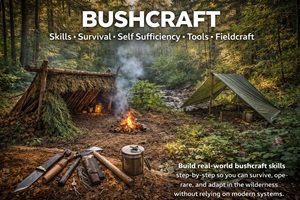
Category: Bushcraft
Focus: Skills • Survival • Self Sufficiency • Tools • Fieldcraft
Objective: Build real-world bushcraft skills step-by-step so you can survive, operate, and adapt in the wilderness without relying on modern systems
1. WHAT BUSHCRAFT REALLY IS
Bushcraft is not:
- camping
- gear collecting
- watching survival shows
Bushcraft is:
- using the land
- understanding your environment
- solving problems with minimal resources
It’s skill over gear. Always.
2. THE BUSHCRAFT MINDSET
Before tools, you need mindset:
- slow down
- observe everything
- use what’s available
- conserve energy
Panic wastes energy. Awareness saves it.
3. THE CORE SURVIVAL PRIORITIES
In the wild, your priorities are:
- Shelter
- Fire
- Water
- Food
Most beginners focus on food first – this is wrong.
4. ESSENTIAL BUSHCRAFT TOOLS (KEEP IT SIMPLE)
You don’t need much:
Core Kit:
- fixed blade knife
- ferro rod (fire starter)
- metal container (boiling water)
- cordage (paracord)
- tarp
Optional:
- folding saw
- small axe
Skills matter more than tools.
5. SHELTER BUILDING (FIRST PRIORITY)
Exposure kills faster than hunger.
Beginner Shelter Options:
1. Lean-To
- uses natural materials
- reflects heat from fire
2. Tarp Shelter
- fast setup
- lightweight
Step-by-Step (Lean-To):
- find a solid support (fallen tree or ridge pole)
- lean branches at 45° angle
- layer debris (leaves, pine needles)
- make it thick (insulation matters)
thickness = warmth
6. FIRE BUILDING (NON-NEGOTIABLE SKILL)
Fire provides:
- heat
- cooking
- water purification
- morale
Fire Basics:
You Need:
- tinder (dry, fine material)
- kindling (small sticks)
- fuel (larger wood)
Step-by-Step:
- gather materials BEFORE starting
- build structure (teepee or lean fire)
- ignite tinder
- slowly add kindling
- build to larger fuel
Beginner Mistakes:
- not enough tinder
- rushing the process
- using wet materials
7. WATER (SECOND MOST CRITICAL)
You can survive:
- weeks without food
- days without water
Finding Water:
- streams
- low ground
- animal tracks
Purification Methods:
1. Boiling (best)
- bring to rolling boil
2. Filtration
- portable filters
3. Improvised
- cloth + charcoal + sand
Never trust raw water
8. FOOD (LOW PRIORITY EARLY, CRITICAL LATER)
Food matters long-term.
Beginner Strategy:
Focus on:
- easy wins
- fish
- small game
- foraging
Avoid:
- unknown plants
- risky hunting without skill
starvation takes time—focus on shelter and water first
9. NAVIGATION (DON’T GET LOST)
Basics:
- always know direction
- mark your path
- use landmarks
Tools:
- map
- compass
Backup:
- sun position
- terrain awareness
getting lost is the fastest way to fail
10. CAMP SETUP (DO IT RIGHT)
Location Matters:
Choose:
- near water (but not too close)
- elevated ground
- sheltered from wind
Layout:
- shelter
- fire (safe distance)
- water access
- gear area
a good camp reduces effort
11. WOOD PROCESSING
You Need:
- dry wood
- multiple sizes
Skills:
- batoning (splitting wood with knife)
- feather sticks (for fire starting)
processed wood burns better
12. WEATHER AWARENESS
Watch for:
- wind changes
- cloud patterns
- temperature drops
Adjust:
- shelter
- fire
- clothing
weather changes fast—adapt early
13. BUSHCRAFT SAFETY
Biggest Risks:
- injury
- dehydration
- exposure
Rules:
- don’t overexert
- stay aware
- work deliberately
one injury can end everything
14. SKILL DEVELOPMENT PLAN
Start Simple:
Week 1:
- build fire
Week 2:
- build shelter
Week 3:
- purify water
Week 4:
- spend a night outdoors
build gradually
15. COMMON BEGINNER MISTAKES
- bringing too much gear
- ignoring environment
- not practicing
- overconfidence
simplicity wins
16. ADVANCED INSIGHT
Bushcraft is about:
- efficiency
- awareness
- adaptability
Not:
- toughness
- suffering
17. REAL-WORLD APPLICATION
Bushcraft helps with:
- survival situations
- off-grid living
- prepping scenarios
these skills transfer directly
18. FINAL TAKEAWAY
You don’t need more gear.
You need:
- practice
- awareness
- skill
If you can:
- build shelter
- make fire
- find water
you can survive almost anywhere