
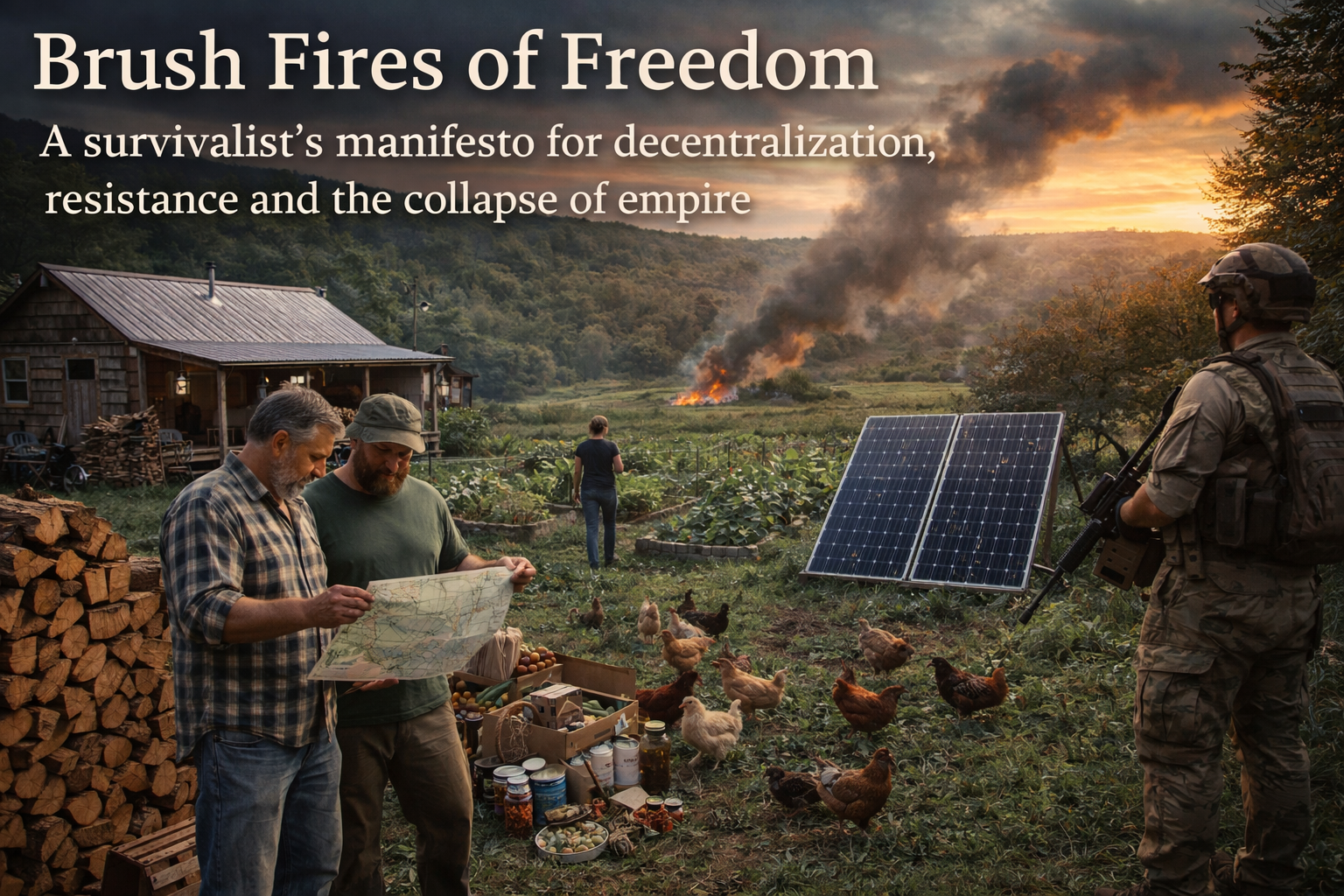
 Throughout history, civilizations have risen and fallen as political power, economic systems, and social institutions evolve. Many historians note that large empires and centralized systems often grow increasingly complex over time. As those systems expand, they can become more difficult to maintain, more dependent on distant resources, and more vulnerable to economic or political stress.
Today, similar conversations are emerging about the stability of modern global systems. Financial networks, international trade, and political institutions now operate at enormous scale. While these systems have enabled technological progress and global cooperation, they have also created new vulnerabilities. Supply chains stretch across continents, currencies depend on complex financial structures, and many communities rely heavily on centralized infrastructure.
For this reason, growing numbers of people are exploring the concept of decentralization and community resilience. Rather than depending entirely on distant institutions or fragile global systems, they are working to strengthen local networks, build practical skills, and develop more self-reliant communities.
Lessons From the Rise and Fall of Empires
History offers many examples of large political systems that eventually declined under the weight of internal challenges. Economic instability, currency devaluation, political corruption, military overextension, and social division have all played roles in past collapses.
In ancient Rome, for example, historians describe periods of severe inflation, weakening currency value, and growing dependence on military expansion. These pressures did not destroy the empire overnight, but over generations they contributed to political fragmentation and economic decline.
Modern societies are far more technologically advanced, yet they still face many of the same structural questions: how to maintain stable economies, manage political power responsibly, and ensure that institutions remain accountable to the people they serve.
Discussions about decentralization often emerge from the idea that smaller, locally grounded systems may sometimes be more adaptable and resilient than large centralized ones.
Understanding the Appeal of Decentralization
Decentralization simply means distributing power and responsibility across many smaller units rather than concentrating it in a single authority.
In practical terms, this idea can apply to many areas of life, including:
Local food production
Community-based economies
Independent energy systems
Local governance and decision-making
Peer-to-peer technology networks
Supporters of decentralization argue that when communities have more direct control over resources and decision-making, they can adapt more quickly to changing conditions.
For example, a local food network may be able to respond faster to disruptions than a global supply chain that depends on multiple international transport systems.
Economic Independence and Financial Diversity
Economic stability is another area where decentralization is frequently discussed. Global financial systems operate through interconnected banking institutions, national currencies, and international markets.
While these systems support global trade and investment, they can also be affected by economic crises, inflation, debt cycles, or policy changes.
Many individuals seeking financial resilience explore a diversified approach that may include traditional savings, tangible assets, local trade networks, or digital financial technologies. The goal is not to reject the broader financial system entirely, but to avoid dependence on any single structure.
Communities that support local businesses, farmers, and small enterprises often create more stable regional economies that can weather disruptions more effectively.
Homesteading and Practical Self-Reliance
Another common theme in discussions about decentralization is self-reliance at the household level.
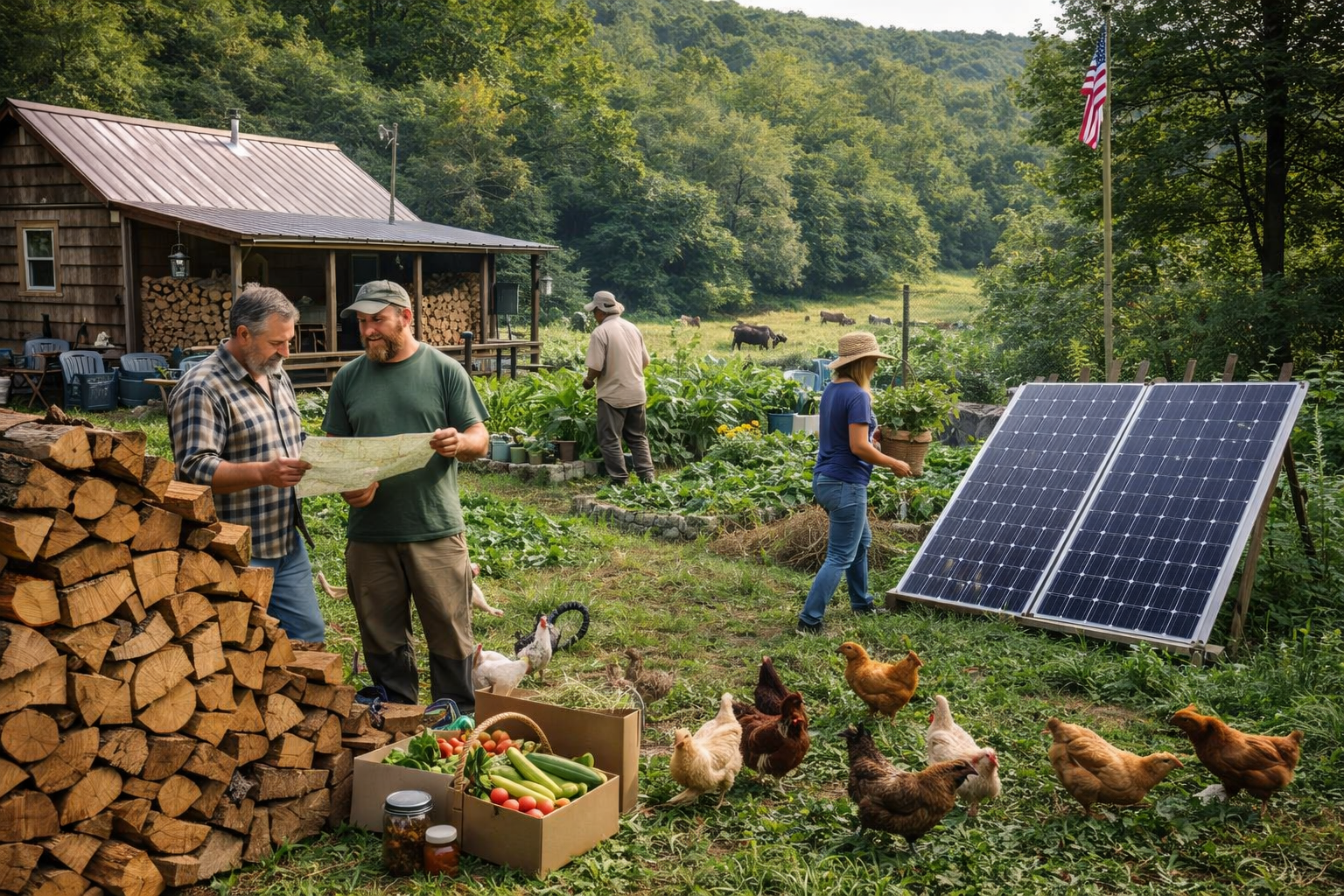
Homesteading and small-scale food production have experienced renewed interest in recent years. Gardening, raising small livestock, preserving food, and developing basic repair skills allow families to provide for some of their own needs rather than relying entirely on external supply chains.
These practices also reconnect people with older traditions that were common for most of human history.
Self-reliance does not mean isolation. Instead, it often strengthens community cooperation, as neighbors exchange knowledge, tools, and resources.
Local Trade and Community Networks
Communities that build strong local networks often develop systems of mutual support that increase resilience during difficult periods.
Local markets, cooperative businesses, and regional supply chains can reduce dependence on distant institutions while strengthening economic relationships between producers and consumers.
In some communities, barter systems or local currencies have also been used to encourage regional trade and keep economic activity circulating locally.
These approaches allow communities to maintain economic activity even when larger systems experience disruption.
The Role of Civic Engagement
Decentralization is not only about economics or survival skills. It is also closely tied to civic engagement and responsible participation in public life.
Healthy societies depend on informed citizens who are willing to participate in decision-making, debate ideas respectfully, and hold leaders accountable.
Philosophers throughout history have emphasized that freedom and stability require both responsibility and participation from the people who live within a society.
Local governance, community meetings, and civic organizations often provide opportunities for citizens to influence decisions that affect their daily lives.
Learning From Peaceful Traditions of Reform
Many historical movements advocating for decentralization and local autonomy have drawn inspiration from philosophical traditions that emphasize peaceful reform, ethical leadership, and responsible citizenship.
Thinkers such as Henry David Thoreau wrote about the importance of individual conscience and civic responsibility. Leaders like Mahatma Gandhi promoted community self-sufficiency and peaceful resistance as tools for social change.
These traditions highlight the importance of ethical action, community cooperation, and constructive reform rather than violence or conflict.
Building Resilient Communities for the Future
The central idea behind resilience is simple: communities that are adaptable, cooperative, and locally capable are often better prepared to face unexpected challenges.
This resilience can be built in many ways:
Supporting local farmers and businesses
Developing community emergency preparedness plans
Encouraging education in practical skills
Strengthening neighborhood relationships
Maintaining diverse and flexible economic systems
None of these steps require abandoning modern society. Instead, they represent a balanced approach that combines technological progress with local capability.
A Future Built on Balance
Modern civilization has achieved extraordinary advances in science, medicine, communication, and technology. At the same time, many people are recognizing the importance of maintaining strong local systems that can operate even when global networks experience stress.
Decentralization, self-reliance, and community cooperation are not new ideas. They are long-standing traditions that have helped societies adapt throughout history.
By combining modern knowledge with practical resilience, communities can build systems that are both innovative and durable.
In a rapidly changing world, the ability to balance global connection with local strength may become one of the most important foundations for stability and freedom in the years ahead.