
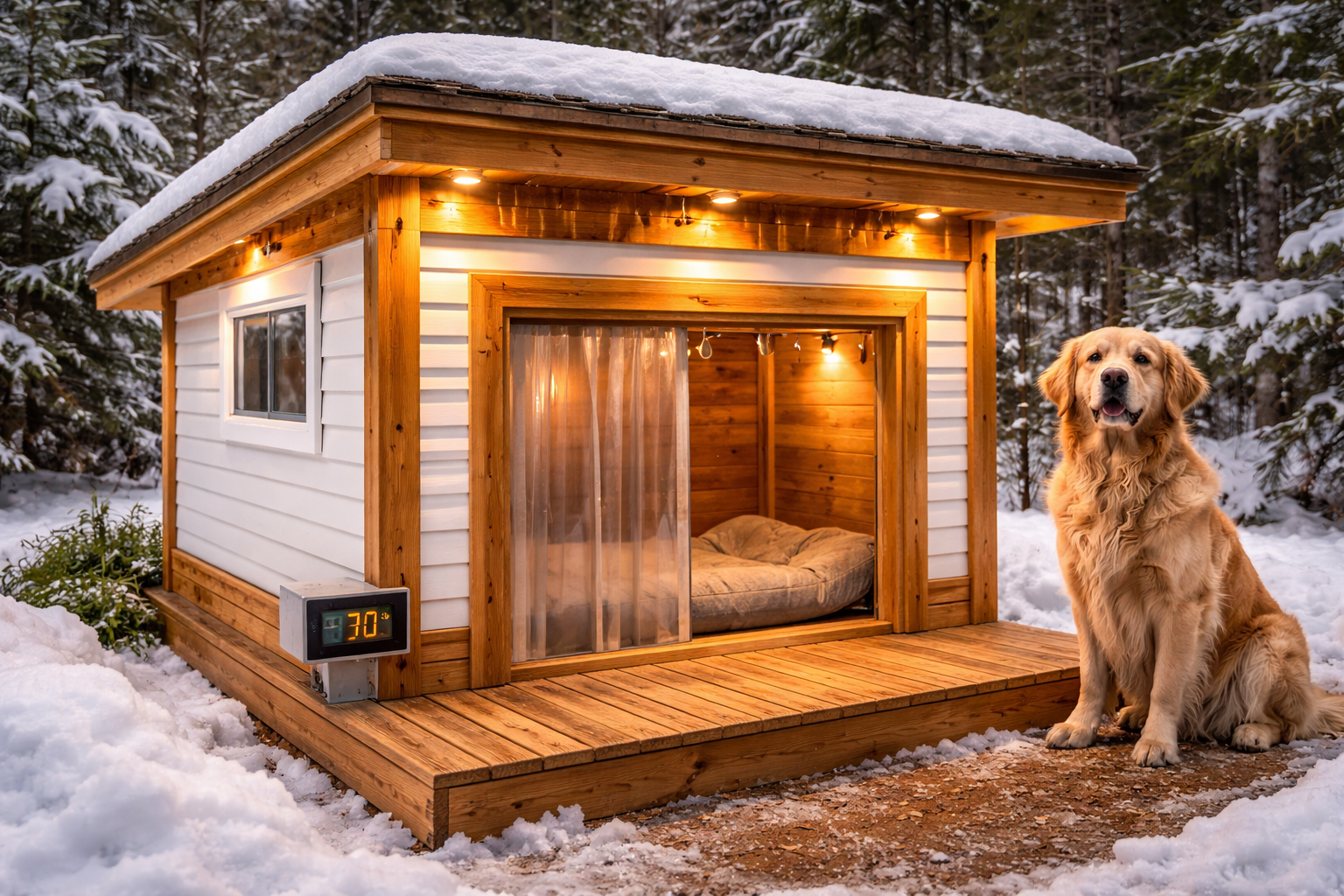
If you live anywhere that gets real winters, a basic dog house isn’t enough.
Cold ground, wind, moisture, and heat loss will turn even a decent shelter into something your dog avoids — or worse, something unsafe.
A proper setup isn’t about making it fancy…
it’s about controlling temperature, moisture, and exposure.
Start With the Base (Most People Get This Wrong)
The biggest mistake is putting a dog house directly on the ground.
Cold transfers fast.
A raised base changes everything:
- Keeps moisture out
Reduces heat loss
Improves airflow underneath
Even a simple framed platform makes a huge difference.
Insulation Is the Real Game Changer
If you don’t insulate, you’re just trapping cold air.
What works:
- Rigid foam board (easy + effective)
Fiberglass (if sealed properly)
Reflective insulation for added heat retention
The key isn’t just adding insulation —
it’s sealing gaps so heat doesn’t escape.
Heating: Keep It Simple and Safe
You don’t need anything extreme.
Low-draw options work best:
- Heated floor mats
Low-watt heating panels
Controlled heat sources with thermostats
The goal isn’t making it hot —
it’s keeping it above freezing and stable.
Ventilation Still Matters
A lot of people over-seal.
That creates moisture buildup → which turns into cold.
You want:
- Small airflow paths
Optional vents or window
A balance between warmth and dryness
Dry warmth is what you’re aiming for.
Entry Design = Heat Retention
The doorway is where most heat escapes.
Simple upgrades:
- Flap covers (vinyl or rubber)
Offset entry (not straight-through wind)
Smaller opening sized to your dog
This alone can noticeably improve internal temps.
Extra Features That Actually Help
You don’t need to go overboard, but a few things are worth it:
- LED lighting (low power, useful at night)
Removable bedding (easy to dry/replace)
Sloped roof for snow/rain runoff
Durable exterior materials (cedar, sealed panels, etc.)
Focus on durability over looks.
Power Options (Grid vs Off-Grid)
If you have power:
Keep it efficient and low draw
Use thermostats to avoid constant running
If you don’t:
Small solar setups can work for low power heating
Battery + panel systems are enough for basic needs
The Big Takeaway
Most people think:
“build a dog house”
But what you’re really doing is:
creating a controlled environment
Keep heat in
Keep moisture out
Reduce exposure
That’s what makes it work.
Final Thought
You don’t need a $2,000 setup to do this right.
But you do need to think it through.
Because in real winter conditions…
a properly built shelter isn’t a luxury for your dog —
it’s the difference between comfort and survival.