
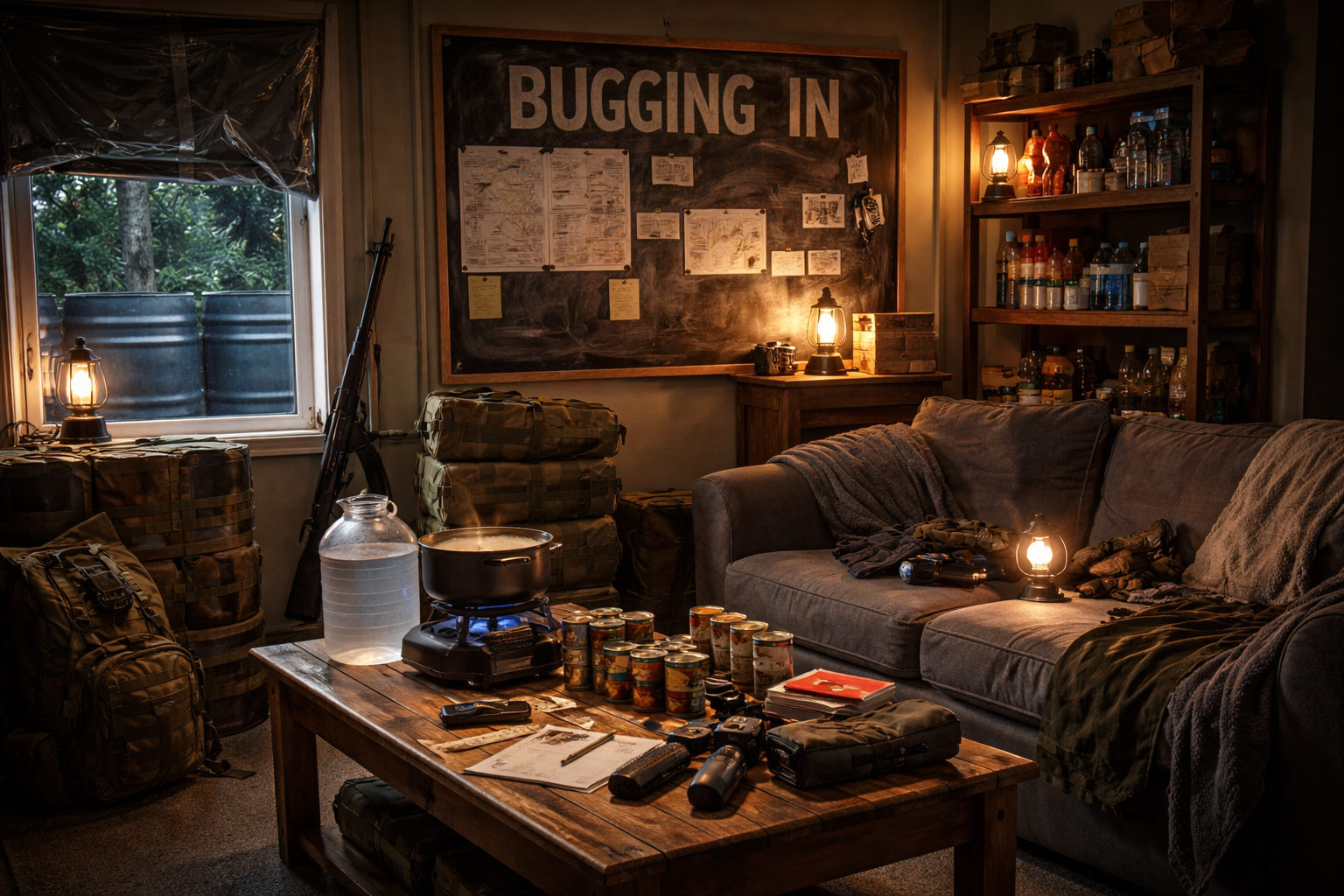
When disaster strikes, most people think about leaving.
But in many situations – whether it’s a natural disaster, civil unrest, or a long-term grid-down event – staying put is often the safest and smartest option.
Your home already has what you need:
Supplies
Shelter
Familiarity
Control
The key is turning it from a place you live… into a place you can hold and operate from effectively.
This is what bugging in is all about.
Why Bugging In Is Often the Best Option
Leaving sounds like action — but it comes with risk:
Unknown conditions
Limited supplies
Exposure to others
Travel restrictions or roadblocks
Staying home allows you to:
Use stored supplies
Control your environment
Avoid unnecessary exposure
Make better decisions under less pressure
In most realistic scenarios, your home becomes your base camp.
Immediate Actions When a Disaster Hits
If a shelter-in-place or curfew is announced, time matters.
Start with the basics:
1. Fill Every Water Container
Bathtubs
Sinks
Buckets
Pots
Aim for at least 1 gallon per person per day
2. Secure the Home
Lock all doors and windows
Close curtains and blinds
Limit visibility from outside
3. Gather Essential Gear
Lighting (flashlights, lanterns)
Radios
Medical supplies
Backup power
Water: Your #1 Priority
Water is not just for drinking — it’s for:
Cooking
Cleaning
Hygiene
Storage Strategy
Store more than you think you need
Use rain collection if possible
Keep backup containers ready
Purification Options
Filters
Purification tablets
Boiling (if possible)
If water supply is interrupted and returns later, don’t assume it’s safe.
Always treat or filter it.
Home Defense & Security
Your home needs to shift from “comfortable” to defensible.
Perimeter Security
Lock everything
Reinforce weak entry points
Reduce visibility
Interior Setup
Choose a safer room (away from windows/exterior walls)
Keep supplies centralized
Block light from escaping at night
Situational Awareness
Maintain a watch if possible
Use simple alert systems
Stay aware of changes outside
The goal is not to draw attention — it’s to avoid it.
Fire & Safety Planning
Disasters increase fire risks significantly.
Make sure you have:
Fire extinguishers
Smoke alarms
Fire blankets
Also:
Know how to shut off gas and power
Secure breaker panels if needed
Food & Cooking Without Power
Food is fuel — but how you prepare it matters.
Smart Food Choices
Rice
Beans
Canned goods
Shelf-stable foods
Cooking Options
Camping stoves
Solar ovens
Low-profile heat sources
Avoid anything that:
Creates visible smoke
Produces strong smells
Draws attention
Sanitation & Hygiene
This is one of the most overlooked — and most critical — areas.
Water Alternatives
Toilet tanks
Water heaters
Backup Toilet Setup
5-gallon bucket
Garbage bags
Tight-sealing lid
Long-Term Option
Dig a latrine (away from water sources)
Good sanitation prevents:
Disease
Contamination
Unnecessary health risks
Communication & Information
Staying informed can change everything.
Have:
Battery or hand-crank radios
Backup communication methods
Also:
Stay connected with trusted neighbors
Share updates and resources
You’re stronger working together than isolated.
Mental Strength & Daily Routine
Long-term situations aren’t just physical — they’re mental.
Keep Structure
Eat regularly
Stay hydrated
Maintain routines
Manage Stress
Keep kids engaged
Avoid burnout
Focus on endurance, not intensity
Small comforts can make a big difference.
Don’t Forget Your Pets
Pets are part of your plan too.
Make sure you have:
Food and water
Waste solutions
Medications
Carriers if needed
Plan for them the same way you plan for yourself.
The Real Advantage of Bugging In
You’re not starting from zero.
You already have:
Shelter
Supplies
Familiar ground
With the right preparation, your home becomes:
A controlled environment
A safer fallback
A long-term survival position
Final Thoughts
Bugging in isn’t about fear — it’s about control and preparedness.
You don’t need extreme setups.
You need:
A plan
Basic supplies
Awareness of your environment
Because when things start to shift…
The people who already planned ahead
don’t panic – they adjust.
If you found this helpful, share it with others who are preparing.
Drop your own bug-in tips below – what’s one thing you’ve done to prepare your home?