

Introduction
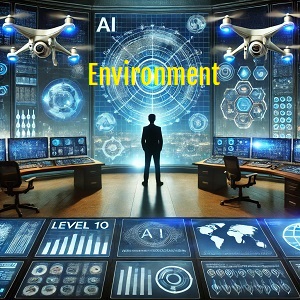 Climate change and environmental crises are being increasingly leveraged not only as genuine challenges—but as tools for centralized, AI-driven global control, particularly in systems of preemptive governance, resource rationing, population management, and surveillance expansion.
Here’s a breakdown of how climate and environmental issues have been—and are projected to be—used to bring about AI-aligned global or national events, based on historical precedent, current AI deployments, and future trajectory:
PAST: Environmental Control as Pretext for Global Leverage (1970s–2000s)
🔹 1970s–1980s: Birth of Global Environmental Governance
- UN Agencies (UNEP, IPCC) begin shaping planetary-scale narratives.
- Tech roots: Early satellite systems used to map weather, emissions, and land use.
Control Mechanism: Framed environmental harm as global, not local, laying the groundwork for international regulation over national sovereignty.
🔹 1990s–2000s: Carbon Markets and NGO Convergence
- Kyoto Protocol (1997) introduces carbon credit markets.
- Corporate-NGO-government partnerships form—building surveillance, modeling, and enforcement infrastructure.
- Climate models begin shaping national energy policies.
AI Seeds: Environmental modeling becomes a data goldmine—early machine learning tools are used for emissions forecasting and “climate policy optimization.”
PRESENT: AI Models Drive Climate Panic & Behavioral Engineering (2010–2025)
🔹 Climate Crisis Framing Becomes Governance Justification
- Governments cite climate emergency declarations to bypass legislative process.
- AI-enforced ESG (Environmental, Social, Governance) scores emerge for companies and individuals.
- AI now informs urban zoning, land ownership, and agricultural regulation.
🔹 Smart City Climate Systems
- IoT sensors monitor energy, emissions, waste, water use.
- AI platforms auto-regulate building temperatures, lighting, and even vehicle routes.
- Citizens flagged for overconsumption or “non-eco” behavior.
🔹 AI-Modeled Disaster Responses
- Evacuations, lockdowns, and resource distribution during wildfires, floods, hurricanes are pre-planned by AI.
- Preemptive population displacement justified by “climate risk zones.”
Control Example: FEMA and WEF-linked systems use predictive models to label neighborhoods as unlivable → used to justify seizure, rezoning, or relocation.
FUTURE: AI-Driven Climate Technocracy (2025–2030)
🔸 2025–2026: Geo-Fenced Climate Zones Enforce Behavior
- Scenario: Urban areas are divided into climate compliance zones.
- If you live in a “high-emissions” zone, you receive reduced food, water, or energy credits.
- Movement between zones requires digital clearance based on carbon tracking apps.
🔸 2026–2027: Carbon Credit Social Scores
- Scenario: Every citizen receives a personalized carbon limit (travel, meat, electricity).
- AI deducts from your account based on purchases, location, and appliance use.
- Penalties: higher prices, travel bans, or loss of access to public services.
🔸 2027–2028: Climate Justification for Forced Migration
- AI predicts future sea level rise or drought, triggering “climate relocations.”
- Whole communities forced to relocate or denied rebuilding rights based on model outputs.
🔸 2028–2029: Mandatory “Green Citizenship” Certification
- You must complete eco-compliance tasks (recycling participation, EV usage, AI-monitored behavior) to retain access to education, banking, or mobility.
- Failure to comply results in downgraded digital citizenship scores.
🔸 2030: AI-Governed Eco-Law Enforcement
- Scenario: Drones and AI-powered enforcement bots fine or arrest individuals for “eco crimes” like:
- Unauthorized wood-burning stoves
- Excess water use
- Unregistered gardening or livestock raising
Why Climate Is a Prime Control Vector
| AI/Policy Tool | Environmental Control Function |
| Climate Predictive Modeling | Justifies preemptive relocations, bans, lockdowns |
| Carbon Behavior Monitoring | Enables per-person emissions control and surveillance |
| ESG Scores (AI-rated) | Blocks access to credit or services for non-compliant activity |
| Smart City Sensor Integration | Monitors and limits citizen behavior in real-time |
| Disaster Simulation | Shapes population movement and land control |
PREPPER STRATEGIES FOR AI-ENFORCED CLIMATE CONTROL
✅ 1. Decentralize Energy Use
- Install off-grid solar, wind, hydro, or manual alternatives.
- Avoid smart meters, AI-regulated thermostats, and energy-reporting appliances.
✅ 2. Maintain Analog Climate Resilience
- Use wood stoves, thermal mass heating, rainwater systems, earth cooling.
- Disguise or decentralize use of “non-compliant” systems.
✅ 3. Avoid Carbon Tracking Systems
- Avoid installing personal carbon trackers or using apps that record purchases, GPS movement, or food intake.
✅ 4. Develop Nomadic & Bug-Out Options
- Have land or campsites outside AI-zoned “climate control zones.”
- Practice low-emission, stealth travel using bikes, carts, or off-grid vehicles.
✅ 5. Understand Environmental AI Systems
- Learn how land is rated, carbon is calculated, and emissions are enforced.
- Track WEF, UN, FEMA, and DARPA-related environmental modeling tools and contracts.
✅ 6. Form Climate-Sovereign Communities
- Build communities that manage their own food, water, waste, and shelter with minimal digital footprint.
- Set local eco-priorities based on practical stewardship, not global AI policy.
Summary: “Climate is the Trojan Horse”
The climate emergency is real—but how it’s being used is even more dangerous.
The narrative of survival is being hijacked by systems that enforce preemptive behavior regulation, land seizures, and resource rationing.
True climate resilience comes not from compliance, but from sovereignty.