

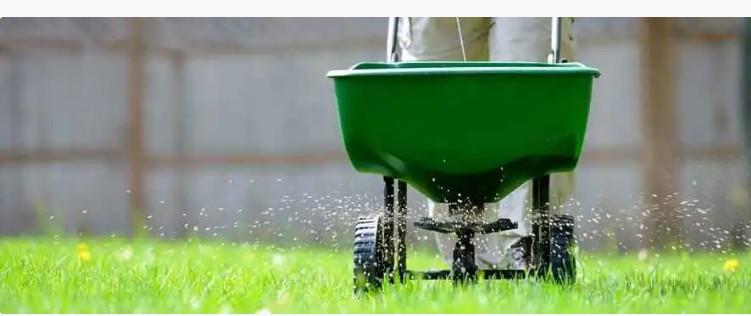
There’s something deeply satisfying about tending to your lawn and yard—whether it’s laying down fresh mulch, watching your grass grow thick and green, or planting a garden that feeds both your family and the local pollinators. But in the rush to create that picture-perfect outdoor space, many of us unknowingly introduce toxic chemicals into the soil we walk on, the air we breathe, and the environment we’re supposed to be nurturing. And we’re not just talking about obscure, hard-to-find chemicals. We’re talking about the best-selling, heavily marketed products in every big-box garden center.
If you care about nature and your health or simply want your yard to be safe for kids, pets, or bare feet, then there are three major types of products you need to cut from your lawn care routine today. Let’s walk through each one, why they’re problematic, and what to use instead.
-
Weed & Feed Products: Popular, Convenient, and Shockingly Toxic
At first glance, Weed & Feed products sound like the ultimate lawn hack. They promise to do two jobs at once—kill weeds and fertilize your grass—so it’s no surprise they’ve become a household staple. But that convenience comes at a cost. Most Weed & Feed formulas contain a chemical called 2,4-D, one of the most commonly used herbicides in the United States. And while it may do a decent job at browning unwanted dandelions, it also has a disturbing list of potential health impacts.
2,4-D has been linked to thyroid dysfunction, hormone disruption, and possibly even non-Hodgkin lymphoma. This isn’t fringe science—it’s been studied for decades. It’s also known to linger in the environment long after application. That means your lawn, your soil, and your local water systems can all hold onto traces of this chemical for months, not to mention the pets and children who walk or play on the treated lawn.
Instead of relying on chemical shortcuts, try building long-term soil health. Worm castings, humic acids, and fulvic acids are incredible tools for restoring the natural microbiology of your lawn. They enrich the soil, promote deep-rooted growth, and strengthen grass resistance to pests and disease. You won’t see instant results overnight, but you’ll build a healthier, more sustainable yard from the ground up.
-
Synthetic Insecticides: Harmful to Bugs and You
Bugs in the garden can be annoying, but the chemical insecticides used to remove them do far more damage than most people realize. Many synthetic insecticides lining store shelves today contain active ingredients like bifenthrin, a neurotoxin that doesn’t discriminate between insects and humans. These chemicals can interfere with hormone function, damage reproductive health, and in some cases, have been flagged for their potential carcinogenic effects.
Exposure doesn’t just come from direct contact, either. These insecticides can be inhaled as they’re applied, carried by the wind to neighboring yards, and absorbed through the skin or paws of anyone who walks through a treated area. If you’re regularly spraying this stuff around your home or garden, you’re not just killing bugs—you’re adding to your family’s toxic burden.
A safer alternative? Essential oils like peppermint, clove, or rosemary can be surprisingly effective pest deterrents. These natural oils disrupt insects’ ability to sense and navigate their environment, making your garden a place they’d rather avoid. You can buy pre-made non-toxic sprays or mix your own at home with water, oil, and castile soap. It won’t give you the same scorched-earth effect as a synthetic chemical, but it’ll help manage pests while protecting your health and the ecosystem around you.
-
Roundup and Other Synthetic Weed Killers: Still Dangerous, Just in New Ways
Roundup has been in the spotlight for years, and for good reason. Its original active ingredient, glyphosate, has been the subject of numerous lawsuits and global debate due to its potential carcinogenic effects. After the public backlash, some manufacturers began changing their formulas, swapping glyphosate for other herbicides that, on paper, look like improvements. But in reality, they’re often just as bad or worse.
One ingredient now commonly used in newer weed killer formulas is diquat dibromide. This chemical is acutely toxic and has been linked to serious health concerns, including potential connections to Parkinson’s disease. The irony? Companies advertised these reformulated weed killers as safer because they didn’t include glyphosate, when in fact, the replacements may pose even more immediate health risks.
Rather than using synthetic herbicides, consider natural options like vinegar-based weed killers. You can find them at health-conscious garden suppliers or make your own at home using household vinegar, salt, and a small amount of natural dish soap. These won’t necessarily kill deep-rooted perennials in one spray, but for spot treatment and driveway cracks, they’re a practical and far safer option.
Your Backyard Should Be a Safe Space, Not a Chemical Testing Ground
Don’t overlook your outdoor space if you’re working to clean up your diet, home, and lifestyle. What you spray on your lawn matters as much as what you put in your body. The average yard treated with conventional products can become a chemical minefield, complete with residues that track into your home on shoes, paws, and bare feet. And when summer hits and the outdoor living begins, you want to know your space is safe for weekend hangouts, barefoot walks, and the neighborhood kids playing tag at dusk.
Switching away from these means putting in the effort to build a yard that’s not just green, but clean. And it means sharing what you learn with your neighbors, family, and friends, because the more of us who make these changes, the safer our communities become.
So as lawn and garden season kicks off, take stock of what’s in your shed. Read those ingredient labels. Do your research. And when in doubt, go natural. Your grass doesn’t need synthetic chemicals to thrive—and neither do you.
References:
- Karr, C. J., Solomon, G. M., & Brock-Utne, A. C. (2007). Health effects of common home, lawn, and garden pesticides. Pediatric Clinics of North America, 54(1), 63–80, viii. https://doi.org/10.1016/j.pcl.2006.11.005
- Mohd Ghazi, R., Nik Yusoff, N. R., Abdul Halim, N. S., Wahab, I. R. A., Ab Latif, N., Hasmoni, S. H., Ahmad Zaini, M. A., & Zakaria, Z. A. (2023). Health effects of herbicides and its current removal strategies. Bioengineered, 14(1), 2259526. https://doi.org/10.1080/21655979.2023.2259526
- Pathak, V. M., Verma, V. K., Rawat, B. S., Kaur, B., Babu, N., Sharma, A., Dewali, S., Yadav, M., Kumari, R., Singh, S., Mohapatra, A., Pandey, V., Rana, N., & Cunill, J. M. (2022). Current status of pesticide effects on environment, human health and its eco-friendly management as bioremediation: A comprehensive review. Frontiers in Microbiology, 13, 962619. https://doi.org/10.3389/fmicb.2022.962619
- Sears, M., Walker, C. R., van der Jagt, R. H., & Claman, P. (2006). Pesticide assessment: Protecting public health on the home turf. Paediatrics & Child Health, 11(4), 229–234. https://www.ncbi.nlm.nih.gov/pmc/articles/PMC2528613/