
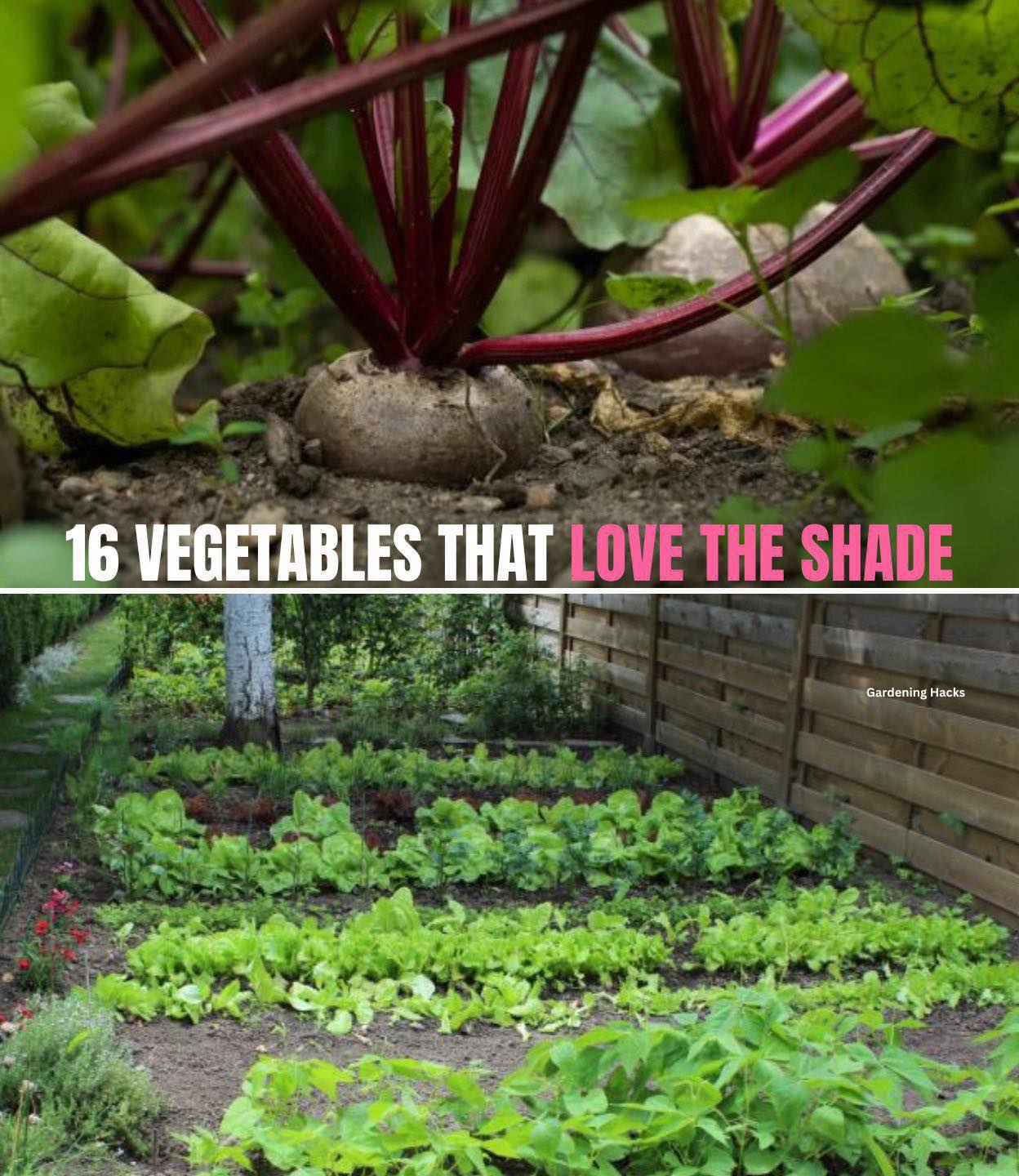
Not every garden gets full sun all day.
But that doesn’t mean you can’t grow food.
If your yard has tree cover, fence shade, or partial sun exposure, there are plenty of vegetables that actually prefer cooler, lower-light conditions.
Here are 16 shade-tolerant vegetables that thrive with less direct sunlight.
🥬 Leafy Greens (Best Performers in Shade)
These crops often do better in partial shade, especially during hot months.
• 🥬 Lettuce – Prevents bolting in warm weather
• 🥗 Spinach – Thrives in cool, low-light conditions
• 🥬 Swiss Chard – Very adaptable and productive
• 🥬 Kale – Handles part shade well
• 🥬 Arugula – Grows quickly in filtered light
• 🥬 Mustard Greens – Strong growth with limited sun
💡 Tip: 3–4 hours of sunlight plus bright indirect light is often enough.
🥕 Root Vegetables (Shade Tolerant, Slower Growth)
Root crops may grow more slowly in shade but still produce well.
• 🥕 Carrots – Smaller but sweeter in cooler conditions
• 🥔 Potatoes – Tolerate partial shade
• 🧅 Onions – Especially green onions
• 🧄 Garlic – Performs well with filtered sunlight
• 🥬 Beets – Tops grow well in shade; roots develop slower
💡 Tip: Expect slightly smaller harvests compared to full sun.
🌿 Brassicas & Cool-Weather Crops
Many brassicas prefer cooler temperatures and less intense sun.
• 🥦 Broccoli – Partial shade helps prevent stress
• 🥬 Cabbage – Thrives in cool, protected areas
• 🌱 Cauliflower – Benefits from shade in hot climates
• 🥬 Bok Choy – Excellent for low-light beds
🌿 Herbs That Handle Shade
• 🌿 Parsley
• 🌿 Cilantro
• 🌿 Mint (very shade tolerant)
🌳 What “Shade” Really Means
Not all shade is equal.
☀️ Full Sun = 6+ hours direct light
🌤️ Partial Shade = 3–6 hours direct light
🌳 Dappled Shade = Filtered light through trees
Most shade-tolerant vegetables still need some light — just not all-day exposure.
🌾 Why Grow in Shade?
✔ Extends growing season
✔ Reduces bolting
✔ Prevents heat stress
✔ Makes use of otherwise unused garden space
✔ Ideal for small urban yards or fenced areas
🌱 Final Takeaway
If you’ve avoided planting in shaded areas, you may be leaving food on the table.
Shade gardens can be incredibly productive — especially with leafy greens, root crops, and cool-weather vegetables.
Not every garden needs full sun.
Sometimes the coolest corners grow the strongest harvests.