
Blueberries are one of the most rewarding fruits you can grow in a home garden. They produce sweet berries packed with antioxidants, attract pollinators in spring, and bring beautiful color to the landscape from spring blossoms to fall foliage.
But blueberries have very specific growing requirements, and planting the wrong neighbors nearby can reduce yields, stunt growth, or even cause plant stress.
The key to a healthy blueberry patch is understanding what plants compete with them and which ones actually help them thrive.
Let’s break down the plants you should avoid growing near blueberries, and the ones that make excellent companions.
🫐 Why Companion Planting Matters for Blueberries
Blueberries grow differently from many other garden plants.
They prefer:
🌱 Highly acidic soil (pH 4.0–5.0)
💧 Consistent moisture
🌿 Organic, well-drained soil
☀️ Full sun or light shade
They also have shallow root systems, meaning nearby plants can easily compete with them for nutrients and water.
Choosing the right neighbors can help:
🐝 attract pollinators
🌱 improve soil health
🌿 suppress weeds
💧 retain soil moisture
But the wrong plants can create serious competition.
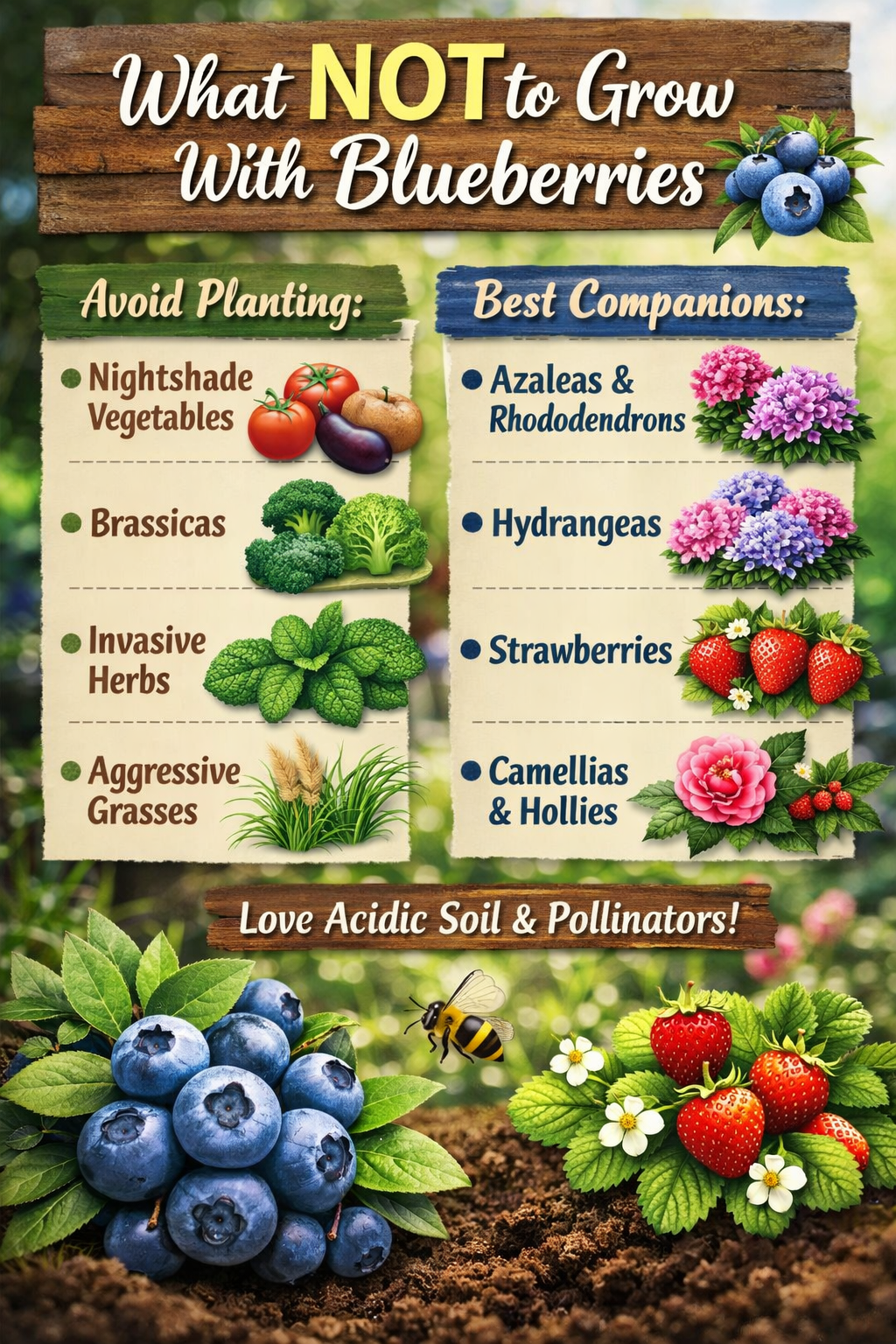
🚫 Plants You Should NOT Grow With Blueberries
🌳 Aggressive Shrubs
Some shrubs spread quickly or develop large root systems that can overwhelm blueberry roots.
Avoid planting shrubs that spread aggressively or sucker heavily.
Examples include:
⚠️ Japanese barberry
⚠️ burning bush
⚠️ privet
⚠️ eleagnus
These shrubs grow aggressively and can take over valuable soil space.
Blueberries grow slowly, so they often lose the competition.
🍅 Nightshade Vegetables
The nightshade family contains many common garden vegetables.
These include:
🍅 tomatoes
🌶 peppers
🥔 potatoes
🍆 eggplants
🌿 tomatillos
The problem is not that they cannot grow nearby — it’s that they prefer different soil conditions.
Blueberries need very acidic soil, while most vegetables grow best in neutral soil.
Nightshades are also heavy feeders, which means they quickly absorb nutrients that blueberries depend on.
🥦 Brassica Vegetables
Plants in the cabbage family also make poor neighbors.
These include:
🥦 broccoli
🥬 cabbage
🥬 kale
🥬 cauliflower
Brassicas grow quickly and require significant nutrients.
Because blueberries grow more slowly, these vegetables can dominate the available resources.
🌿 Spreading Herbs
Some herbs spread aggressively and can quickly take over garden space.
Examples include:
🌱 mint
🌱 lemon balm
These plants send runners across the soil surface and can form dense mats around blueberry plants.
That competition can interfere with water and nutrient access.
If you want to grow these herbs, it’s best to keep them in containers nearby instead of directly in the blueberry bed.
🌾 Aggressive Grasses
Some ornamental grasses can also crowd blueberries.
Avoid planting species known for spreading quickly or reseeding heavily.
Examples include:
🌾 pampas grass
🌾 fountain grass
🌾 miscanthus
These grasses develop strong root systems that can outcompete slower-growing shrubs like blueberries.
🌱 Best Companion Plants for Blueberries
Now for the fun part — the plants that actually work well with blueberries.
These companions typically share similar soil conditions and help create a balanced garden environment.
🌸 Azaleas and Rhododendrons
These flowering shrubs thrive in the same acidic soil that blueberries love.
Benefits include:
🌸 beautiful spring blooms
🐝 pollinator attraction
🌱 similar soil and moisture needs
They also add stunning color to a berry garden.
🌼 Hydrangeas
Hydrangeas pair beautifully with blueberries in mixed garden beds.
They enjoy:
💧 moist soil
🌤 partial sun
🌱 acidic soil
Their large blooms also provide visual contrast to blueberry foliage.
🌿 Camellias
In warmer climates, camellias make excellent companions.
They provide:
🌺 winter or early spring blooms
🌿 evergreen foliage
🌱 similar soil conditions
They also bring year-round structure to a berry planting.
🌳 Hollies
Hollies are excellent landscape companions.
They provide:
🐦 food for wildlife
🌿 evergreen structure
🌱 tolerance of acidic soil
Many holly varieties grow well alongside blueberries.
🌸 Pieris (Japanese Andromeda)
Pieris shrubs have delicate bell-shaped flowers that resemble blueberry blossoms.
They thrive in:
🌱 acidic soil
🌤 partial sun
💧 moist conditions
Their ornamental foliage also adds visual interest to berry beds.
🌼 Gardenias
Gardenias provide fragrant blooms and attract pollinators.
They share many of the same growing preferences as blueberries:
🌱 acidic soil
☀️ full sun to partial shade
💧 consistent moisture
Their white flowers create a beautiful contrast with blueberry shrubs.
🌳 Viburnum
Some viburnum species tolerate acidic soils and can grow well with blueberries.
They offer:
🌸 spring flowers
🍇 decorative berries
🐦 wildlife habitat
Look for varieties suited to acidic soil conditions.
🍓 Strawberries
Strawberries are one of the best companions for blueberries.
They work well because:
🌱 they share acidic soil preferences
🌿 they form a low ground cover
💧 they help retain soil moisture
Strawberries also help suppress weeds around blueberry plants.
🌿 Simple Blueberry Garden Layout Idea
A productive blueberry garden might look like this:
🫐 blueberries as the main shrubs
🍓 strawberries as ground cover
🌸 azaleas or hydrangeas as accent shrubs
🐝 pollinator flowers nearby
This layered approach supports both fruit production and garden biodiversity.
🫐 Final Thoughts
Blueberries are long-lived plants that can produce fruit for decades when properly cared for.
The key is giving them the environment they prefer and avoiding plants that compete too aggressively.
Remember these simple rules:
✔ choose plants that enjoy acidic soil
✔ avoid heavy-feeding vegetables nearby
✔ keep aggressive spreaders away
✔ include pollinator-friendly plants
When planted thoughtfully, blueberries can become the centerpiece of a beautiful and productive edible landscape.