
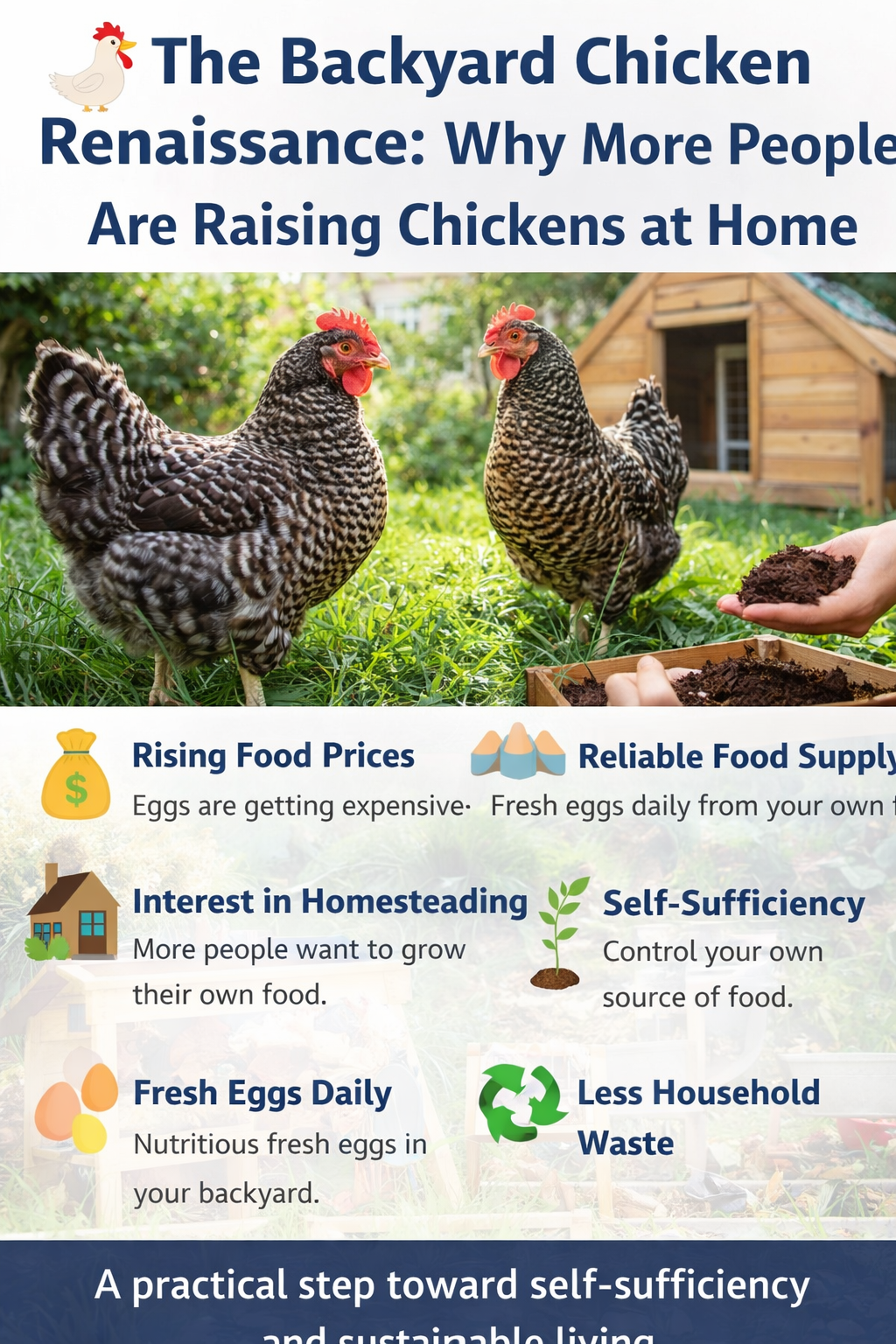
Across North America, something interesting is happening in backyards.
More people than ever are raising chickens.
What was once considered a rural hobby has become a growing movement among suburban homeowners, urban gardeners, and homesteaders. Rising food prices, concerns about food quality, and a desire for self-reliance have all contributed to this modern backyard chicken renaissance.
For many families, keeping chickens is no longer just a novelty — it’s becoming a practical step toward food security and sustainable living.
If you’re curious about starting your own flock but don’t know where to begin, this guide will walk you through the essentials.
🛒 Why Backyard Chickens Are Becoming So Popular
Several factors have pushed backyard poultry into the spotlight.
💰 Rising Food Prices
Egg prices have fluctuated dramatically in recent years, making grocery store eggs increasingly expensive.
🥚 Reliable Food Supply
A small flock can produce a steady supply of fresh eggs for your household.
🌿 Interest in Homesteading
More people want to reconnect with food production and become less dependent on large supply chains.
🏡 Self-Sufficiency
Raising chickens allows families to take control of at least part of their food supply.
For many beginners, chickens are often the first livestock animal they raise because they are relatively easy to manage.
❓ Questions Most New Chicken Keepers Ask
Almost everyone considering backyard chickens starts with the same questions:
🐔 Do I have enough space?
🥚 How many eggs will chickens produce?
🏠 What kind of coop do I need?
🌾 What do chickens actually eat?
🛠 How much daily work is required?
The good news is that raising chickens is simpler than many people expect.
With a little preparation and basic knowledge, a backyard flock can become a low-maintenance and rewarding addition to your home.
🥚 The Benefits of Raising Backyard Chickens
Backyard chickens offer several advantages beyond just eggs.
🥚 Fresh Eggs Daily
One of the most obvious benefits is access to fresh eggs.
Home-raised eggs often have:
brighter yolks
richer flavor
thicker shells
higher nutrient content
Many chicken keepers say that once they experience fresh eggs, store-bought eggs simply don’t compare.
🌱 Natural Fertilizer for Your Garden
Chicken manure is rich in nutrients that plants love.
Once composted properly, it provides:
🌿 Nitrogen
🌿 Phosphorus
🌿 Potassium
These nutrients help support strong plant growth and healthy soil.
Many gardeners consider chickens to be living compost machines.
♻️ Less Household Waste
Chickens happily consume many kitchen scraps that would otherwise end up in the garbage.
Examples include:
🍎 fruit scraps
🥬 vegetable trimmings
🌽 leftover grains
🍞 stale bread
While chickens still require proper feed, kitchen scraps can help reduce waste and supplement their diet.
🐓 Choosing the Right Chicken Breed
Not all chicken breeds are the same.
Different breeds are known for different characteristics, such as egg production, temperament, or climate tolerance.
Some popular beginner breeds include:
🐔 Rhode Island Red – hardy and excellent egg layers
🐔 Buff Orpington – friendly and great for families
🐔 Plymouth Rock – adaptable and dependable
🐔 Sussex – productive layers with calm personalities
🐔 Australorp – known for exceptional egg production
When choosing a breed, consider:
🌡 Your local climate
🥚 Egg production goals
🐔 Temperament
🦊 Predator awareness
Selecting the right breed helps ensure your flock thrives.
🌾 What Do Backyard Chickens Eat?
Chickens are omnivores, meaning they eat a wide variety of foods.
A healthy chicken diet may include:
🌽 grains
🌿 greens
🐛 insects
🍎 fruits and vegetables
🥚 commercial layer feed
Most backyard flocks rely primarily on balanced poultry feed, with scraps and forage acting as supplements.
Access to fresh grass and insects can also improve the nutritional quality of eggs.
🏠 Housing Options for Backyard Chickens
Proper housing is essential for healthy birds.
There are several common housing styles.
🏡 Stationary Chicken Coop
A permanent coop provides shelter and protection from predators.
Advantages:
✔ simple to manage
✔ durable structure
✔ easy feeding and watering
However, chickens in stationary coops may quickly wear down vegetation in the area.
🚜 Chicken Tractor
A chicken tractor is a movable enclosure placed directly on grass.
Benefits include:
🌱 fresh pasture access
🐛 natural insect control
💩 distributed manure fertilization
Many homesteaders prefer tractors because they allow chickens to graze naturally while remaining protected.
🌳 Free-Range System
Free-range chickens are allowed to roam within a fenced area or yard.
This provides the most natural behavior but also increases exposure to predators.
Many backyard keepers combine controlled free-range time with a secure coop.
🛠 Essential Features of a Good Chicken Coop
A well-designed coop should include several key elements.
🚪 Secure Doors – keep predators out
🌬 Proper Ventilation – prevent moisture buildup
🪵 Roosting Bars – where chickens sleep at night
🥚 Nesting Boxes – comfortable egg-laying areas
💧 Clean Water Access – fresh water at all times
🌾 Bedding Material – such as pine shavings or straw
A clean and well-ventilated coop keeps chickens healthier and reduces odors.
🦊 Protecting Chickens From Predators
Predators are one of the biggest risks to backyard flocks.
Common threats include:
🦝 raccoons
🦊 foxes
🐍 snakes
🦅 hawks
🐀 rodents
To protect your flock:
✔ lock the coop at night
✔ use strong wire fencing
✔ cover runs with netting if hawks are common
✔ inspect enclosures regularly for gaps
A secure coop is one of the most important investments you can make.
🐣 When Chickens Start Laying Eggs
Most chickens begin laying eggs between 18 and 24 weeks of age.
Egg production varies depending on:
🐔 breed
🌤 daylight hours
🍽 nutrition
🏥 overall health
During peak production, a good laying hen may produce 4–6 eggs per week.
🌳 What Happens When Chickens Die?
Like any livestock, chickens eventually reach the end of their lifespan.
When birds die from natural causes or predators, some homesteaders choose to bury them in the garden.
This practice can help enrich soil when planting trees or shrubs.
Always follow local regulations and use proper sanitation practices when handling deceased animals.
🏡 Starting Your Backyard Flock
If you’re new to chickens, the best approach is to start small.
A flock of 4–6 hens is often ideal for beginners.
This size provides a steady egg supply while remaining manageable for daily care.
As you gain experience, you can decide whether to expand your flock.
🌱 Final Thoughts
Backyard chickens represent more than just a food source.
They symbolize a shift toward local food production, sustainability, and self-reliance.
Whether you want fresh eggs, natural fertilizer, or simply the satisfaction of producing your own food, chickens can be a valuable addition to your backyard homestead.
For many people, they are the first step toward a more resilient lifestyle.
And once you start raising them, you may discover that chickens are not just practical — they’re also surprisingly entertaining members of the household.