
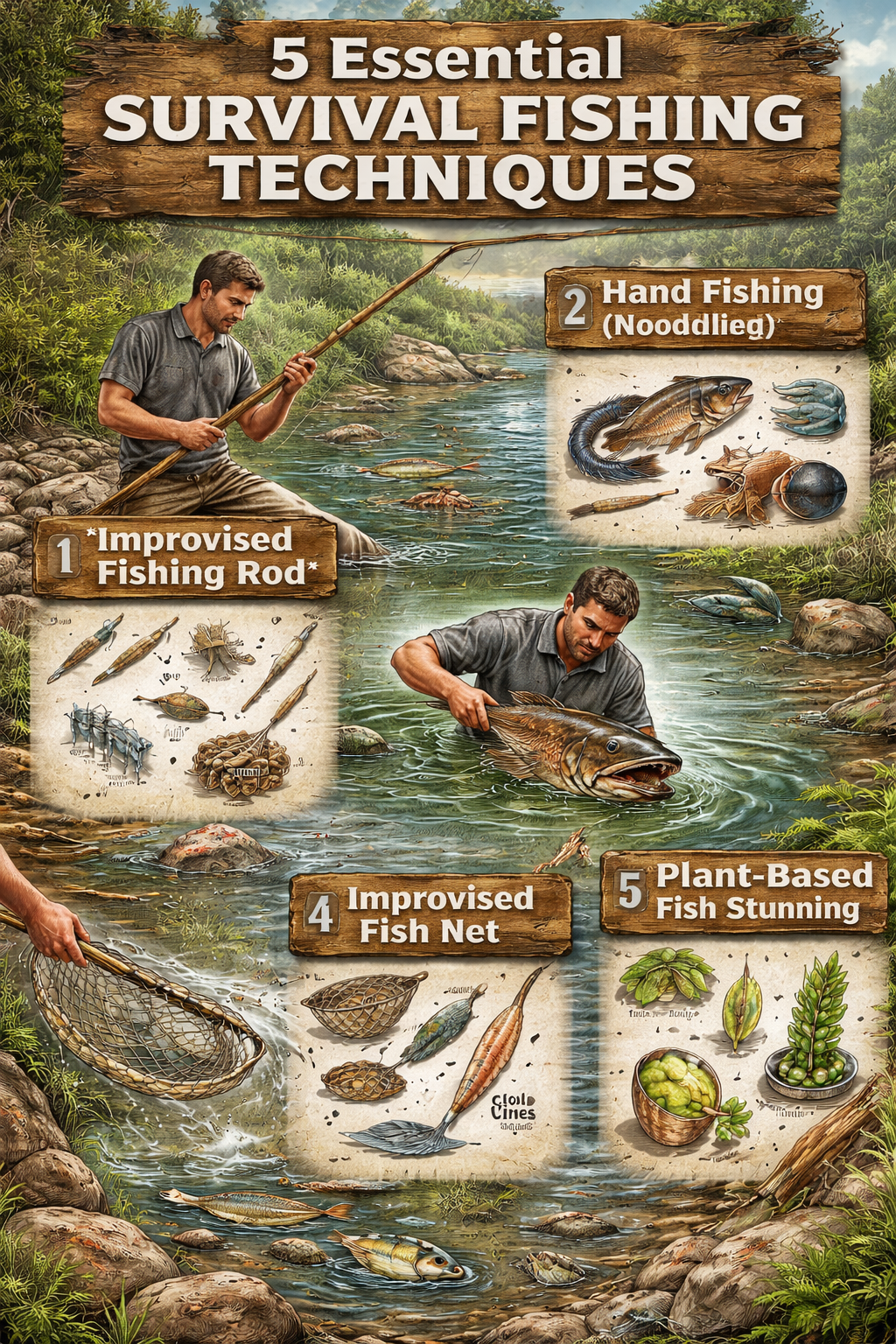
When food supplies become uncertain, securing a reliable source of protein becomes critical. Fish are one of the most dependable wild food sources because they are found in rivers, lakes, ponds, and coastal areas across much of the world. They provide high-quality protein, healthy fats, and key nutrients that help maintain energy and health in difficult situations.
Unlike hunting large game—which often requires specialized gear, training, and a fair amount of luck—fishing can often be done with simple tools or improvised equipment. With a little creativity and some knowledge of basic techniques, it is possible to catch fish even when traditional gear is unavailable.
Below are five practical fishing techniques that can help provide food in a survival or off-grid situation.
🪵 1. Improvised Fishing Rod
In a survival situation you may not have access to a traditional fishing rod and tackle. Fortunately, it is possible to create a simple rod using materials found in nature or everyday items.
Building a Simple Rod
Rod:
Look for a flexible branch around 6–8 feet long. Bamboo or young saplings work especially well because they combine strength and flexibility.
Fishing Line:
Several materials can be used as makeshift fishing line.
Thin wire stripped from electronics
Strong thread pulled from clothing seams
Braided plant fibers
Natural sinew from animal tendons if available
Improvised Hooks:
Many small metal objects can be shaped into usable hooks.
Safety pins
Paperclips
Small nails
Sewing needles
Soda can tabs bent and sharpened
Natural options may include sturdy thorns or sharpened bone fragments.
Bait Ideas:
Fish are attracted to movement and contrast.
Feathers
Small shiny objects
Pieces of cloth
Worms or insects
Small bits of meat
Learning a few strong knots, such as the improved clinch knot or Palomar knot, helps keep your hook and line secure.
🐟 2. Hand Fishing (Noodling)
Hand fishing—often called noodling—is a method where fish are caught directly by hand in shallow water. This technique requires patience and confidence but can be effective for certain species.
How It Works
Large fish such as catfish often hide inside holes, under rocks, or beneath submerged logs.
Locate likely hiding spots in shallow water.
Slowly reach into the hole and feel for movement.
When a fish is located, grip it around the mouth or behind the gills and pull it out quickly.
Safety Considerations
⚠️ Always check for other animals first.
Underwater holes can sometimes contain snapping turtles, snakes, or other wildlife.
Wearing gloves can help protect your hands from sharp fins or debris.
🗡️ 3. Spear Fishing
Spear fishing is one of the oldest methods of catching fish and works best in clear, shallow water.
Making a Simple Spear
Shaft:
Choose a straight stick roughly 5–7 feet long.
Sharpening the Tip:
Carve the end into a sharp point with a knife or sharp rock.
Multi-Pronged Spear:
Split the tip into two or four sections and wedge small sticks inside to create multiple points. This increases the chance of hitting the fish.
Fire Hardening:
Briefly heating the sharpened tip over a fire can harden the wood and make it more durable.
Spear Fishing Tips
Move slowly and quietly near the water.
Fish appear higher in water due to light refraction, so aim slightly below the fish.
Strike quickly and confidently.
Fishing at night with a light source can sometimes increase success because fish are easier to spot and less cautious.
🪢 4. Improvised Fish Nets
When fish are concentrated in shallow areas, a net can capture several fish at once with less effort than line fishing.
Materials for a Survival Net
Old fencing wire or mesh
Window screen material
Clothing such as shirts or pillowcases
Woven vines or plant fibers
Building a Simple Net
Use two sturdy sticks as handles.
Attach your net material between them to form a scoop.
Sweep the net through shallow water or trap fish against the bank.
Funnel Fish Traps
Another option is a stationary trap made from sticks and mesh shaped into a funnel. Fish can swim in but struggle to swim back out.
🌿 5. Traditional Plant-Based Fish Stunning
In extreme survival situations, certain plants can temporarily stun fish in small pools of water, making them easier to collect.
Some plants historically used for this purpose include species containing natural compounds that reduce oxygen availability in water.
Basic Method
Crush the plant material thoroughly.
Spread it in a small enclosed pool or slow-moving water.
After a short time, fish may become disoriented and float to the surface.
⚠️ Important:
This method should only be considered in true survival emergencies, as it can impact other aquatic life and may be illegal in many areas.
🧠 Additional Survival Fishing Tips
Look for signs of fish
Jumping fish
Surface ripples
Birds diving into water
Schools visible in clear water
Fish during active feeding times
Early morning and late evening are often the most productive periods.
Stay quiet
Fish are very sensitive to vibration. Move slowly and avoid splashing.
Preserve your catch
Fish spoil quickly, so cook or preserve them as soon as possible.
Common preservation methods include:
Smoking
Drying
Roasting over fire
Always cook freshwater fish thoroughly to reduce the risk of parasites or bacteria.
🧭 Final Thoughts
Fishing is one of the most reliable ways to obtain food in a survival environment. With some creativity and a basic understanding of fish behavior, even simple materials can become effective fishing tools.
The best time to learn these techniques is before you actually need them. Practicing fishing skills ahead of time builds confidence and dramatically increases your chances of success if you ever face a real emergency.
In survival situations, knowledge and resourcefulness are often the most valuable tools you can carry.