
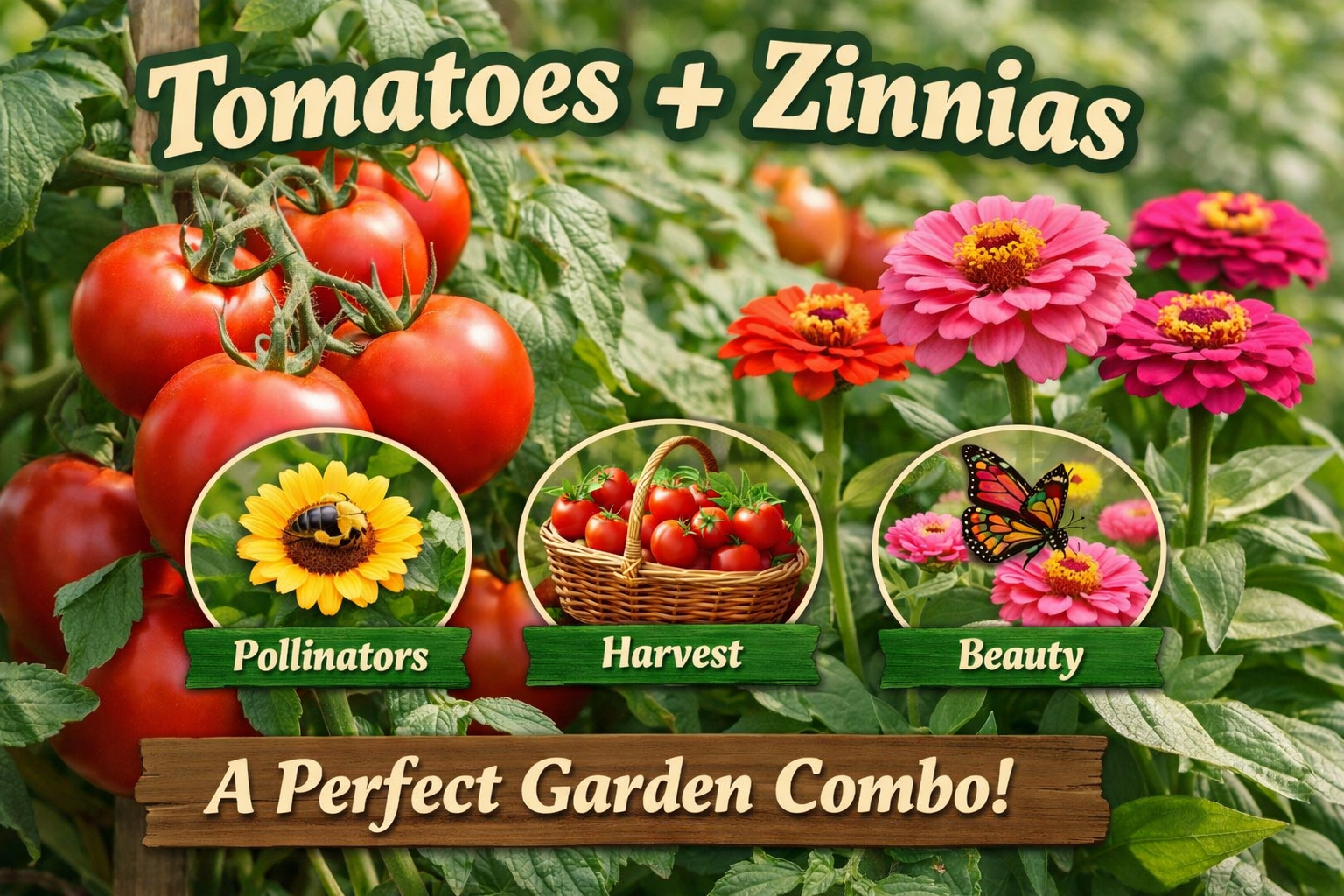
🌿 Mixing Flowers and Vegetables Can Be Smart
A productive garden doesn’t have to look plain.
One of the easiest ways to make a vegetable garden more beautiful and more useful at the same time is to mix flowers in with your crops. When chosen carefully, flowers can help attract pollinators, bring in beneficial insects, and make the garden feel more alive.
One pairing many gardeners think about is zinnias and tomatoes.
So, can they grow together?
Yes — they usually can, and often very well — as long as you plan the spacing properly.
🍅🌼 Why Tomatoes and Zinnias Work Well Together
Tomatoes and zinnias enjoy many of the same growing conditions, which makes them a natural match in a summer garden.
Both plants generally prefer:
☀️ full sun
🌡 warm weather
💧 regular watering
🌱 loose, well-drained soil
That makes it easy to care for them in the same part of the garden without having to create completely different conditions for each one.
Zinnias are also easy to tuck into the edges of a bed or place near tomatoes without creating too much trouble, especially if you choose the right varieties.
🐝 Benefits of Planting Zinnias Near Tomatoes
🐞 1. They Attract Helpful Insects
Zinnias are excellent at drawing in insects you actually want in the garden.
These may include:
🐝 bees
🦋 butterflies
🐞 predatory insects
🪰 hoverflies
🛡 parasitic wasps
All of these can help support a healthier garden ecosystem. Some help with pollination, while others help reduce pest pressure by feeding on nuisance insects.
🌈 2. They Add Color to the Garden
Tomato plants are useful, but let’s be honest — a row of tomatoes can look a little plain by itself.
Zinnias bring bright color, energy, and beauty to the bed. That can make the garden more enjoyable to work in and more inviting overall.
A garden that looks good is often a garden we spend more time tending.
✂️ 3. You Get Cut Flowers Too
One of the nicest things about growing zinnias is that they’re not just pretty outside.
They also make wonderful cut flowers.
That means the same planting can give you:
🍅 food for the kitchen
🌼 flowers for the table
🐝 support for beneficial insects
That’s a pretty good return from a small amount of space.
🌻 4. They Help Create a More Diverse Garden
Monocultures tend to invite more trouble.
A mixed planting often feels more balanced. Adding flowers among vegetables can help break up the space visually and biologically, which is often a good thing in a home garden.
More diversity usually means:
🌿 better habitat for helpful insects
🪲 less sterile growing space
🏡 a healthier overall garden feel
⚠️ Things to Watch Out For
Even though zinnias and tomatoes can grow well together, there are still a few things to keep in mind.
💧 1. Competition for Water and Nutrients
If you plant too closely, zinnias and tomatoes may compete for resources.
Tomatoes are heavy feeders, and they don’t love having too many neighbors crowding their root zone.
That’s especially important in:
🪴 containers
🛏 small raised beds
📏 tightly planted garden rows
🍃 2. Poor Airflow Can Lead to Disease
Tomatoes already need good air circulation to stay healthier through the season.
If flowers are packed too tightly around them, moisture can hang around longer, and that can increase the risk of fungal issues.
Watch for conditions that encourage problems like:
🦠 leaf spots
🌫 powdery mildew
🍂 damp crowded foliage
🌤 3. Taller Zinnias Can Cause Shading
Some zinnia varieties stay short and tidy, while others get surprisingly tall.
If tall zinnias are planted too close to shorter tomato plants, they may block light and crowd the lower branches.
This is more likely to be a problem with smaller or bush-type tomato plants than with tall trellised ones.
🪴 Best Way to Plant Zinnias With Tomatoes
The key is placement.
Instead of planting zinnias directly on top of your tomato root zone, try using them in ways that support the bed without crowding it.
Good options include:
🌼 planting zinnias along the border of the bed
🌼 placing them near the corners of raised beds
🌼 using them behind or beside tomato rows
🌼 tucking compact varieties into open sunny spots nearby
Give each plant enough room so air can move and roots aren’t fighting too hard underground.
As a general rule, it helps to keep a bit of space between the tomato base and the flower planting rather than packing them together.
📏 Variety Choice Matters
Not all zinnias behave the same way.
If you’re planting near tomatoes, think about size first.
🌼 Smaller zinnias
These are often the easiest to mix in close by because they stay lower and are less likely to block light.
Best for:
✔ borders
✔ bed edges
✔ small raised beds
🌼 Taller zinnias
These work better as a backdrop or in the rear of the planting where they won’t lean over the tomatoes.
Best for:
✔ behind trellised tomatoes
✔ separate flower strips
✔ larger in-ground beds
🍅 Matching the Tomato Type Helps Too
The type of tomato you’re growing matters just as much as the flower choice.
🍅 Bush / determinate tomatoes
These stay shorter and more compact, so they usually do best with smaller zinnias nearby.
🍅 Vining / indeterminate tomatoes
These are often grown upward on cages, strings, or trellises, which makes them easier to pair with taller flowers if space allows.
The more vertical your tomato setup is, the easier it is to add flowers around it without creating a jungle.
🌞 Tips for Success
If you want tomatoes and zinnias to thrive together, keep these basics in mind:
✔ plant tomatoes first and let them establish
✔ add zinnias once the layout is clear
✔ avoid overcrowding
✔ water consistently
✔ prune tomatoes as needed for airflow
✔ deadhead or cut zinnias often to keep them blooming
✔ watch for fungal issues during humid weather
A little planning goes a long way.
🏡 Final Thoughts
Zinnias and tomatoes can make a great garden team.
They like similar summer conditions, zinnias bring beauty and beneficial insect activity, and together they can turn a plain vegetable bed into a space that feels both productive and alive.
The biggest thing is not to overdo it.
Give tomatoes the room they need, choose zinnia varieties that fit your space, and use flowers to support the planting rather than crowd it.
When done well, this pairing gives you the best of both worlds:
🍅 fresh food
🌼 bright flowers
🐝 more pollinator activity
🏡 a garden that looks as good as it grows