
🌍 Introduction: Preparing for the Future of Food
Over the past few years, I’ve been thinking more seriously about food resilience. Rising prices, supply chain disruptions, extreme weather, and global instability have reminded many of us how fragile modern food systems can be.
A lot of people respond to uncertainty by stocking up on canned goods or dry foods. Those are useful steps. But I’ve started focusing on something a little different.
Fertilizer.
To me, fertilizer represents future food production. It’s the ability to grow calories, nutrition, and independence right in your own backyard.
In uncertain times, the ability to grow food may be one of the most valuable resources a household can have.
🌾 The Hidden Backbone of Agriculture
Most people rarely think about what actually makes modern agriculture possible.
High crop yields depend heavily on fertilizers that provide essential plant nutrients:
🌿 Nitrogen (N) – supports leafy growth
🌱 Phosphorus (P) – strengthens roots and fruit development
🌾 Potassium (K) – improves plant health and resilience
Without these nutrients, crop yields can drop significantly.
Farmers rely on them every growing season. When fertilizer becomes expensive or difficult to obtain, food production can be affected — and those effects eventually show up in grocery stores.
🧰 Why Fertilizer Can Be a Resilience Tool
Stockpiling fertilizer isn’t about panic.
It’s about planning ahead.
A single bag of fertilizer can help produce hundreds of pounds of vegetables over time. When combined with seeds, soil, and water, it becomes a powerful resilience tool.
Benefits include:
🥕 Higher garden yields
💰 Lower grocery costs
🏡 More household independence
📦 Less reliance on fragile supply chains
Instead of viewing fertilizer as just another supply item, it can be seen as stored potential food production.
⏳ Timing Matters in Gardening
Gardening works on seasonal timelines.
What happens today affects the harvest months later.
If fertilizer becomes scarce during planting season, crop yields can decline. That impact may not appear in stores right away — there’s often a delay between supply disruptions and food availability.
Because of that lag, many gardeners prefer to secure supplies before shortages appear.
🪣 Practical Tips for Storing Fertilizer
If you plan to keep fertilizer on hand, storage matters.
Most fertilizers absorb moisture from the air, which can reduce effectiveness.
Helpful storage tips include:
🪣 Store in airtight buckets or sealed containers
🌡 Keep in a cool, dry location
💧 Protect from humidity and rain
🏷 Label containers clearly
When stored properly, many fertilizers remain usable for several years.
🌿 Beyond Fertilizer: Building a Food System
Fertilizer alone doesn’t create resilience.
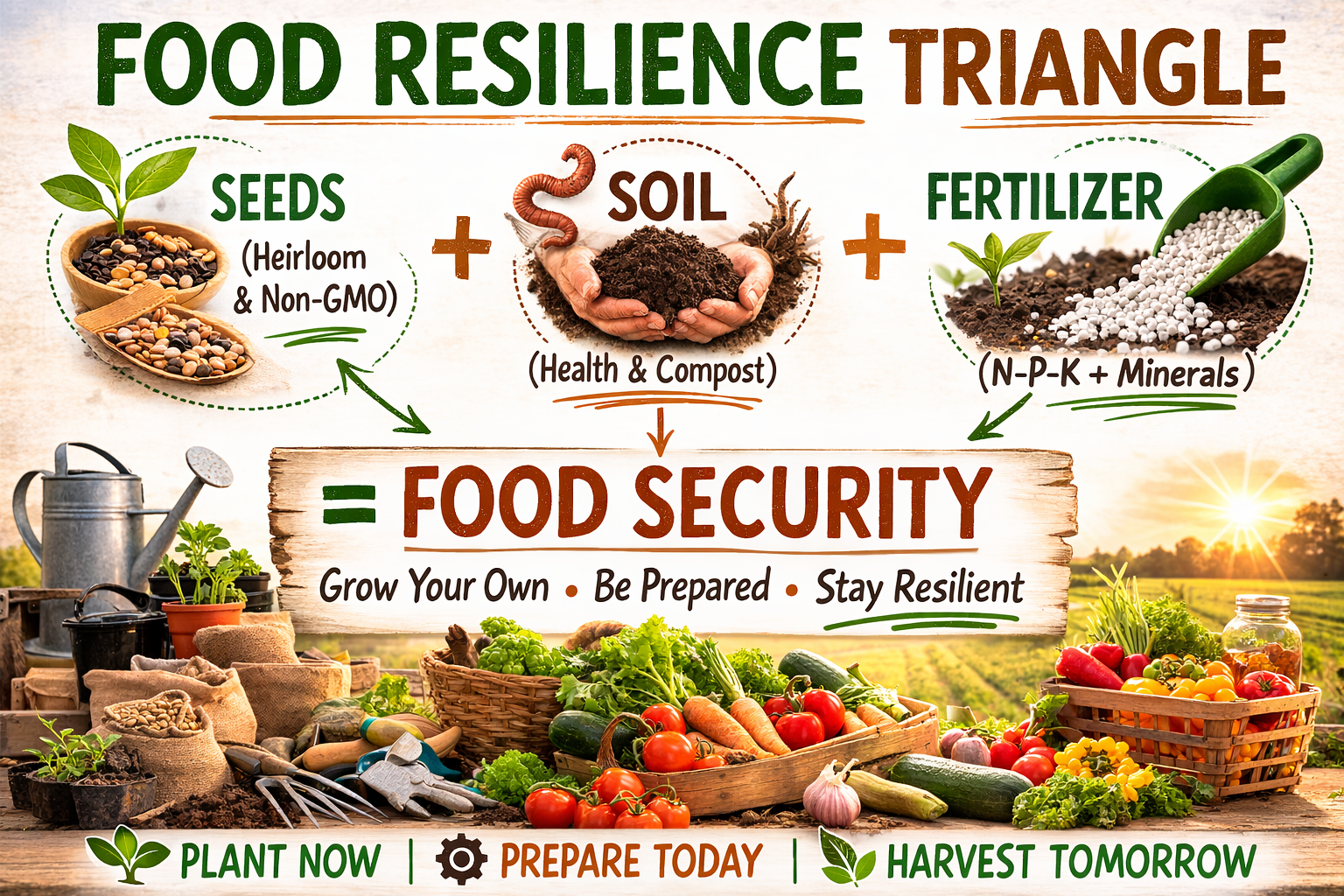
Real food security comes from combining several pieces together:
🌱 Seeds (preferably heirloom or open-pollinated)
💧 Reliable water sources
🪱 Healthy soil and compost
📚 Gardening knowledge
🥫 Food preservation skills
Together, these pieces create a sustainable household food system.
🏡 Gardening as a Preparedness Skill
Growing food is about more than just calories.
Gardening teaches:
🌤 patience
🌎 environmental awareness
🧠 problem-solving
🌿 practical self-reliance
Even small backyard gardens can supplement food supplies and build valuable skills over time.
🌟 Final Thoughts
For me, keeping fertilizer on hand is not about expecting disaster.
It’s about being prepared and capable.
If nothing unusual happens, the fertilizer still helps grow a productive garden.
But if food supplies tighten or prices rise sharply, having the ability to grow your own food becomes incredibly valuable.
Sometimes the best preparation is simply giving yourself the ability to produce something essential.
And food will always be essential.