
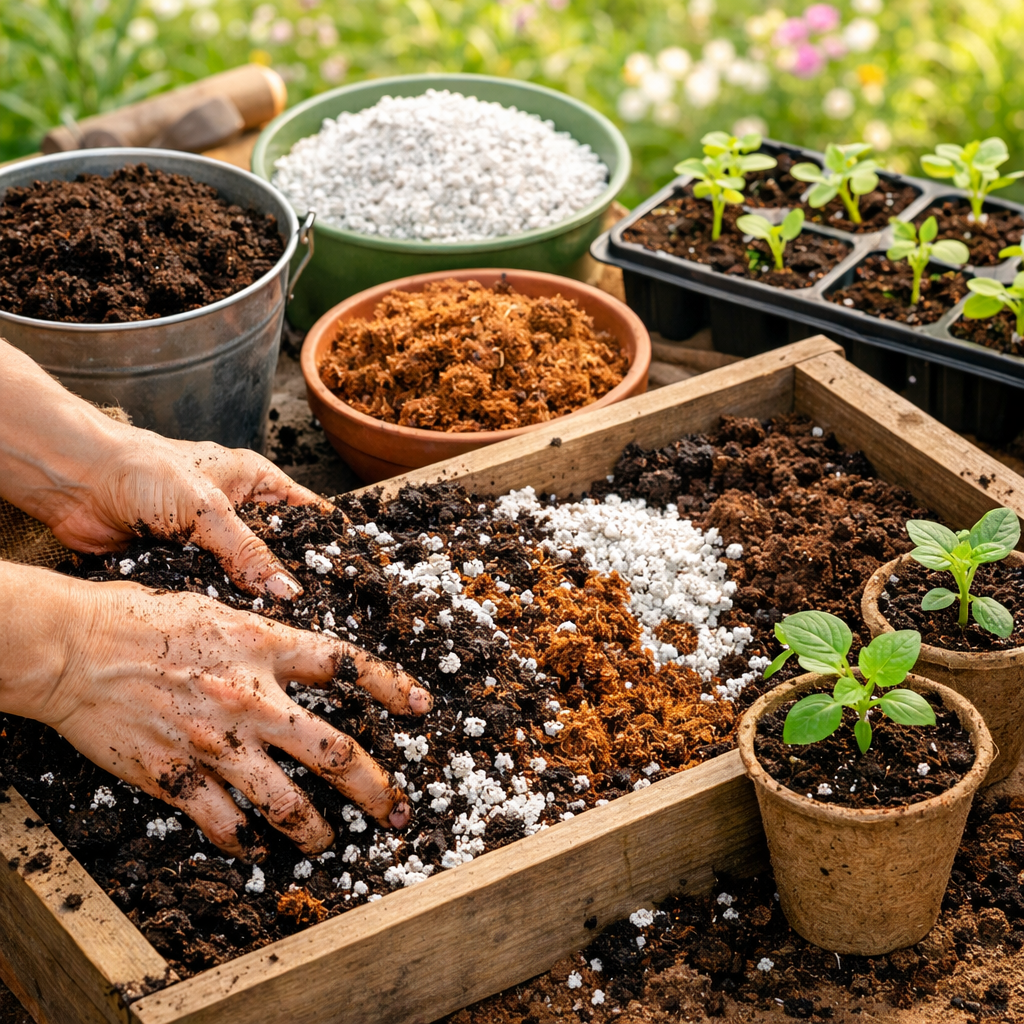
When it comes to gardening, the health of your plants starts long before the first sprout appears. The foundation of every strong plant is the soil it grows in. Just like a house built on a weak foundation will eventually develop problems, plants grown in poor soil will struggle to reach their full potential.
Many gardeners automatically reach for bags of commercial potting soil from the garden center. It’s convenient and quick, but convenience doesn’t always equal quality. More gardeners and homesteaders are discovering that making their own potting mix can produce healthier plants while saving money and avoiding unnecessary additives.
If you’re preparing for the upcoming growing season, here are five reasons to consider ditching store-bought mixes and making your own.
🧪 1. You Control What Goes Into Your Soil
One of the biggest benefits of creating your own potting mix is knowing exactly what ingredients are being used.
Many commercial mixes contain synthetic fertilizers, wetting agents, and other additives designed to improve shelf life or speed up growth. While they may work short term, they don’t always support long-term soil health.
When you mix your own soil, you can choose natural materials that support beneficial microbes and plant growth.
Common DIY soil ingredients include:
🌿 Compost
🐇 Aged manure
🌾 Peat moss or coco coir
🪨 Perlite or vermiculite
🍂 Leaf mold
Together these ingredients create a living soil environment that supports healthy plants.
📦 2. Store-Bought Soil Is Often Inconsistent
Many gardeners have experienced buying two bags of potting mix that perform completely differently.
Some bags hold moisture well. Others drain too quickly or become compacted and heavy. Differences in texture, nutrient content, and water retention can affect germination and plant health.
By creating your own mix, you control the recipe. Once you find a blend that works well in your climate and garden setup, you can reproduce it consistently every season.
Consistency leads to stronger seedlings and more predictable results.
🌧️ 3. Storage Conditions Can Damage Bagged Soil
Commercial potting soil often sits outside at garden centers or big-box stores for long periods.
During that time, bags may be exposed to:
🌧 Rain
☀️ Heat
❄️ Temperature swings
💧 Excess moisture
When water gets into the bags, nutrients can leach out or fertilizers may activate early. In some cases, overly wet soil can develop mold or harmful microorganisms.
Mixing your own soil ensures that your ingredients are fresh and stored properly.
🌿 4. Nutrients Break Down Over Time
Many bagged soils contain fertilizers meant to feed plants for weeks or months. However, these nutrients can degrade during transportation and storage.
By the time you open the bag, much of the nutrient value may already be reduced.
When you mix soil yourself, you can add fresh compost and natural fertilizers right before planting. This gives seedlings the nutrients they need at the time they actually need them.
Fresh organic matter also improves soil structure and water retention.
💰 5. DIY Soil Saves Money
Gardening costs can add up quickly—especially if you’re starting a large number of plants.
Buying bag after bag of potting soil every year can become expensive. But mixing your own soil using bulk ingredients can significantly reduce those costs.
Many materials can even be produced on your own property:
🌿 Compost piles
🍂 Leaves and yard waste
🐓 Chicken or rabbit manure
🌾 Mulched plant material
Over time, DIY soil becomes far more cost-effective than buying commercial mixes every season.
🌻 Build a Better Foundation for Your Garden
Healthy soil is the starting point for productive plants, strong roots, and abundant harvests.
By making your own potting soil, you gain control over the ingredients, avoid unnecessary additives, and create a consistent growing environment for your plants.
It’s a simple step that can lead to healthier gardens, stronger harvests, and a more sustainable homestead.
✅ Have you tried making your own potting soil?
Share your favorite ingredients or soil recipes in the comments!